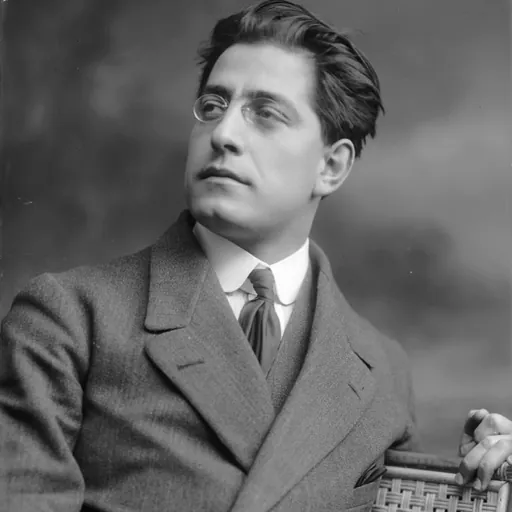
Giovacchino Forzano
Italian playwright, librettist and director
About Giovacchino Forzano
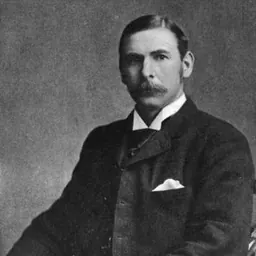
Lived 1884 – 1970 (aged 85). Giovacchino Forzano was an Italian film director, screenwriter, film editor, writer, librettist and playwright.
Giovacchino Forzano (; 19 November 1884 – 28 October 1970) was an Italian playwright, librettist, stage and film director. A resourceful writer, he authored numerous popular plays and produced opera librettos for most of the major Italian composers of the early twentieth century, including the librettos for Giacomo Puccini's Suor Angelica and Gianni Schicchi.
Biography Forzano was born in Borgo San Lorenzo, in the province of Florence.
He studied medicine before embarking on a brief career as an operatic baritone. He then began studying law and, after finishing his diploma, became a freelance journalist, contributing regularly to several of Italy's major newspapers. In 1914 he met and befriended Puccini who asked him to write the librettos for his Il trittico, a collection of three one-act operas. Forzano agreed to write the librettos for two of the works, Suor Angelica and Gianni Schicchi, but declined Il tabarro saying that he preferred to create his own plots (Giuseppe Adami wrote the libretto for Il tabarro). Il trittico premiered at the Metropolitan Opera on 14 December 1918 to high acclaim. With the success of Il trittico, Forzano was soon approached by other composers to provide librettos, including Alberto Franchetti, Ruggero Leoncavallo, Ermanno Wolf-Ferrari, Mario Peragallo, Mary Rosselli Nissim, Umberto Giordano, and Pietro Mascagni. The subjects of his plays were many and varied: some were historical with settings as different as early Renaissance Florence or France during the Revolution; others were contemporary, comedies of manners often dealing with issues around societal preconceptions with regard to the role of women or the nature of relationships. As a result of his success in the world of popular theatre, his high-profile directing of a well-received open-air performance of Gabriele d'Annunzio's La figlia di Iorio at the Vittoriale in 1927 and his involvement with the Carro di Tespi, a travelling theatre initiative supported by the Fascist regime, Forzano came to the attention of Benito Mussolini who, in 1929 suggested an artistic collaboration. This eventually resulted in the composition of three plays, the joint authorship of which was never explicitly acknowledged in Italy, but which nonetheless was common knowledge. Although Forzano derived a certain amount of kudos from the association with the Dictator, it does not seem that he received any direct financial benefit, unlike many other cultural figures of the time who received subsidies of various kinds from the fascist authorities. Unfortunately, however, Forzano became associated indissolubly with Mussolini and the regime, both as a result of these plays, the last of which Cesare was first performed in 1939, and on account of the films which Forzano produced and directed during the 1930s, beginning with Camicia nera in 1933, all of which were staunchly supportive of the regime. Following the Fall of Fascism Forzano was never able to free himself from this association and, consequently, never able to capture his former position, either as a dramatist or cultural figure.
Opera librettos Notte di leggenda (Alberto Franchetti, 1915) Lodoletta (Pietro Mascagni, 1917) Suor Angelica (Giacomo Puccini, 1918) Gianni Schicchi (Giacomo Puccini, 1918) Edipo re (Ruggero Leoncavallo, 1919) Il piccolo Marat (Pietro Mascagni, 1921) Glauco (Alberto Franchetti, 1922) I Compagnacci (Primo Riccitelli, 1924) Gli amanti sposi (Ermanno Wolf-Ferrari, 1925) Sly (Ermanno Wolf-Ferrari, 1927) Il re (Umberto Giordano, 1929)
Principal theatrical works Le campane d Lucio (1916) Madonna Oretta (1918) Sly (1920) Lorenzino (1922) Il conte di Brechard (1924) I fiordalisi d'oro (1924) Il dono del mattino (1924) Gutlibi (1925) Ginevra degli Almieri (1926) Madama Roland (1927) Pietro il Grande (1929) Jack Broder (1929) Danton (1929) Il colpo di vento (1930) Campo di Maggio (with Mussolini; 1930) Don Buonaparte (1931) Villafranca (with Mussolini; 1931) Racconti d'autunno, d'inverno e primavera (1937) Cesare (with Mussolini; 1939)
Don’t just read it —
keep it.
Full-length biographies made to live with: read them, listen on the way to work, watch them tonight.
- E-book
- Audio
- Video
Instant download · yours to keep · every purchase keeps this site free
Important facts
People in Giovacchino Forzano's life
Named in this biography and alive at the same time


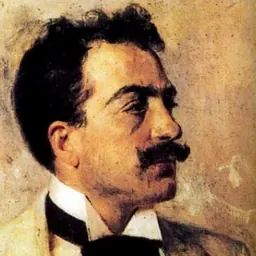


Related people
Same field, nearest in time
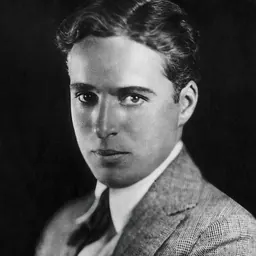


Contemporaries
People whose lives overlapped Giovacchino Forzano's
Frequently asked questions
Who was Giovacchino Forzano?
Italian playwright, librettist and director (1884–1970)
When was Giovacchino Forzano born?
Giovacchino Forzano was born on 19 November 1884 in Borgo San Lorenzo.
When did Giovacchino Forzano die?
Giovacchino Forzano died on 28 October 1970 in Rome.
What was Giovacchino Forzano's occupation?
Giovacchino Forzano was a film director, screenwriter, film editor, writer, librettist and playwright.
What nationality was Giovacchino Forzano?
Giovacchino Forzano was Italian.
Sources & further reading
· Wikipedia: Giovacchino Forzano
· DBpedia: Giovacchino Forzano
Cite this page
APA: Biography.guide. (2026). Giovacchino Forzano. https://biography.guide/giovacchino-forzano/
MLA: "Giovacchino Forzano." Biography.guide, https://biography.guide/giovacchino-forzano/.
Chicago: "Giovacchino Forzano." Biography.guide. https://biography.guide/giovacchino-forzano/.
Data last updated: 2026-09-22 · Spot an error? Report a correction.
Portrait: Wikimedia Commons · author & licence
Page generated 2026-09-27 05:02 UTC