
Giorgio Pasquali
Italian classical philologist
About Giorgio Pasquali
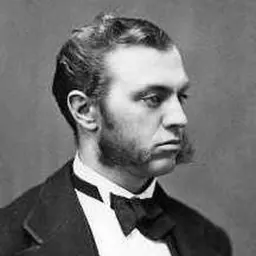
Lived 1885 – 1952 (aged 67). Giorgio Pasquali was an Italian classical philologist, university teacher and grammarian.
Giorgio Federico Guglielmo Ercole Francesco Pasquali (29 April 1885, Rome9 July 1952, Belluno) was an Italian classical scholar who gave a fundamental contribution to the field of textual criticism.
Biography
Origins and education Pasquali was born in Rome in an upper-class family ("generone"). His father, Gustavo Pasquali, Dr. jur., was a barrister and a lawyer for the Austrian and German Embassies, while his paternal grandfather Ercole Pasquali was a university professor and a gynecologist for the House of Savoy; Pasquali's mother, Anna Lasagni Pasquali, was a nephew of Cardinal Pietro Lasagni. and Giovanni Pascucci with 1913's Quaestiones Callimacheae. In the meantime, Pasquali also won a scholarship to study abroad, and choose to enroll for the 1908 winter term in the Georg-August-Universität at Göttingen – studying with Friedrich Leo, Jacob Wackernagel and Eduard Schwartz – and for the 1909 summer term in the Friedrich-Wilhelms-Universität at Berlin, where he attended Wilamowitz' seminars. – he was rejected again. In the fall of the same year Pasquali left Germany, after the start of the Great War, but almost immediately returned, in Berlin, where he was teaching assistant from November 1914 to April 1915. the Accademia della Crusca (1936) and the Royal Academy of Italy (1942).
Death Pasquali died in a car accident in Belluno in 1952. He published his first printed works at 21 and, when he completed his critical edition of Proclus' commentary on Plato's Cratylus, he was only 23. He was interested both in the dynamics of textual transmission and literary criticism, and his mentor Nicola Festa encouraged him to work on late ancient or non-canonical authors such as Proclus, Tertullian, Eusebius and Gregory of Nyssa. Festa also introduced him to philology, by making him read the edition of Euripides' Herakles by Wilamowitz.
He worked both on Greek and Latin literatures, mainly from the Hellenistic and Roman age onwards: Horace, Callimachus, Theophrastus, Pausanias and above-mentioned authors Proclus, Tertullian, Eusebius and Gregory of Nyssa. On another hand, he deeply despised Byzantine literature: "la letteratura bizantina è tra le più noiose al mondo" ("Byzantine literature ranks among the most boring [literatures] in the world"); he spoke of "inferiorità del medioevo bizantino rispetto a quello occidentale" ("inferiority of the Byzantine Middle Ages compared to the Western Middle Ages") and of the Byzantines as a "civiltà, diciamo pure inferiore" ("an inferior civilization, let's say").
His written production counts more 500 works.
Contribution to textual criticism
Pasquali's greatest claim to fame is his book Storia della tradizione e critica del testo ("History of tradition and textual criticism"). In 1929, Pasquali was asked to review Textkritik by Paul Maas, for the specialized journal Gnomon. "Against all rules", Pasquali's review came out twice as long as the book it referred to, and he used it to expose some reflections on the nature and methods of textual criticism that went beyond Maas' scopes; Pasquali wrote – rather than a review – an essay on textual criticism that contained, in its core, the principles of historicism and careful attention for the details and events of textual transmission that were going to make Storia della tradizione.
Pasquali's book first came out in 1934 and it was deeply influenced by Eduard Schwartz's critical edition of the Ecclesiastical History by Eusebius. Studying the vaste and complex textual transmission of Eusebius' History, Schwartz had come to the conclusion that several textual variants, which were too large in number and too important to be attributed to "normal" scribal changes, were in fact author's variants survived in the manuscript transmission – Eusebius had evidently revised his own text; moreover, no branch of the transmission is immune from contamination, which makes it impossible to reconstruct the text following Maas' strict mechanical method. According to Maas, contamination was the only obstacle that his own method could not overcome:
and again in the fourth and last edition:
Yet, Pasquali's historical method was based on four principles desired from Schwartz's studies in Eusebius, which he resumed as follows:
Genuine variants can be found even in interpolated manuscripts: this notion anticipates Pasquali's famous motto recentiores, non deteriores (Latin for: "newer, not worse [manuscripts]") which also is the title of Chapter VI of Storia della trasmissione. A text is never transmitted mechanically, rather there are always "new recensions": this is particularly the case for widely-read works – such as, precisely, the classics. The notions of "archetype" and "family trees" (stemma codicum) are both misleading, which Schwartz was even harsher on – he called them "fairytales". This is the only "principle" that Pasquali did not subscribe to, rather arguing that one can, but not must, postulate an archetype. The great majority of errors are not due to letter-swaps.
About the third notion (against the archetype), Pasquali wrote:
In general, Pasquali compiled a so-called 'dodecalogue' that resumes his book:
The textual transmission of Greek and Latin classics not always originates from a single archetype, be it Medieval or late antique. More often, the various manuscripts derive from late antique editions. The Middle Ages, both in the West and in Byzantium, had much more manuscripts than scholars do think. However, as to the Greek classics, usually a single manuscript arrived in the West from Byzantium; but we have a high number of Latin manuscripts, sometimes in the range of hundreds. Thus it is acceptable to say that the transmission of the Latin classics is less tight than that of the Greek ones. Whence the possibility, more likely for the Latin texts, that more recent manuscripts (recentiores) do derive from different antigrapha than older ones; for this reason, manuscripts are not to be discarded merely on the basis of their date (non deteriores). The same holds true for Humanistic collations and early printed editions. Arbitrary alterations and even falsifications do not automatically disqualify a witness. To believe that the transmission of ancient authors is always mechanical, is prejudicial; it is only occasionally mechanical. The paleographically easiest conjecture is, in texts not-mechanically transmitted, almost never the most probable one. Also prejudicial is to believe that the transmission was always vertical. It often was horizontal, more often in the case of texts widely read. Manuscripts from lateral areas are likely to preserve the correct reading, against those of central areas. This criterion is derived from linguistics. Variant readings can be older than the manuscripts transmitting them, and be traced back to lost ancient editions. Papyri (for Greek authors) and ancient quotations (for Latin authors) do show that every witness represents a different «edition», in ancient times already. There are no known examples of ancient archetypes for the Greek authors, for the Latins the case cannot be excluded. Different redactions of the same work did exist in the ancient times already. This is suggested by the study of the very few autograph papyri and of ancient witnesses, and by the analogies in Medieval works — especially those by Petrarch and Boccaccio — and in selected cases can be proven.
It has been noted that this idea of philology is not 'mathematical' nor 'mechanical' as it would have been had it merely based on Lachmann and Maas; it rather was historical, and historicism was the leading point of Pasquali's studies (he once jokingly said of himself: "io sono fradicio di storicismo" [I am soaked in historicism]). Pasquali's original project was to include, in the translated second edition of Textkritik, also Maas' essay on Schicksale der antiken Literatur in Byzanz [The fate of ancient literature in Byzantium], which was Maas' only historical essay on the transmission of Ancient Greek literature in the Byzantine millennium. However, Maas refused, and suggested in turn that his Schicksale were translated and included into Pasquali's Storia della tradizione, because "every history of tradition is fundamentally excluded [from Textkritik]".
Works (selection)
Books
Articles
Don’t just read it —
keep it.
Full-length biographies made to live with: read them, listen on the way to work, watch them tonight.
- E-book
- Audio
- Video
Instant download · yours to keep · every purchase keeps this site free
Important facts
People in Giorgio Pasquali's life
Named in this biography and alive at the same time

Related people
Same field, nearest in time
Contemporaries
People whose lives overlapped Giorgio Pasquali's


Frequently asked questions
Who was Giorgio Pasquali?
Italian classical philologist (1885-1952)
When was Giorgio Pasquali born?
Giorgio Pasquali was born on 29 April 1885 in Rome.
When did Giorgio Pasquali die?
Giorgio Pasquali died on 9 July 1952 in Belluno.
What was Giorgio Pasquali's occupation?
Giorgio Pasquali was a classical philologist, university teacher and grammarian.
What nationality was Giorgio Pasquali?
Giorgio Pasquali was Italian.
Sources & further reading
Cite this page
APA: Biography.guide. (2026). Giorgio Pasquali. https://biography.guide/giorgio-pasquali/
MLA: "Giorgio Pasquali." Biography.guide, https://biography.guide/giorgio-pasquali/.
Chicago: "Giorgio Pasquali." Biography.guide. https://biography.guide/giorgio-pasquali/.
Data last updated: 2026-09-20 · Spot an error? Report a correction.
Page generated 2026-09-27 05:08 UTC