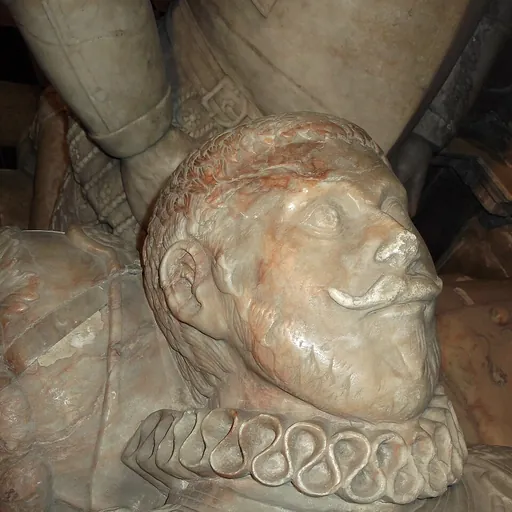
Gilbert Gerard
Tudor politician, lawyer and landowner: Attorney General, Master of the Rolls.
About Gilbert Gerard
Lived 1517 – 1593 (aged 75–76). Gilbert Gerard was an English politician and judge.
Gilbert Gerard (before 1523–1593), Attorney General 1559–81, Master of the Rolls 1581–93. Gerard Chapel, Church of St John the Baptist, Ashley, Staffordshire Sir Gilbert Gerard (died 4 February 1593) was a prominent English lawyer, politician and landowner of the Tudor period. He was returned six times as a member of the English parliament for four different constituencies. He was Attorney General for more than twenty years during the reign of Elizabeth I, as well as vice-chancellor of the Duchy of Lancaster, and later served as Master of the Rolls. He acquired large estates, mainly in Lancashire and Staffordshire.
Background Gerard was born by 1523, the son of James Gerard of Astley and Ince, Lancashire, who was descended from the Gerards of Bryn, Ashton in Makerfield, Lancashire, and Kingsley, Cheshire. The Gerard family had lived at Ince, near Wigan, since the late 14th century. However, James was probably a younger son, so it was not expected that he or Gilbert would inherit the family estates.
The Gerard family became wealthy and distinguished in the reign of Elizabeth I, although Sir Gilbert was the most successful of them. However, he also had a younger brother, William, who served as MP for Preston and Wigan and died in 1584, and a nephew, William III, by that brother, who also served as MP for Wigan and died in 1609. Still more confusing, Sir William, the Lord Chancellor of Ireland had a son called Gilbert, who served as MP for Chester in 1593.
Gilbert's mother was Margaret Holcroft, daughter of John Holcroft of Holcroft, Lancashire. The Holcrofts were another rising landed gentry family. Margaret had two brothers: Sir John Holcroft and Sir Thomas Holcroft. Both distinguished themselves in the Anglo-Scottish Wars, served as MP for Lancashire, and profited from speculation in monastic lands at the Dissolution of the Monasteries, although it was Sir Thomas, the younger brother, who had the more successful and varied career, building up a substantial estate around the estates of the former Vale Royal Abbey. Sir John, heir to the family estates, speculated in wardships, and it was through one of these that Gilbert Gerard's marriage was arranged, to Anne Radcliffe or Ratcliffe. Sir John addressed Gerard as "cousin", a term also used for their relationship by the History of Parliament. "Cousin" was used in the 16th century more widely for blood relatives than in modern English: Sir John and Sir Thomas were Gerard's maternal uncles.
Education Gerard spent some time at the University of Cambridge but did not graduate, as was typical at the time.
He entered Gray's Inn in 1537, when he was probably still about 16, and was called to the bar in 1539. He seems to have been an outstanding student and was honoured by the Inn several times in later life. In 1554 he was elected Autumn Reader, an important post with both academic and administrative responsibilities, and in 1556 he served as Treasurer.
Allegiance to Gray's Inn became a family tradition and it served as a power base for the family. Gerard installed himself in a room there and was generally styled "of Gray's Inn".
Parliamentary career Gerard's parliamentary career was interwoven with his progress as a lawyer. He was returned to parliament a total of six times, four of them in the reign of Mary I.
Henry FitzAlan, 19th Earl of Arundel, another of Gerard's political patrons. Gerard was first returned as MP in 1545 for Liverpool. The town belonged to the Duchy of Lancaster, and the most important local magnates were the Earls of Derby and the Molyneux family. 1545 may have been the first year Liverpool had returned members for about a century - certainly the first for which records survive.
By the early years of Elizabeth's reign, the Earls of Derby and the Duchy of Lancashire were effectively selecting one member each, although it was the mayor and burgesses or freemen who nominally elected the members. Even in 1545, it is likely that Edward Stanley, 3rd Earl of Derby was a decisive influence in handing a seat to Gerard. The two probably already knew each other: Gerard was the earl's legal counsel by 1562 - perhaps much earlier. or among those who supported Sir Anthony Kingston in the 1555 parliament,
Despite his reputation as a staunch Protestant supporter of Elizabeth, Gerard appears in fact to have been essentially conservative, accepting the existing regime irrespective of religious policy. Elizabeth probably promoted him because of his proven competence as an advocate, not his ideological purity.
Only once more did Gerard secure election to parliament, and that much later in life. On 18 November 1584 he was returned as member for Lancashire. As the county seats were dominated by the Duchy of Lancaster and the Earls of Derby, Gerard would have had a good chance in Lancashire at any time. However, he was by now vice-chancellor of the Duchy, so the result was not in question. He was returned as senior knight of the shire, together with Richard Molyneux. As he was already Master of the Rolls, he was required to attend the House of Lords, although not a peer.
Consequently, he was unable to sit in the House of Commons. In January of the following year he was replaced as MP by Richard Bold, a powerful local landowner whose wife was a known recusant and who had recently been reported to Burghley as a recusant himself.
Legal career
Barrister Information about Gerard's career before the accession of Elizabeth I is scanty and not always reliable. He was made an Ancient
However, this is certainly not entirely true. Gerard cannot have spent much, if any time in prison, as he was appointed permanent counsel by the City of London in October 1554, and represented Wigan in the English parliament for the third time in 1555. Nor can he have incurred the wrath of Mary, as he was made a Serjeant-at-law, one of a small and extremely powerful group of barristers with exclusive rights to work in the Court of Common Pleas towards the end of her reign - an appointment that lapsed on her death. He was made Justice of the Peace in five counties by 1559, many of them probably in Mary's reign: Bedfordshire, Buckinghamshire, Cambridgeshire, Cheshire and Huntingdonshire. However, it is certainly true that Gerard was much favoured by Elizabeth and one of a small group of lawyers who were quickly installed in important offices to consolidate the new regime.
Attorney-General
Thomas Bromley, Solicitor General 1569–79, Lord Chancellor 1579–87. Gerard was made Attorney General on 22 January 1559, a week after Elizabeth's coronation, He devised the questions put to the Duke of Norfolk, John Lesley, the Earl of Northumberland, Lord Lumley and others. In the following year he seconded Nicholas Barham in the prosecutions of Norfolk and his secretary, Robert Higford: the only two State Trials of his term of office.
Subsequently, Davison alone had to face Elizabeth's wrath. He was sent to the Star Chamber for trial, where Gerard and his fellow judges sentenced him to a fine of 10,000 marks and imprisonment during the Queen's pleasure. In fact, his fine was remitted and he was released after a few months, even receiving his salary while detained. However, the case is regarded as notorious by legal historians and did not reflect well on the judges involved. He was implicated in a plot to free Mary, Queen of Scots, from Tutbury Castle, close to Etwall. Imprisonment and fines forced him to dispose of some property and he sold to Gilbert Gerard lands around Ashley, Staffordshire. Gilbert built there a very large house, Gerrard's Bromley, which became the seat of his branch of the Gerards.
Marriage and family Gerard married Ann Radcliffe or Ratcliffe. She was the daughter of Thomas Ratcliffe of Winmarleigh and of Isabel Boteler. As her father died before she reached the age of majority, she became a ward of Sir Thomas Holcroft, Gerard's uncle. She inherited Damhouse in Astley, which was later sold by her son, Thomas. She remained a Catholic throughout her life.
They had two sons:
Thomas, Gilbert's heir, was created the first Baron Gerard of Gerrard's Bromley in 1603.
Ratcliffe married Elizabeth Somerset, a wealthy heiress related to the Earls of Worcester. They had a number of children.
Sir Charles Gerard of Halsall, married Penelope, sister and coheir of Sir Edward Fitton, 2nd and last of the Fitton baronets of Gawsworth, Cheshire. They had at least three sons: Charles (the eldest), a Cavalier general during the Civil War and a courtier after the Restoration. He was made Baron Gerard of Brandon in 1645 and Earl of Macclesfield in 1679. Edward Gerard, a colonel of foot who was wounded at the First Battle of Newbury (1643). Sir Gilbert Gerard, killed in one of the frequent skirmishes that took place in Ludlow between Cavaliers and Roundheads. Gilbert, a colonel of a Royalist regiment of foot and was appointed Governor of Worcester in December 1642. Ratcliffe, twin brother of Gilbert, under whom he served as a lieutenant-colonel. He married Jennet, the illegitimate daughter of Devereux Barrett of Tenby, Pembrokeshire. They had several children: Gilbert (died 1687), served as a Royalist captain in the Civil War, after the restoration sat as MP for Northallerton and was made Baronet of Fiskerton John (1632–1654) served as an ensign in the Civil War, was executed in for his part in the Gerard's conspiracy Charles (born 1635)
They also had at least four daughters who survived infancy:
Frances married Richard Molyneux of Croxteth and Sefton, an important Lancashire landowner, who became first of the Molyneux baronets. One of their sons was
Richard Molyneux, 1st Viscount Molyneux
Radclyffe married Sir Thomas Wingfield of Letheringham.
Catherine married Richard Hoghton, a Lancashire landowner who became first of the De Hoghton baronets.
Margaret married Peter Legh of Lyme Park, Cheshire, a client of the Earls of Derby who studied at Gray's Inn, probably under the auspices of Gilbert Gerard.
Death and burial Gerard's will was made on 8 January 1593 and probate was on 6 April of that year. He died on 4 February 1593, Joseph, also known as Jasper, Hollemans was the son of Garrett Hollemans, a Dutch sculptor who fled to England in the 1580s and worked from Burton upon Trent, centre of alabaster carving in the 16th and 17th centuries. Joseph worked for clients as illustrious as the House of Cavendish and the Spencer family of Althorp. While there is no evidence that he personally carved the memorial, it is in Burton alabaster of his style and period.
Don’t just read it —
keep it.
Full-length biographies made to live with: read them, listen on the way to work, watch them tonight.
- E-book
- Audio
- Video
Instant download · yours to keep · every purchase keeps this site free
Important facts
People in Gilbert Gerard's life
Named in this biography and alive at the same time


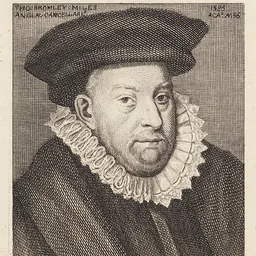




Related people
Same field, nearest in time
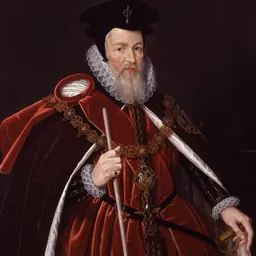
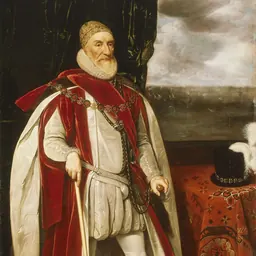
Contemporaries
People whose lives overlapped Gilbert Gerard's

Frequently asked questions
Who was Gilbert Gerard?
Tudor politician, lawyer and landowner: Attorney General, Master of the Rolls.
When was Gilbert Gerard born?
Gilbert Gerard was born in 1517.
When did Gilbert Gerard die?
Gilbert Gerard died on 4 February 1593.
What was Gilbert Gerard's occupation?
Gilbert Gerard was a politician and judge.
What nationality was Gilbert Gerard?
Gilbert Gerard was English.
Sources & further reading
· DBpedia: Gilbert Gerard (judge)
Cite this page
APA: Biography.guide. (2026). Gilbert Gerard. https://biography.guide/gilbert-gerard/
MLA: "Gilbert Gerard." Biography.guide, https://biography.guide/gilbert-gerard/.
Chicago: "Gilbert Gerard." Biography.guide. https://biography.guide/gilbert-gerard/.
Data last updated: 2026-09-21 · Spot an error? Report a correction.
Portrait: Wikimedia Commons · author & licence
Page generated 2026-09-27 05:01 UTC