
About Thomas Holcroft
Lived 1505 – 1558 (aged 52–53). Thomas Holcroft was an English politician.
Sir Thomas Holcroft (1505 – 31 July 1558) was a sixteenth-century English courtier, soldier, politician and landowner.
Holcroft's fortune was made from speculation in former monastic properties, after having distinguished himself during the Anglo-Scottish Wars. He was a close supporter of Lord Protector Somerset and represented three constituencies in the English Parliament.
Background and early life
Thomas Holcroft was born at Holcroft Hall, Culcheth, Lancashire, the son of John Holcroft of Holcroft and Margaret Massey.
The Holcrofts were minor gentry who had been resident since the Middle Ages at Holcroft Hall, the remains of which lie close to the Glazebrook, to the east of Culcheth. The manor of Holcroft was the product of a division of the manor of Culcheth in the mid-13th century and the Holcrofts may have been descended from the de Culcheth family, the original holders of the manor, although the succession of the estate is not certain before John Holcroft, the lord of the manor in the early 16th century and Thomas's father. The Holcrofts had made little impression even regionally before Sir Thomas' generation. His mother's family descended from a junior branch of an ancient noble family, but were scarcely more important: Margaret was a daughter of Hamnett or Hamlet Massey of Rixton, south of Holcroft, on the River Mersey. The Masseys also had a scattering of other estates, including holdings at Pennington.
Thomas being a younger son was not first in line to inherit the Holcroft lands.
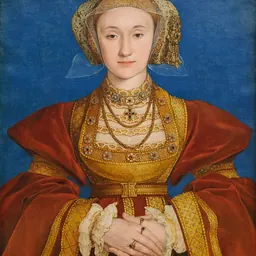
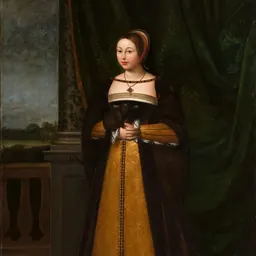
In October 1535 he was entrusted with an important mission. Holcroft and William Barlow, Prior of Bisham, were sent to James V of Scotland to pave the way for an alliance between the two countries, hitherto in conflict. The aim was to arrange a meeting between the two kings, and to explain to James, King Henry's unfolding policy of breaking with the Pope and enriching the Crown through dissolution of the monasteries. In 1536 Holcroft was sent to deliver messages to Margaret Tudor, Henry's sister and James's mother. However, this diplomatic effort was futile and the countries drifted towards war. In 1539, Holcroft was appointed to attend the Lord Admiral William FitzWilliam, 1st Earl of Southampton at the reception of Anne of Cleves.
In preparation for the expected conflict in Scotland, Holcroft was sent north with carts and horses in 1542. Responding to this provocative preparation, Scottish forces advanced in November but were severely defeated at the Battle of Solway Moss. James died shortly afterwards and attempts were made to negotiate an end to the conflict, but these failed after the return to power in Scotland of Cardinal Beaton.
War resumed in December 1543 and led to the prolonged series of campaigns known as The Rough Wooing. Sir Norman Leslie, Master of Rothes, was the main opponent of Beaton within Scotland and was known to favour his assassination. Holcroft was sent to negotiate with Leslie. The idea was abandoned temporarily, and Holcroft served in the subsequent campaign that led to the Burning of Edinburgh. Holcroft was knighted upon the recommendation of Edward Seymour, at that time the Earl of Hertford, at Leith in May 1544.
Holcroft's service was further rewarded with positions in the Royal Household of England: in 1536 he was appointed Sewer of the Chamber and four years later Esquire of the Body. More substantial offices accompanied these: he was Bailiff for the Duchy of Lancaster in the West Derby Hundred from 1536 to 1545 and receiver for Lancashire and Cheshire for most of the period between 1538 and 1558). From 1540 to 1545 he was Master Forester for Quernmore and Wyresdale in Lonsdale Hundred. These were lucrative appointments that gave him a wide range of useful contacts.
Siege of Haddington In the reign of Edward VI, Holcroft was given still more power and responsibility. During 1548–9 he headed the English spy network in Scotland and spent more than £400 of his own money on the work. The English commander Grey de Wilton, wrote to Edward Seymour, 1st Duke of Somerset, "rejoicing in the diligence, good will, and courage of the Lord Warden and Mr. Holcroft."
Holcroft won great distinction during the Siege of Haddington. The English garrison at Haddington held out against a Scottish and French army. Thomas Fisher, charged with arranging the return of Mary, Queen of Scots, to marry Edward VI, wrote of Haddington in a letter to William Cecil: "I assure you it had been French ere this, but for Master Holcroft, who has served as few men living would and with such liberality as is wonderful".
Edward VI heard about the exploits of Holcroft and Thomas Palmer bringing food to the besieged garrison at Haddington, and recorded their names in his journal. Holcroft's letters describe the building of a fort at Dunglass, and the "King's Pale" in Scotland, anticipating that Edward VI would receive feudal rents from the occupied area of Southern Scotland, extending from Dunglass to Berwick, and Lauder to Dryburgh. Landowners would be replaced by a Scottish "assured man" or an English landlord who would "answer the king's majesty for the rents of the same". Holcroft and Francis Leek wrote from Alnwick to Edward Seymour, now Duke of Somerset, in January 1549, about constructing further fortifications at Haddington, Lauder, and Lindisfarne.
Fall of Somerset Holcroft became close to Somerset and chief regent of the young Edward VI, and to William Paget, Seymour's key administrator. Seymour was closely identified with the partly successful Scottish campaigns and Holcroft was given an annuity of £100 "until better provided for" when the wars ended. Seymour was toppled from power in October 1549 but later released from imprisonment and allowed to resume his place on the council. During this period Holcroft visited Paget's homes a total of nine times. Holcroft was a duchy official and had started his career as a client of Derby. As such, he was a natural choice for member of parliament. The parliament was summoned in December 1544 but did not meet for the first time until almost a year later, on 23 November 1545. It then held only two sessions before its dissolution three days after Henry VIII's death in January 1547. Among its concerns were the war with France and Scotland and the abolition of chantries. Despite his expertise in these areas, there is no record of his contributing to work in committee. the status of the palatine counties was ambiguous and transitional and they were not fully absorbed into the English political and judicial system until the 19th century. The Chamberlain of Chester was head of the palatine administration and the post was held by Sir Rhys Mansel. He apparently did not intervene in elections. Consequently, the knights of the shire were drawn from the overlapping circles of landed gentry who dominated county life. Holcroft would have needed support from within these circles, as well as the acquiescence of the Dudley regime, to emerge smoothly as MP for Cheshire. Holcroft had close links to Sir Richard Cotton, a Cheshire landowner who was Comptroller of the Household, and with Sir Thomas Venables, another local landowner and courtier, who was elected as second member for Cheshire alongside Holcroft. It is likely Cotton, who was a close supporter of Dudley, smoothed Holcroft's way with the government. Holcroft probably also used his good relationship with Cecil to communicate his loyalty.
Holcroft was able to transfer his allegiance to Mary without challenge, alongside Cotton, and like many other former Seymour supporters. Consequently, he was returned again for Cheshire in the second parliament of 1553, which was Mary's first. The parliament reversed most of the reforms of Edward VI's reign and restored the Latin Mass. He was not marked as one of those who "stood for the true religion", i.e. Protestantism, on the Crown Office list of the 1553 parliament annotated in Elizabeth I's reign.
In the next parliament, which assembled in April 1554, Holcroft represented Arundel. The constituency was tightly controlled by Henry FitzAlan, 19th Earl of Arundel, another former Seymour supporter who was now a partisan of Mary. He also controlled Steyning, which returned Holcroft's nephew Gerard for this parliament. Holcroft assisted Arundel in the negotiations that led to the marriage between Mary and Philip II of Spain. A much larger group of properties in London, Essex and Bedfordshire was disposed of in the same reign to a partnership involving Gilbert Gerard, Holcroft's nephew, who was already making a name for himself as a lawyer. In the latter part of Mary's reign, Thomas and Juliana Holcroft did further property deals in London, this time involving Sir Rowland Hill, a former Protestant Lord Mayor of London, as well as Gilbert Dethick, an important Officer of arms and diplomat, and Thomas Leigh, a Protestant businessman and politician from Bedfordshire.
Holcroft made his fortune mainly by speculation in monastic lands. Initially he was appointed by Thomas Cromwell to assist the commissioners for the Dissolution of the monasteries in Lancashire. He went on to act as receiver of monastic estates. He then moved into the leasing, purchase, development and resale of lands. He spent a total of £3,798 on monastic estates. Initially lessee, with others. Purchased the priory site in 1540.
As royal commissioner, received surrender of house. Leased the site and surrounding lands, purchasing them in 1544. Acquired the priory site and lands on 23 July 1554 from Queen Mary. Commissioner was John Bradyll, a servant of Thomas Holcroft. He leased the land from 1544 and purchased it jointly with Richard Assheton for £2,132 in 1554
Holcroft acquired and has kept a reputation for ruthlessness in his acquisition of monastic lands.
Later years and death Although not prepared to stand up for Protestantism in parliament, there is considerable evidence that Holcroft used his position as knight marshal to aid Protestants during the Marian Counter-Reformation.
John Strype, an important 17th-century biographer of Thomas Cranmer, wrote that:
"The knight-marshal, Sir Thomas Holcroft, the under-marshal, the knight-marshal's secretary, were secret friends of the Protestants: and, when designs were laid to take any of them, some signification was often privately brought them, that search would within some few hours be made for them; and therefore that they should depart from their lodgings, and conceal themselves. And when any good men were under their hands in prison, they would take all occasions to shew them kindness, as far as safely they might."
Strype also recorded the testimony of Sir John Bourne, a principal secretary to Mary, about Edwin Sandys, the Protestant Bishop of Worcester, escape from the Marshalsea:
"That corrupt labour was made for his deliverance under queen Mary, to which he (Bourne, then secretary) assented not; and when he was discharged he knew not, but sure he was there was no plain order for it; and that he had heard, he conveyed himself away by breaking prison with the aid of sir Thomas Holcroft or his man."
Sandys continued to feud with Bourne long after Elizabeth restored Protestantism. In 1563 he made a sworn statement that Holcroft and others had sued for his release, but he did not confirm Bourne's account that Holcroft actually engineered his escape.
When Holcroft made his will on 25 July 1558, he was in Wenham, Suffolk, at the home of Michael Wentworth, a Yorkshire politician and courtier who seems to have been loyal to the regime. It is possible, therefore that Holcroft had been arrested and placed in Wentworth's custody. He first married Elizabeth Fitton, daughter of Edward Fitton. After her death in 1595, he married Elizabeth Rayner, widow of Henry Talbot. By Elizabeth Fitton he had a son:
Thomas Holcroft, who married Mary Talbot, Elizabeth Rayner's daughter.
Isabel, who married Edward Manners, 3rd Earl of Rutland. They had a daughter:
Elizabeth Manners, who married William Cecil, 2nd Earl of Exeter, a grandson of William Cecil, 1st Baron Burghley.
Don’t just read it —
keep it.
Full-length biographies made to live with: read them, listen on the way to work, watch them tonight.
- E-book
- Audio
- Video
Instant download · yours to keep · every purchase keeps this site free
Important facts
Family & relationships
People in Thomas Holcroft's life
Named in this biography and alive at the same time


Related people
Same field, nearest in time

Contemporaries
People whose lives overlapped Thomas Holcroft's




Frequently asked questions
Who was Thomas Holcroft?
English politician (1505–1558)
When was Thomas Holcroft born?
Thomas Holcroft was born in 1505 in Culcheth.
When did Thomas Holcroft die?
Thomas Holcroft died on 31 July 1558.
What was Thomas Holcroft's occupation?
Thomas Holcroft was a politician.
What nationality was Thomas Holcroft?
Thomas Holcroft was English.
Sources & further reading
· DBpedia: Thomas Holcroft (politician)
Cite this page
APA: Biography.guide. (2026). Thomas Holcroft. https://biography.guide/thomas-holcroft/
MLA: "Thomas Holcroft." Biography.guide, https://biography.guide/thomas-holcroft/.
Chicago: "Thomas Holcroft." Biography.guide. https://biography.guide/thomas-holcroft/.
Data last updated: 2026-09-22 · Spot an error? Report a correction.
Page generated 2026-09-27 04:59 UTC