
About Gil Dozier
Lived 1934 – 2013 (aged 79). Gil Dozier was an American military officer, lawyer, rancher, farmer, businessperson and politician.
Gilbert Lynel Dozier (March 19, 1934 – September 23, 2013), was an attorney, businessman, farmer, and rancher who served from 1976 to 1980 as the Louisiana Commissioner of Agriculture and Forestry. A Democrat, Dozier's political career ended with felony convictions and imprisonment for nearly four years. Most of his adult life was spent in and about Baton Rouge, Louisiana.
Family background Dozier was one of two sons born in rural Fields in Beauregard Parish in southwestern Louisiana to the educators A. J. Dozier (1907–1997) and the former Sylvia Mae Hennigan (1910–1977). Dozier's brother, Kenneth Rufus Dozier (born 1938) of DeRidder, is partly named for their paternal grandfather, Rufus Dozier. Sylvia Dozier's mother, the former Myrtie Mae Whitman, died before her fortieth birthday in 1927 in childbirth with her ninth pregnancy. Sylvia's father, Gilbert Franklin Hennigan, for whom Gil Dozier received his first name, was a rancher, a member and president of the Beauregard Parish School Board, and from 1944 to 1956 a state senator for Allen, Calcasieu, Cameron, Jefferson Davis, and Beauregard parishes.
As chairman of the Senate Education Committee, Hennigan was instrumental in the upgrading in 1950 of McNeese State University in Lake Charles to a four-year institution. Toby O'Rillion, the husband of Dozier's maternal aunt Hope, After Sylvia died in 1977, the next year A. J. married the former Elizabeth Jane Huckaby Kelly (1918–2008), the widow of Elton D. Kelly (1916–1968), a football coach at Minden High School in Minden in Webster Parish in northwestern Louisiana, whose team won the Class AA state championship in 1963. The Kellys, who married in 1940, had three children, David Kelly, Kathy Kelly Hynson of Rosenberg, Texas, and Debby Kelly-Hiebert, Gil Dozier's step-siblings. The Kellys were science teachers in Minden; both had earlier been on the faculty at DeRidder High School. After Elton's death, Elizabeth, or "Libby," retired from teaching, became a registered dietitian and worked at various medical facilities in the DeRidder area. She also managed a small apartment complex. She died in 2008 at the age of ninety in Needville in Fort Bend County, Texas.
Education and military Dozier played basketball from 1952 to 1955 for the Ragin' Cajuns of the University of Louisiana at Lafayette, when the institution was known as the University of Southwestern Louisiana. He obtained his bachelor's degree from ULL in 1955.
From 1957 to 1959, From 1965 until at least 1980, he was a member of the Air Force Reserve. A third candidate was the outgoing State Representative Lantz Womack of Winnsboro in Franklin Parish, who like Pearce had roots in West Carroll Parish in northeastern Louisiana.
Though Dozier had planned to run for governor in the 1979 nonpartisan blanket primary in which no incumbent was listed on the ballot, his ensuing legal problems and unsavory headlines made such a race highly speculative. In 1976, he had given an emergency appointment to the radio broadcaster and campaign consultant, R. T. "Dan" Hanchey, with the idea that Hanchey would manage the gubernatorial campaign. Hanchey, whose broadcasting career included stints in Mobile, Alabama, and New Orleans, recalls that he left the post when Dozier's legal troubles began to surmount.
Dozier instead ran for reelection as agriculture commissioner in the primary held on October 27, 1979. Agribusinessman and fellow Democrat Bob Odom of Zachary in East Baton Rouge Parish, who had worked in three positions under Pearce and was thereafter fired from the department by Dozier, defeated both Dozier and Pearce, who made his last comeback attempt for the office which he had held from 1952 to 1956 and again from 1960 to 1976. Leland George Rawls (born August 9, 1950), a young farmer from Bastrop in Morehouse Parish and then a member of the Louisiana Republican State Central Committee, also ran in the 1979 primary. Rawls carried a hoe during the campaign as a reminder of his promise to "promote, protect, and advance the Agriculture Department." Rawls finished far behind the three leading Democrats. Odom prevailed with 563,515 votes (45.9 percent) to Dozier's 382,486 (31.1 percent). Pearce polled 163,873 (13.4 percent), Rawls 67,021 (5.5 percent), and 50,045 votes (4 percent) were cast for still another Democrat, Joe Coco.
In the general election held on December 8, 1979, Odom handily unseated Dozier, 853,578 (67.2 percent) to 415,714 (32.8 percent). The general election drew some 43,000 more voters in the agriculture commissioner's race than had participated in the first round of balloting. Dozier's percent hardly changed from the primary to the general election.
Legal troubles The month after his defeat for reelection, Dozier was formally charged in a five-count indictment with violations of both the Hobbs and the Racketeer Influenced and Corrupt Organizations acts. On September 23, 1980, the United States District Court for the Middle District of Louisiana convicted Dozier of extortion and racketeering. The sentence of ten years imprisonment and a $25,000 fine was suspended pending appeal, and Dozier remained free on bail. Among specific instances of extortion cited: Dozier sought $25,000 in 1977 from Nicholas Fakouri and the Vermillion Dairymen's Cooperative Association in Abbeville in Vermilion Parish in return for a loan guarantee from the Louisiana State Market Commission. He also attempted to extort $20,000 in 1976 from the Louisiana Computer Company in return for favorable treatment from the state. In all the incidents specifically cited, Dozier maintained that "his various solicitations were nothing more than the ordinary fundraising activities of a public official faced with the financial burdens of electioneering."
While on bond, Dozier was arrested in a jury tampering scheme after he asked Huey P. Martin, who then solicited the assistance of George Davis, to contact the petit jurors to declare in letters to the court that deliberations in Dozier's trial had been improper. For their compensation, Martin and Davis were to split $50,000 for each of five years.
Dozier had faced a potential eighty years in prison and fines of up to $55,000 when he was found guilty on four of five counts against him: Prosecutors asserted that Dozier had turned his department into a "cash register" to bilk campaign donations from those having business with the state.
The United States Court of Appeals for the Fifth Circuit in New Orleans upheld Dozier's conviction. The court said that Dozier had used his office illegally when he set a price to assist someone who had a problem with a state agency or a contract issue.
On June 24, 1982, the district court revoked Dozier's probation and imposed a prison term of eight additional years on one of the counts in the original indictment. The eight years was to have been served consecutively with the two other five-year prison terms. The court ordered Dozier to serve a minimum of eighteen months of the eight years before he could be eligible for parole. Dozier was ordered to be placed on five years' probation once released from prison. Dozier had already served time from June 1982 to July 1984, in the Federal Corrections Institution in Fort Worth, Texas. According to the U.S. Bureau of Prisons, Dozier was released April 25, 1986. It was reported that Reagan shortened Dozier's term to 6 years.
Reagan did not release his files in the Dozier case, but it was learned that Mayor Ernest Morial of New Orleans, a fellow Democrat, submitted a character reference for the former agriculture commissioner. The commutation was one of ten issued by Reagan, who said that Dozier's original sentence was excessive compared to what other political figures in similar circumstances had been receiving. Dozier told a civic gathering in Minden that he believed problems in the Carter administration could lead, as it developed, to the election of a Republican as governor of Louisiana in 1979. The Carter-Reagan presidential election came after Dozier had left office and was free on bond.
After Reagan's decision, Dozier faced a parole hearing in the United States Justice Department. In the hearing, Dozier's attorneys described their client as a "Darth Vader", who turned from a "crusading reformer to a man obsessed by the dark side within a year of taking office, an attitude fueled by an overwhelming desire to run for governor." Camille Gravel of Alexandria, one of Dozier's attorneys, described him, accordingly:
He was too aggressive and too self-centered in his ambition. To violate the law was not Dozier's remotest interest; yet his overbearing and arrogant manner did in fact create a certain impression in the minds of others. ...
Judge Polozola opposed the commutation and resisted any change to the 18-year sentence, but President Reagan made the ultimate decision for Dozier's release on parole. U.S. Representative Henson Moore of Louisiana's 6th congressional district, a Republican first elected in 1975 and his party's unsuccessful nominee for the United States Senate in 1986, questioned Reagan's decision not to release the commutation file in the Dozier case.
Dozier developed a friendship with Billy Cannon, a dentist and the 1959 Heisman Trophy winner who played for the Louisiana State University Tigers and the American Football League but became involved in counterfeiting. The author Jack Fiser said that Cannon "seemed to associate with people who had a peculiarly low ethical threshold. ..."
After his release from prison in 1986, Dozier spent time in a half-way house in Albuquerque, New Mexico, and then returned to Baton Rouge. He has also lived in St. Francisville in West Feliciana Parish. He was the manager and registered agent of Colt Environmental Services, L.L.C. in Louisiana, city not given.
In 1986, Dozier petitioned for a pardon of his crimes to gain readmittance to the Louisiana bar, for he had lost his right to practice law with the federal convictions. He worked in the real estate office of his brother Kenneth when first released. He did receive the pardon and practiced law at 13698 Oakley Lane in St. Francisville, north of Baton Rouge.
Since 1965, Dozier engaged in real estate development, farming, and cattle ranching while also practicing law.
Dozier's predecessor, Dave Pearce, was in his seventies when he too was tried on similar charges of abusing the office of agriculture commissioner, but Pearce served no time in prison because of his age, ill health, and the decision of then East Baton Rouge Parish District Attorney Ossie Brown to drop the felony counts against Pearce. Dozier's successor, Bob Odom, faced eleven charges of theft, bribery and extortion in his management of the agriculture department, but he was acquitted in a trial held in 2002. His death came 33 years to the day of his initial sentencing. Survivors included his long-term companion, Treva Lea Tidwell (born 1962) of St. Francisville and Baton Rouge; five children from the 1955 marriage to the former Jean Helen Kirkland (born 1935) of Laurel Park, North Carolina: Susan Laborde and husband Robert, Denise Dupre and husband Greg, Leslie Lynelle Dozier, Carrie Johns, and Gilbert H. Dozier and wife Kelly. Other survivors include his brother, Kenneth Rufus Dozier. A memorial service was held on September 28 at Rabenhorst Funeral Home, 825 Government Street, in Baton Rouge. Interment followed at Newlin Cemetery in Singer in Beauregard Parish.
Don’t just read it —
keep it.
Full-length biographies made to live with: read them, listen on the way to work, watch them tonight.
- E-book
- Audio
- Video
Instant download · yours to keep · every purchase keeps this site free
Important facts
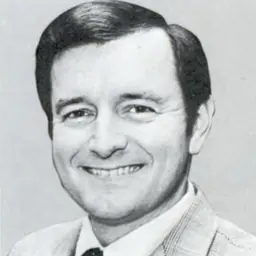
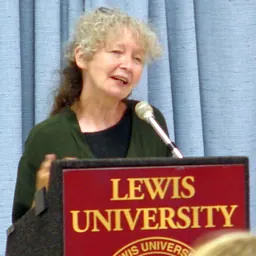
People in Gil Dozier's life
Named in this biography and alive at the same time




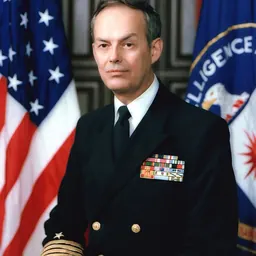
Related people
Same field, nearest in time


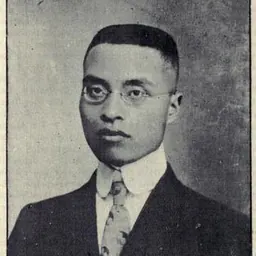
Contemporaries
People whose lives overlapped Gil Dozier's




Frequently asked questions
Who was Gil Dozier?
Louisiana politician and lawyer (1934-2013)
When was Gil Dozier born?
Gil Dozier was born on 19 March 1934 in Fields.
When did Gil Dozier die?
Gil Dozier died on 23 September 2013 in Baton Rouge.
What was Gil Dozier's occupation?
Gil Dozier was a military officer, lawyer, rancher, farmer, businessperson and politician.
What nationality was Gil Dozier?
Gil Dozier was American.
Sources & further reading
Cite this page
APA: Biography.guide. (2026). Gil Dozier. https://biography.guide/gil-dozier/
MLA: "Gil Dozier." Biography.guide, https://biography.guide/gil-dozier/.
Chicago: "Gil Dozier." Biography.guide. https://biography.guide/gil-dozier/.
Data last updated: 2026-09-20 · Spot an error? Report a correction.
Page generated 2026-09-27 05:04 UTC