
About Gideon Johnson Pillow
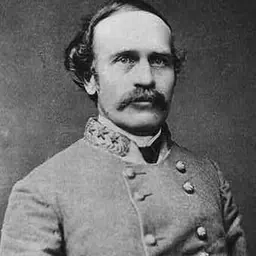
Lived 1806 – 1878 (aged 72). Gideon Johnson Pillow was an American lawyer.
Gideon Johnson Pillow Jr. (June 8, 1806 – October 8, 1878) was a senior officer of the Confederate States Army in the Western Theater of the American Civil War, having previously served as a general of United States Volunteers during the Mexican–American War. Before his military career, Pillow practiced law and was active in Democratic Party politics. He was a floor leader in support of the nomination of fellow Tennessean James K. Polk at the 1844 Democratic National Convention. In 1847, Pillow was commissioned a brigadier general of volunteers to serve in the Mexican–American War, where he was wounded at Cerro Gordo and Chapultepec and later promoted to major general, even when his superiors were unimpressed with his lack of military knowledge and his tendency to modify battle plans to the detriment of operations. However, controversy arose when, in a series of letters, Pillow tried to take what was perceived by some as undue credit for American victories at the expense of his commander, Major General Winfield Scott. Pillow was court-martialed for insubordination, but with President Polk's assistance, the court-martial was reduced to a court of inquiry, which in 1848 exonerated Pillow.
After the war, Pillow served as a delegate to the Nashville Convention of 1850, where he supported compromise. He remained active in supporting the Democratic Party. At the start of the Civil War in 1861, Pillow supported secession, and was commissioned a brigadier general in the Confederate Army in July. Pillow received the thanks of the Confederate Congress for driving off the Union force at the Battle of Belmont, Missouri.
Pillow controversially failed to exploit a temporary breakthrough of Union lines by his troops which might have allowed the Confederate garrison of Fort Donelson to escape at the Battle of Fort Donelson on February 15, 1862. The next night, before the surrender of the fort, Brigadier General John B. Floyd passed overall command of the fort to Pillow, who in turn passed it to Brigadier General Simon Buckner. Floyd and Pillow managed to personally escape with a few aides before Buckner surrendered the remaining garrison to the Union Army of Brigadier General Ulysses S. Grant. These actions sent his military career and reputation into decline.
Pillow commanded a brigade at the Battle of Stones River in 1863, where he performed poorly, and was among the few generals in the army to praise the leadership of commanding General Braxton Bragg. Removed from combat duty, he worked mainly in recruiting assignments through the remainder of the war. Bankrupt after the war, Pillow recovered financially and resumed a successful legal career. He died near Helena, Arkansas, in 1878; initially buried in Helena, Pillow was later reinterred at Elmwood Cemetery in Memphis.
Early life and education Pillow was born on June 8, 1806, in Williamson County, Tennessee, to Gideon Pillow and Ann Payne Pillow.
He came from a well connected, property owning family with a reputation for Indian fighting and loyalty to Andrew Jackson. He graduated from the University of Nashville in 1827 and practiced law in Columbia, Tennessee, where he became friends with future President James K. Polk. Pillow married Mary Elizabeth Martin, March 24, 1831. Pillow served as a brigadier general in the Tennessee Militia from 1833 to 1836. Pillow played "an important role" in the 1844 Democratic Party convention which nominated Polk for president, although Pillow exaggerated his contribution to the exclusion of other prominent Polk supporters. Pillow refused Scott's request that Pillow revise his exaggerated battle reports in which he took credit for the American victories at Contreras and Churubusco. Then, a letter written by Pillow under the pseudonym "Leonidas", published in the New Orleans Delta in September 1847, wrongfully credited Pillow with the victories at Contreras, including the plan of battle and command of all the forces engaged, and Churubusco. When Pillow's intrigue was exposed, he was arrested by Scott and held for court-martial for insubordination and violating regulations, along with Colonel James Duncan and Brigadier General William J. Worth.
Pillow wrote to President Polk about Scott's involvement in a bribery scheme proposed by Mexican leader Santa Anna for his help in ending the war without further bloodshed. Polk relieved Scott of command by a letter of February 18, 1848. Polk reduced the proceedings against Pillow, Duncan and Worth from a court martial to a court of inquiry which had no criminal implications and added that Pillow could question Scott about the bribery scheme. Polk and Secretary of War William L. Marcy chose the three members of the court for their hostility to Scott.
Proceedings began in March 1848 in Mexico City. Major Archibald W. Burns, a paymaster and Pillow protege, claimed authorship of the "Leonidas" letter, at Pillow's behest. When the court of inquiry took as much testimony as they could in Mexico City it reconvened in Frederick, Maryland. Scott left Mexico City the next day. Scott dropped the charges against Worth and Duncan and Pillow was exonerated when the court announced their findings on July 1, 1848. Scott resumed his duties as general-in-chief of the army early that month. While the affair had cost Pillow politically, it benefited Polk by ending Scott's presidential aspirations.
Pillow was discharged from the United States Volunteers in July. Pillow assisted Roswell S. Ripley in writing The war with Mexico.
On the other hand, Pillow's friend and patron, President Polk, stated after the court of inquiry was closed: "General Pillow is a gallant and highly meritorious officer, and has been greatly persecuted by General Scott, for no other reason than that he is a Democrat in his politics and was supposed to be my personal and political friend." Pillow attempted to win the vice presidential nomination, but was not taken seriously, and it went to William R. King. In July 1861, he was appointed brigadier general in the Confederate States Army
Belmont
Pillow's first combat of the war was against Union Army Brigadier General Ulysses S. Grant, also in his first battle, at Belmont, Missouri, in November. Grant decided to attack the small Confederate Camp Johnston at Belmont, Missouri across the river from the Confederate fort at Columbus, Kentucky.
Failing to take full advantage of a superior position, Pillow ordered an assault on the Union force through the woods, giving the Union troops cover from which to push back the Confederates. Pillow, assisted by Brigadier General Benjamin F. Cheatham, reorganized the Confederates and counterattacked. Nevertheless, Pillow and his command were voted the Thanks of the Confederate Congress on December 6, 1861:... for the desperate courage they exhibited in sustaining for several hours, and under most disadvantageous circumstances, an attack by a force of the enemy greatly superior to their own, both in numbers and appointments; and for the skill and gallantry by which they converted what at first threatened so much disaster, into a triumphant victory. Without permission, Pillow began to forward men and supplies to Fort Donelson, a crucial installation protecting the Cumberland River. Three additional brigadier generals were assigned to the fort soon thereafter. One, John B. Floyd, former governor of Virginia and Secretary of War under James Buchanan, outranked Pillow, who found himself displaced as commander and put in the unofficial position of second-in-command. On the night of February 14, Floyd and his subordinate commanders decided to try to break out of the fort and escape a likely Union siege before the full Union force could arrive. Pillow set forth a plan to surprise the Union force which was accepted. Floyd gave no orders concerning the details of the operations, including the evacuation and order of march, in order to exploit any breakthrough.
As the Battle of Fort Donelson continued into February 15, 1862, under Floyd's order, Pillow took control from the general who was in formal command of the left wing of the army, Brigadier General Bushrod Johnson, who continued to ably assist Pillow. Floyd then panicked and ordered all troops back to their trenches. Floyd, who feared prosecution for treason if he should be captured, turned command of the army over to Pillow, who had similar concerns and immediately passed command to Simon Bolivar Buckner, who had argued that the Confederate position was untenable. He finally agreed with the other generals to surrender the fort and garrison, but not himself personally. Pillow escaped in the night in a small boat across the Cumberland River; Floyd likewise escaped, taking two regiments of his Virginia command with him before Buckner could surrender to Grant.
Some historians have judged Ulysses S. Grant as being too rash in his haste to assault Fort Donelson without possessing overwhelming superiority. However, his acquaintance with Gideon Pillow played a key factor in his confidence. As he wrote in his memoirs,
Grant also recalled that, following the surrender of Fort Donelson, he met with his old friend Buckner, who told him of Pillow's escape. At the Confederate council of war the night before, the vain Pillow had expressed concern that his capture would be a disaster for the Southern cause.
"He thought you'd rather get hold of him than any other man in the Southern Confederacy," Buckner told Grant.
"Oh," replied Grant, "if I had got him, I'd let him go again. He will do us more good commanding you fellows."
Reassignment Pillow assumed command of the 3rd Division of the Army of Central Kentucky, but was suspended from command by order of Jefferson Davis on April 16 for "grave errors in judgement in the military operations which resulted in the surrender of the army" (at Fort Donelson). After the battle, Pillow was one of the few Confederate officers to speak in favor of General Bragg's battlefield decisions, denigrating Breckinridge's execution of the ill-fated assault.
Pillow commanded the Volunteer and Conscription Bureau of the Army of Tennessee and related recruiting assignments starting January 16, 1863. he resumed recruiting assignments, where he served out the remainder of the war.
Don’t just read it —
keep it.
Full-length biographies made to live with: read them, listen on the way to work, watch them tonight.
- E-book
- Audio
- Video
Instant download · yours to keep · every purchase keeps this site free
Important facts
People in Gideon Johnson Pillow's life
Named in this biography and alive at the same time
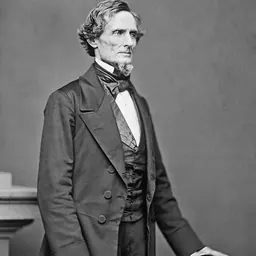

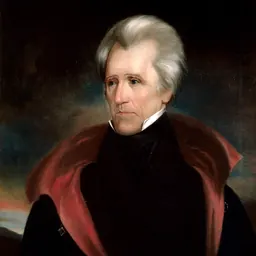
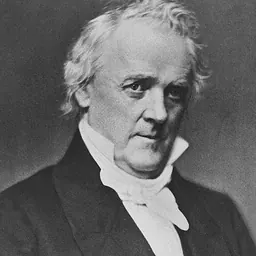

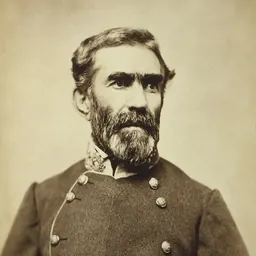

Related people
Same field, nearest in time




Contemporaries
People whose lives overlapped Gideon Johnson Pillow's





Frequently asked questions
Who was Gideon Johnson Pillow?
Confederate States Army general (1806–1878)
When was Gideon Johnson Pillow born?
Gideon Johnson Pillow was born on 8 June 1806 in Williamson County.
When did Gideon Johnson Pillow die?
Gideon Johnson Pillow died on 8 October 1878 in Helena.
What was Gideon Johnson Pillow's occupation?
Gideon Johnson Pillow was a lawyer.
What nationality was Gideon Johnson Pillow?
Gideon Johnson Pillow was American.
Sources & further reading
· Wikipedia: Gideon Johnson Pillow
· DBpedia: Gideon Johnson Pillow
Cite this page
APA: Biography.guide. (2026). Gideon Johnson Pillow. https://biography.guide/gideon-johnson-pillow/
MLA: "Gideon Johnson Pillow." Biography.guide, https://biography.guide/gideon-johnson-pillow/.
Chicago: "Gideon Johnson Pillow." Biography.guide. https://biography.guide/gideon-johnson-pillow/.
Data last updated: 2026-09-20 · Spot an error? Report a correction.
Page generated 2026-09-27 05:34 UTC