
About Gian Luca Pallavicini
Lived 1697 – 1773 (aged 76). Gian Luca Pallavicini was a diplomat.
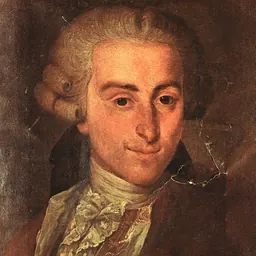
Gian Luca Pallavicini (or Pallavicino) (Genoa, 23 September 1697 – Bologna, 27 September 1773) was a Genoese nobleman, field marshal and diplomat in the service of the Habsburgs as Governor of Milan.
Biography Gian Luca Pallavicini was a member of the noble Genoese Pallavicini family that had held high positions in the Republic of Genoa since the 12th century and had risen to the position of Doge three times.
Having undertaken a military and diplomatic career, between 1731 and 1733 he was ambassador of the Republic of Genoa in Vienna. In 1733, he entered in the service of the Emperor and in the summer of 1733 he managed to obtain the sending of a small fleet to Trieste, to support the Imperial army, which was then engaged in combat against France, Sardinia and Spain in the War of the Polish Succession. He also assumed command and became the first commander in chief of the Imperial fleet on 7 August 1733.
In 1734 he led the viceroyal fleet of the Kingdom of Naples against the Spanish. In late spring 1735, he led an Austrian river flotilla on the Po, near Revere, not far from Mantua. Under his auspices a naval construction plan was prepared, but only partially realized. In 1735 he received the title of General of the galleys and the rest of the Navy.
Later, he was appointed commander of the Danube river flotilla, with which he fought against the Ottomans. In 1741 he was promoted to Lieutenant Field Marshal. During the War of the Austrian Succession he directed the siege of Mirandola in 1742 and the following year he fought in the Battle of Campo Santo. Having entered the Austrian diplomatic circles, on 22 December 1744 he was appointed Minister Delegate for Lombardy under the government of Maria Theresa of Austria, and from 9 March 1745 he was appointed Governor of the Duchy of Milan and General Commander of the Austrian troops in Milan, taking possession of his Milanese headquarters from 16 June of that year.
This appointment was necessary, because on 16 December of that same 1745, Philip of Bourbon and his Spanish army had entered Milan, proclaiming himself King of Lombardy. Governor Pallavicini was forced to take refuge in the fortress of Mantua, from where Maria Theresa gave him instructions for the creation of a new emergency government until order was restored in the Lombard capital. Pallavicini was able to return to Milan only on 25 August 1746 after victory in the Battle of Rottofreddo.
Already in 1749, in an attempt to gain popularity with the Milanese population, he organized several public activities, including open-air concerts in the area of the Castello Sforzesco, availing himself of the collaboration of the Milanese musician and composer Giovanni Battista Sammartini. With this renewed confidence, Giovanni Luca Pallavicini was re-appointed Governor of Milan on 26 September 1750. He continued to amaze the Milanese with other spectacular ideas, such as the one on 6 October 1750 when, on the occasion of the celebrations for his election, he brought a live rhinoceros for the first time to Milan and displayed it for the enjoyment of the population in the Piazza Mercanti.
During his reign of 3 years, he succeeded in reducing the members of the Senate, the Secret Chancellery and the Fiscal College, and also in concentrating in one single magistracy, the competences previously carried out by the two revenue magistrates, accompanied by a consequent reduction in staff. He also obtained the approval of the Sovereign to establish ons single general board for all public contracts, and a council to study how to reduce the debts of the state and of the city of Milan. Pallavicini wrote several letters of recommendation ahead of Mozart's Italian tour. He died in Bologna on 27 September 1773 and was buried in the Certosa of Bologna, where a monument by Giovanni Duprè recalls his presence in the city.
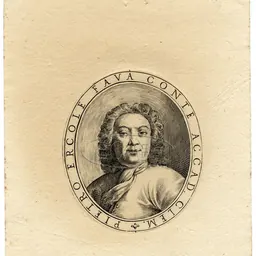
Marriage and children He married twice : In 1720 with Anna Maria Pallavicino (1698–1751), daughter of the Genoese patrician Domenico Pallavicino and Maddalena Spinola, previously divorced from Gian Giacomo Imperiali In 1753 with Maria Caterina Fava Ghislieri (1714–1786) from Bologna, daughter of Count Pietro Ercole Fava Ghislieri and Porzia Sega, widow of the Bolognese senator Count Camillo Boccadiferro. They had one son : Giuseppe Maria Pallavicino (1756–1818), Marquis of the Holy Roman Empire, Order of the Golden Fleece (1792).
Don’t just read it —
keep it.
Full-length biographies made to live with: read them, listen on the way to work, watch them tonight.
- E-book
- Audio
- Video
Instant download · yours to keep · every purchase keeps this site free
Important facts
People in Gian Luca Pallavicini's life
Named in this biography and alive at the same time

Related people
Same field, nearest in time



Contemporaries
People whose lives overlapped Gian Luca Pallavicini's




Frequently asked questions
Who was Gian Luca Pallavicini?
Governor of the Duchy of Milan
When was Gian Luca Pallavicini born?
Gian Luca Pallavicini was born on 23 September 1697 in Genoa.
When did Gian Luca Pallavicini die?
Gian Luca Pallavicini died on 27 September 1773 in Bologna.
What was Gian Luca Pallavicini's occupation?
Gian Luca Pallavicini was a diplomat.
Sources & further reading
· Wikipedia: Gian Luca Pallavicini
· DBpedia: Gian Luca Pallavicini
Cite this page
APA: Biography.guide. (2026). Gian Luca Pallavicini. https://biography.guide/gian-luca-pallavicini/
MLA: "Gian Luca Pallavicini." Biography.guide, https://biography.guide/gian-luca-pallavicini/.
Chicago: "Gian Luca Pallavicini." Biography.guide. https://biography.guide/gian-luca-pallavicini/.
Data last updated: 2026-09-20 · Spot an error? Report a correction.
Page generated 2026-09-27 05:29 UTC