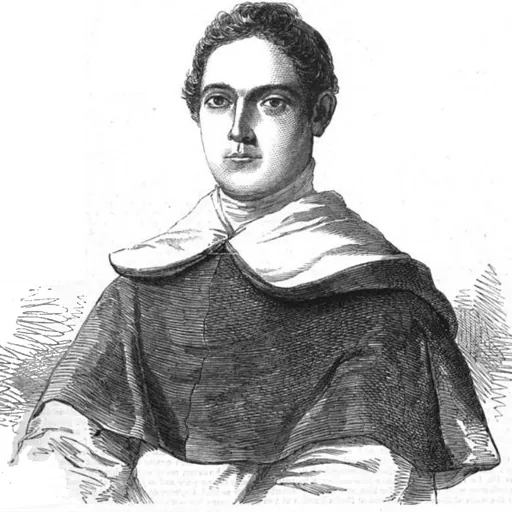
Giacinto Achilli
Italian Roman Catholic priest who became a Protestant evangelical
About Giacinto Achilli
Lived 1802 – 1860 (aged 57–58). Giacinto Achilli was a presbyter and dominican friar.
Giovanni Giacinto Achilli (; c. 1803 – c. 1860) was an Italian Roman Catholic Dominican friar and anti-Jesuit who was discharged from priesthood and imprisoned by the Roman Inquisition after being accused of child sexual abuse or for doctrinal heresy. Achilli escaped and subsequently became an evangelist for the Anglican Communion. He is noted for his activities in England, and victory in a legal case against John Henry Newman, who had made accusations about Achilli's past, for libel.
Early life as a priest Achilli was born in Celleno, a village c. 30 km from Viterbo, then part of the Papal States. He joined the Dominican order in 1819 and was ordained a priest in 1825.
In 1833 Achilli obtained the degree of Master of Sacred Theology at the Roman College of St. Thomas, the future Pontifical University of Saint Thomas Aquinas, The Angelicum.
In 1840, for being against the abuses of the Roman Inquisition, Achilli underwent a sequence of disciplinary actions and sanctions, largely arising from allegations by his pro-Inquisition opponents including the alleged rape of a 15-year-old girl in Naples.
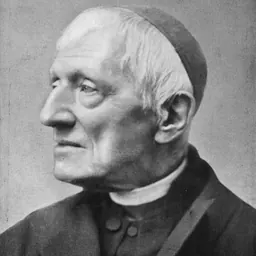
On 16 June 1841, the Roman Inquisition finally lost patience and permanently suspended Achilli from the cure of souls, sentencing him to three years' penance at a remote monastery at San Nazzaro. However, in 1842, Achilli made his way to Corfu, then a British protectorate, and claimed political asylum alleging that he was a cavaliere and that he had escaped from the fortress at Ancona. The local authorities were minded to grant the papal consul's request for extradition until they discovered that Achilli was claiming to have converted to Protestantism and was engaged in fervent anti-Catholic propaganda, largely under the influence of Isaac Lowndes, the Scottish Presbyterian secretary of the Bible Society. He also made alliances with exiled Italian nationalists. There Augustin Theiner attempted to reconvert him to Catholicism, to no avail. Lewis Tonna and other London evangelicals canvassed the French government in October 1849 and succeeding in effecting Achilli's release. by turns defending and attacking Achilli. In the meantime, Achilli was accused of raping or assaulting four of his domestic servants and a further young woman. In 1850, Pius IX re-established the hierarchy of the Catholic Church in England and Wales and excited popular religious divisions. John Henry Newman was minded to repeat Wiseman's allegations, of sexual immorality and that Achilli had misrepresented his expulsion from the Catholic Church, in a lecture but first took legal advice, on 16 July, from his confidant James Hope-Scott for fear of a libel suit.
Hope-Scott was reassuring, expressing the opinion that an action was possible but not probable and that the risk was worth taking. Newman delivered his lecture on 28 July 1850.
In November 1851, Achilli swore an affidavit denying the allegations made against him. This enabled him to bring criminal proceedings for the common law offence of defamatory libel against Newman, rather than a simple civil action for damages.
The trial began on 21 June and lasted five days. The Attorney-General Sir Frederic Thesiger led for the prosecution, assisted by Solicitor-General Sir Fitzroy Kelly. Newman was supported by a formidable team of lawyers led by Sir Alexander Cockburn and including sympathetic Anglo-Catholic Edward Lowth Badeley. Henry Matthews had advised Newman to plead justification, that the allegations were true, and the English libel law put the burden of proof on Newman.
After the trial A leading article in The Times summarised liberal opinion when it described the proceedings as:
The outcome of the trial was a Pyrrhic victory for Achilli whose reputation was ruined by his accusers. He travelled to the US in 1853 with the Swedenborgians and worked for the American Bible Union on translating the New Testament into Italian. He sent his wife to Italy and, in 1859 found himself in court accused of adultery with a Miss Bogue. In 1860, he disappeared, leaving his eldest son, aged eight, to the care of Miss Bogue. A note written in Achilli's name implied that he intended suicide. Nothing more is known of him.
Don’t just read it —
keep it.
Full-length biographies made to live with: read them, listen on the way to work, watch them tonight.
- E-book
- Audio
- Video
Instant download · yours to keep · every purchase keeps this site free
Important facts
People in Giacinto Achilli's life
Named in this biography and alive at the same time




Related people
Same field, nearest in time

Contemporaries
People whose lives overlapped Giacinto Achilli's





Frequently asked questions
Who was Giacinto Achilli?
Italian Roman Catholic priest who became a Protestant evangelical
When was Giacinto Achilli born?
Giacinto Achilli was born in 1802 in Celleno.
When did Giacinto Achilli die?
Giacinto Achilli died in 1860.
What was Giacinto Achilli's occupation?
Giacinto Achilli was a presbyter and dominican friar.
Sources & further reading
Cite this page
APA: Biography.guide. (2026). Giacinto Achilli. https://biography.guide/giacinto-achilli/
MLA: "Giacinto Achilli." Biography.guide, https://biography.guide/giacinto-achilli/.
Chicago: "Giacinto Achilli." Biography.guide. https://biography.guide/giacinto-achilli/.
Data last updated: 2026-09-22 · Spot an error? Report a correction.
Portrait: Wikimedia Commons · author & licence
Page generated 2026-09-27 05:03 UTC