
Geza von Hoffmann
Austrian-Hungarian eugenicist
About Geza von Hoffmann
Lived 1885 – 1921 (aged 35–36). Geza von Hoffmann was a eugenicist and consul.
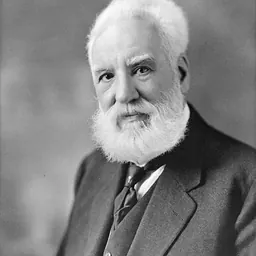
Geza von Hoffmann (1885 – 1921) was a prominent Austrian-Hungarian eugenicist and writer. He lived for a time in California as the Austrian Vice-Consulate where he observed and wrote on eugenics practices in the United States.
His best known book, Die Rassenhygiene in den Vereinigten Staaten von Nordamerika (Racial Hygiene in the United States of America) described his observations in America. He was predominantly concerned with improving the biological quality of the population.
Published in 1913, Racial Hygiene in the United States in America discussed the similarities of eugenics theories such as negative and positive eugenics and so-called practical social policies like sterilization and immigration. He endorsed “negative” eugenic policies on the practical level, while simultaneously emphasizing their theoretical value. Negative eugenics programs included any activities that discourage or stop the reproduction or continuation of certain peoples deemed inferior. It could also include programs that simply limit certain people to the state. These programs would include sterilization, immigration bans, separate institutions for different groups, marriage restrictions and more. The people typically picked for negative eugenics were placed in racialized groups or somehow physically or mentally deemed "unfit". Positive eugenics entailed any programs that encourage reproduction, success or admittance into the state of certain groups considered superior. These programs could include restricting abortions, providing financial aid for additional children and more. According to his book, he viewed marriage limits, immigration laws, and forced sterilization as the best ways to practice eugenics as he observed it in the United States. They were all negative, which was the main criticism about both his work and United States' practice of eugenics. According to Hoffman, the best young men, representing the strength of the European nations at war, either died or were injured in other lands which hurt the genetic strength of the population. This observation came after the outbreak of World War I, which resulted in catastrophic loss of life.
Austro-Hungarian influence Geza von Hoffmann dominated the external group of eugenics in Eastern Europe. He and other members of the external group looked outside of Eastern Europe for influence on eugenics instead of relying on their own nations. His work, along with the work of other notable eugenicists in the Eugenic Society in Hungary, made that country between 1910 and 1918 the “vanguard of eugenic thinking in Europe." He compared and combined eugenics ideas in both Germany and United States and theorized about applying the combined concepts to Hungary society.
In his article titled "Eugenics in the Central Empires since 1914", he compared various eugenics societies and their different activities. He compared the German Society for Racial Hygiene, the German Society for Racial Hygiene in Munich, the International Society for Racial Hygiene, the Austrian Society for the Study of the Science of Population, the Czech Society for Eugenics, the Hungarian Society for Racial Hygiene and Population Policy.
Hoffmann further developed the concept of eugenics in Austria-Hungary and later internationally. He believed other eugenicists like István Apáthy and Madzsar were too focused on the "social and political" aspects of eugenics.
German connections Hoffman was among a group of Central and Southeast European eugenicists educated in Germany and Austria. Despite being an Austro-Hungarian diplomat he "had strong connections with German racial hygiene." However, despite the loss in contact, he continued to influence German eugenic practices significantly with his observations on American eugenic practices.
American observations Hoffmann was a rare European observer of eugenics in the early 1900s, and he offered a comprehensive research of eugenic legislation in United States.
In 1913, his book Die Rassenhygiene in den Vereinigten Staaten von Nordamerika (Racial Hygiene in the United States of America) was used as a standard work of the early American eugenics movement.
In 1910, he reported in the Journal of the International Society for Racial Hygiene, (Archiv für Rassen- und Gesellschaft) on a proposal by the American Genetic Association led by Harry H. Laughlin which stated that the “lowest 10 percent of American population be sterilized”.
In part because of Hoffmann's work, the United States was considered by German eugenicists to be the "first country to enforce comprehensive eugenics legislation." He “contributed to European and American debates on racial hygiene, eugenics and sterilization.”
Works Die Rassenhygiene in den Vereinigten Staaten von Nordamerika (Racial Hygiene in the United States of America) 1913 “Eugenics in the Central Empires since 1914” “Eugenic and Works of a General Character” with other authors “Genealogy” “Immigration and Emigration as Related to Racial Changes” Krieg und Rassenhygiene (War and Racial Hygiene) 1916 “Negative Eugenics, Sterilization, Segregation, etc.”
Don’t just read it —
keep it.
Full-length biographies made to live with: read them, listen on the way to work, watch them tonight.
- E-book
- Audio
- Video
Instant download · yours to keep · every purchase keeps this site free
Important facts
People in Geza von Hoffmann's life
Named in this biography and alive at the same time
Related people
Same field, nearest in time



Contemporaries
People whose lives overlapped Geza von Hoffmann's


Frequently asked questions
Who was Geza von Hoffmann?
Austrian-Hungarian eugenicist
When was Geza von Hoffmann born?
Geza von Hoffmann was born in 1885.
When did Geza von Hoffmann die?
Geza von Hoffmann died in 1921.
What was Geza von Hoffmann's occupation?
Geza von Hoffmann was a eugenicist and consul.
Sources & further reading
· Wikipedia: Geza von Hoffmann
Cite this page
APA: Biography.guide. (2026). Geza von Hoffmann. https://biography.guide/geza-von-hoffmann/
MLA: "Geza von Hoffmann." Biography.guide, https://biography.guide/geza-von-hoffmann/.
Chicago: "Geza von Hoffmann." Biography.guide. https://biography.guide/geza-von-hoffmann/.
Data last updated: 2026-09-20 · Spot an error? Report a correction.
Page generated 2026-09-27 05:09 UTC