
About Géza Gyóni
Lived 1884 – 1917 (aged 33). Géza Gyóni was a Hungarian poet, journalist, theologian and writer.
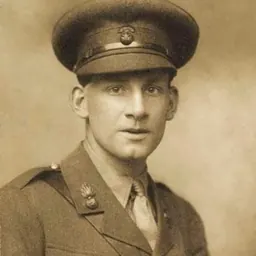
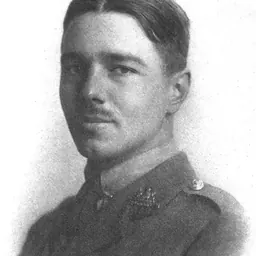
Géza Gyóni (25 June 1884 – 25 June 1917) was a Hungarian war poet. He died in a Russian prisoner of war camp during the First World War. His many verse contributions to Hungarian literature are considered to be both immortal and the Hungarian language's equivalent to the poetry of Wilfred Owen, Siegfried Sassoon, and Isaac Rosenberg.
Early life Born Géza Áchim to a "crusading Lutheran family" in the small village of Gyón, near Dabas, in Austria-Hungary, Gyóni was one of the seven children of a pastor of the Evangelical-Lutheran Church in Hungary.
After his younger brother died, Gyóni's mother became mentally ill and the future poet was sent to live with his uncle, who was also a Lutheran minister.
In Szabadka, Gyóni met and fell in love with the woman whose memory and infidelity were to taunt him in the POW camps in Siberia. In response, Gyóni, like many other Austro-Hungarians, accepted the Government's description of, "a plot against us," by a Russo-Serbian military alliance and the need to fight, "a defensive war." Some Hungarian intellectuals, quite ironically, felt that World War I provided an excellent opportunity for revenge against the House of Romanov for Tsar Nicholas I's pivotal role in the defeat of the Hungarian Revolution of 1848.
Unlike his previous term of enlistment, Gyóni seemed to initially enjoy the soldier's life, regularly writing poetry which was sent back home from the front for publication.
According to Peter Sherwood, "Gyóni's first, still elated, poems from the Polish Front recall the 16th-century Hungarian poet Bálint Balassi's soldiers' songs of the marches, written during the campaign against the Turks."
During the Siege of Przemyśl, which has since been dubbed, "The Stalingrad of World War I", Gyóni wrote poems to encourage the city's defenders and these verses were published there, under the title, Lengyel mezőkön, tábortűz melett (By Campfire on the Fields of Poland). A copy reached Budapest by aeroplane, which was an unusual feat in those days.
One of his poems from this period, Csak egy éjszakára (For Just One Night), in which he calls for Hungary's war profiteers, industrialists, and armchair patriots to come and spend just one night in the trenches, became a prominent anti-war poem and its popularity has lasted well beyond the end of the First World War.
Prisoner of war
Beginning of the Russian occupation of Przemysl, March 1915. In March 1915, Gyóni was taken prisoner when the Austro-Hungarian Army surrendered Przemyśl to the Imperial Russian Army, who celebrated by immediately launching a pogrom against the city's Jewish population. Regular outbreaks of anti-semitic violence, as well as the religious persecution of Rusins and Ukrainians who belonged to the Eastern Catholic Churches, were to continue until the Imperial Russian Army was humiliatingly driven out of the region by the Gorlice–Tarnów offensive and into the Great Retreat of 1915.
Meanwhile, Gyóni was permitted to remain with his younger brother, Mihály Áchim, who had also been captured. Together they endured a lengthy nine-month journey between POW camps and receiving areas in Kiev, Moscow, Alatyr, Petropavlovsk, Omsk and finally Krasnoyarsk in Siberia. In the Krasnoyarsk camp, which was located upon a plateau 7 km outside of the city and held more than 13,000 Imperial German and Austro-Hungarian POWs, Gyóni learnt of the full actions of Jenő Rákosi, the politician who had been weaponizing his verse for wartime propaganda. Gyóni had only heard rumours before and was enraged by what he learned.
Austro-Hungarian Army POWs in Russia, 1915; early colour photo taken by Prokudin-Gorskii. Central Powers POWs who spoke Slavic languages were generally treated favorably by their Tsarist captors, due to both extreme Slavophilism and also in the hopes of recruiting them to switch sides and fight for the Allies. German- and Hungarian-speaking prisoners, on the other hand, were treated so inhumanely and with such unnecessary brutality that, according to historian Alfred Maurice de Zayas, the post-Armistice government of the Weimar Republic spent many years investigating and ultimately ruled that the treatment of POWs in Russian Imperial custody was a war crime according to the Hague Conventions of 1899 and 1907.
Even so, Gyóni went on to write perhaps his finest poetry as a POW in Krasnoyarsk and produced the collection Levelek a kálváriáról és más költemények (Letters from Golgotha and Other Poems) which was published in 1916, based on manuscripts sent through the lines.
According to Erika Papp Faber, "The framework of this volume is provided by his unfaithful sweetheart and is filled with homesickness and visions of reconciliation with her."
Text_and_translation| Nekem magyar bárd sorsát mérték: Úgy hordom végig a világon Véres keresztes magyarságom, Mint zarándok a Krisztus képét.
Géza Gyóni's last collection, Rabságban (In Captivity), consists of poems that were brought back to the truncated post-Treaty of Trianon Kingdom of Hungary by a fellow POW. It was posthumously published in 1919.
According to Erika Papp Faber, "Loránt Czigány, the literary historian, called Gyóni 'a war poet of considerable talent,' while others, among them László Cs. Szabó, observe that Gyóni was not as outstanding a 'singer of the trenches' as were some French and English poets of World War I. Be that as it may, Géza Gyóni is a writer whose entire life and writings reflect the events of his time and help in understanding that period of European history." Erika Papp Faber's version is far more faithful to the original poem in Hungarian.
Collections 1903 – Versek (Poems) 1909 – Szomorú szemmel (With sorrowful eyes) 1914 – Lengyel mezőkön, tábortűz melett (By the campfire on Polish prairies) 1916 – Levelek a kálváriáról és más költemények (Letters from Calvary and Other Poems) 1917 – Élet szeretője (Lover of Life) (posthumous) 1919 – Rabságban (In Prison) (posthumous)
Literature Cross, Tim, The Lost Voices of World War I, Bloomsbury Publishing, Great Britain: 1988.
Don’t just read it —
keep it.
Full-length biographies made to live with: read them, listen on the way to work, watch them tonight.
- E-book
- Audio
- Video
Instant download · yours to keep · every purchase keeps this site free
Important facts
People in Géza Gyóni's life
Named in this biography and alive at the same time

Related people
Same field, nearest in time
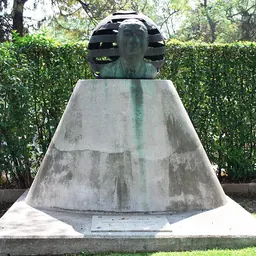

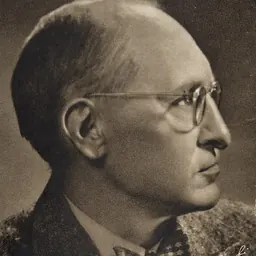
Contemporaries
People whose lives overlapped Géza Gyóni's
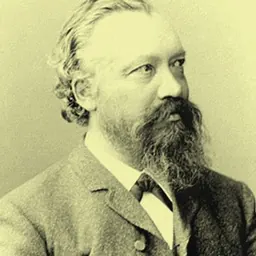
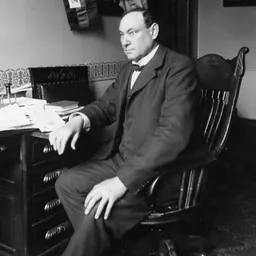

Frequently asked questions
Who was Géza Gyóni?
Hungarian writer (1884-1917)
When was Géza Gyóni born?
Géza Gyóni was born on 25 June 1884 in Gyón.
When did Géza Gyóni die?
Géza Gyóni died on 25 June 1917 in Krasnoyarsk.
What was Géza Gyóni's occupation?
Géza Gyóni was a poet, journalist, theologian and writer.
What nationality was Géza Gyóni?
Géza Gyóni was Hungarian.
Sources & further reading
Cite this page
APA: Biography.guide. (2026). Géza Gyóni. https://biography.guide/geza-gyoni/
MLA: "Géza Gyóni." Biography.guide, https://biography.guide/geza-gyoni/.
Chicago: "Géza Gyóni." Biography.guide. https://biography.guide/geza-gyoni/.
Data last updated: 2026-09-20 · Spot an error? Report a correction.
Page generated 2026-09-27 05:18 UTC