
About Gertrud Isolani
Lived 1899 – 1988 (aged 88). Gertrud Isolani was a German journalist and writer.
Gertrud Isolani (born Gertrud Isaacsohn: 7 February 1899 – 19 January 1988) was a widely read journalist-commentator in Germany during the years of the so-called "Weimar" Republic. In 1933 her writing was banned. Her father having died in 1932, and already conscious of the rising tide of Antisemitism which had helped the populists to power, she left Germany, and settled in Paris. From here she continued to write for German-language exile newspaper, Pariser Tageblatt and for the French and Swiss press. In connection with her race and her record as a liberal-leaning journalist during the 1920s, she lived under conditions of intensifying difficulty in France after 1940, but survived. At the end of 1942, after several failed attempts, she succeeded in transferring to Switzerland. She lived out her final 45 years near Basel. After 1945 she resumed her work as a journalist and author, but never again achieved the level of success she had enjoyed in Germany before 1933.
Life and works Provenance and early years Gertrud Ida Caecilie Regina Isaacsohn was born in Dresden. The family relocated in 1900, and she grew up in Berlin where Eugen Isaacsohn (1860–1932) her father, who had come originally from Marienburg in East Prussia, worked as a journalist and theater critic. One source describes the home in which she grew up as "intellectually stimulating", Her initial contributions appeared under the pseudonym "Ger Trud". She would remain a regular contributor to the Berliner Tageblatt till 1933. Initially she contributed short stories and articles on a range of general topics to the "Feuilleton" (arts and culture) sections: over time she became known, in particular, for theatre criticism and book reviews. The name change was later explained as a response to rising antisemitism. In 1918 she completed her first book, a biographical study of the poet-author, Christian Morgenstern (1871–1914) which was published in 1919. In addition to her writing career, several sources mention her work as a radio presenter during the early years of public broadcasting in the 1920s.
Marriage and career Gertrud Isolani married Berthold Sternberg at Berlin in 1921. Sternberg and his brother were co-owners of "Aerozon-Fabrik", a Berlin-based business which manufactured porcelain products such as air purifiers, vaporizers, perfume burners, night-lights and light fittings. The Hitler government took power in January 1933 and lost no time in transforming Germany into a one-party dictatorship. Antisemitism was quickly transformed from a mere toxic manifestation of populist street politics into a core pillar of government philosophy and strategy. Apart from those who were not engaged in direct political activism, many were slow to believe the evidence of their own eyes. In May 1933 the BdÜ was one of a number of writers' organisations forcibly "integrated" into the new National Chamber of Writers, newly created by Propaganda Minister Goebbels. Membership of the government backed National Chamber of Writers was essential for anyone wishing to pursue a career as a writer, but Isolani was excluded from it on account of her race-religion. No longer able to pursue her profession in Germany, and possibly also on account of her experiences as a target of the populist newspapers, Gertrud Isolani understood what was happening relatively quickly. With her daughter and husband (who had been forced to dispose of his manufacturing business at around the same time) Isolani was among an estimated 26,000 Germans relocating to Paris during the months immediately after Hitler took power in 1933. The refugees internees were almost all Jews or Communists (or both). During the early part of June 1940 they were transported by train to various internment camps in Vichy France, far to the south. Isolani and her daughter were taken to the Camp at Gurs which had been hastily established a few years earlier to accommodate defeated anti-Franco "Brigadists" returning north after the Spanish Civil War. Now it was re-deployed as an internment camp for German women refugees from Hitler. In 1940 it had still not been provided with the level of security commonly associated with wartime internment camps, but its extremely remote location surrounded by high mountains still rendered escape beyond the very small village of Gurs something of a challenge. Nevertheless, conditions in the camp were dire in terms of sanitation and accommodation. During that first summer plenty of the women interned in the camp escaped simply by walking out of the camp and continuing down the mountains past the village.
In June or July 1940 Gertrud Isolani and her daughter were among those whose escaped from Camp Gurs. They managed to link up with her husband and it seems to have been as a threesome that they lived "underground" in Vichy France. Clearly the Swiss were not in the business of running death camps, and the physical conditions were evidently less dire than those they had encountered at Gurs. In addition, in at least one of the camps and possibly all three of them, Gertrud and Ursula were reunited with their husband/father.
In 1944, as the end of the European war appeared more firmly on the horizon, the family were finally able to set up home together away from the refugee camps. They settled at Binningen, then as now a resolutely separate municipality that adjoins, on its south side, the city of Basel.
Recognition
Output (selection) Briefe, Gespräche, Begegnungen – Part I of a memoire: Berlin, Frankreich, Schweiz. Leinenausgabe, Böhlau, Köln 1985. – if two planned volumes, only this one volume appeared. This volume was published as Kein Blatt vor den Mund: Briefe, Gespräche, Begegnungen – Teil 1 der Memoiren: Berlin, Frankreich, Schweiz. Wieder: Basileia-Verlag, Basel 1985 Der Donor. Roman; das Problem der künstlichen Befruchtung. J. G. Bläschke, Darmstadt 1969 (originally published in Biel in 1949). Golda Meir. Israels Mutter Courage. 2nd edition. Verlag Peter, Rothenburg ob der Tauber 1970. Der Jünger des Rabbi Jochanan. Erzählungen. Vorwort Max Brod. Starczewski, München 1967. Die letzte Havanna. Kriminalroman (= Die grünen Kriminal. 11) Fraumünster, Zürich 1944. Maîtressen. Erzählung. Hegereiter, Rothenburg ob der Tauber 1962. Malererbe. Studie zum Lebenswerk Christian Morgensterns. Pfeil Verlag, Berlin 1919. Nacht aller Nächte. Roman des Erzvaters Abraham. Herbert Reich Verlag, Hamburg 1957. Schwiegermütter, Schwiegermütter. Eine psychologische, kulturhistorische, soziologische und humoristische Studie. Gissler, Basel 1975. Stadt ohne Männer. Roman. Falken Verlag, Zürich 1945. Mehrfache Neuaufl., zuletzt Basler Zeitung, Basel 1979 . Translated into 7 languages. It describes the author's experiences of Frauencamp Gurs (Gurs women's camp) in southern France.
Don’t just read it —
keep it.
Full-length biographies made to live with: read them, listen on the way to work, watch them tonight.
- E-book
- Audio
- Video
Instant download · yours to keep · every purchase keeps this site free
Important facts
People in Gertrud Isolani's life
Named in this biography and alive at the same time


Related people
Same field, nearest in time
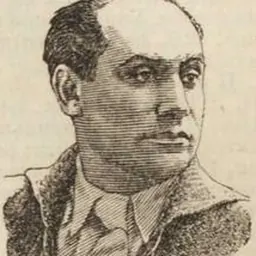



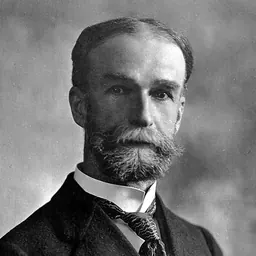
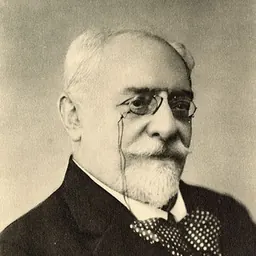
Contemporaries
People whose lives overlapped Gertrud Isolani's



Frequently asked questions
Who was Gertrud Isolani?
German journalist (1899-1988)
When was Gertrud Isolani born?
Gertrud Isolani was born on 7 February 1899 in Dresden.
When did Gertrud Isolani die?
Gertrud Isolani died on 19 January 1988 in Riehen.
What was Gertrud Isolani's occupation?
Gertrud Isolani was a journalist and writer.
What nationality was Gertrud Isolani?
Gertrud Isolani was German.
Sources & further reading
Cite this page
APA: Biography.guide. (2026). Gertrud Isolani. https://biography.guide/gertrud-isolani/
MLA: "Gertrud Isolani." Biography.guide, https://biography.guide/gertrud-isolani/.
Chicago: "Gertrud Isolani." Biography.guide. https://biography.guide/gertrud-isolani/.
Data last updated: 2026-09-20 · Spot an error? Report a correction.
Page generated 2026-09-27 05:17 UTC