
About Gertie de S. Wentworth-James
Lived 1874 – 1933 (aged 58–59). Gertie de S. Wentworth-James was a British writer.
Gertrude Soilleux Wentworth-James (29 March 1874 – 22 April 1933), better known by variations of her pen name Gertie de S. Wentworth-James, was a British columnist and novelist. She primarily authored romance novels, though her writing extended into science fiction and fantasy. In her lifetime, she produced over 50 books, several of which were adapted as films or plays.
Early life Wentworth-James was born Gertrude Soilleux Webster in Kensington, Middlesex (now a borough of London).
Gertrude began training as a pianist at a young age and was considered a child prodigy by her teachers. At 11 years old, she performed under August Manns at Crystal Palace. She wrote and performed comedic sketches to entertain the resort's guests. Herbert was described as "devoted" to his wife and "always" carried a photograph of her in his pocket. She also wrote a one-act play, The Cure that Failed, in 1905.
Her debut novel, The Wild Widow, was published in 1908 in the United Kingdom by Thomas Werner Laurie, and in the United States by the Empire Book Company. Laurie would remain her primary publisher throughout her career. Bystander reviewed her debut positively, dubbing Wentworth-James' writing "clever in a new-womanish sort of way" and replete with "witty and suggestive" dialogue. The Bookman was less complimentary, describing the story as one of "exceedingly unpleasant people... narrated in an exceedingly unpleasant style".
In 1909, Wentworth-James published Pink Purity, which would later be described by the Daily Herald and Liverpool Daily Post as among the "best known" of her career. The novel, which featured an early example of a flapper protagonist, involved sexual themes and depicted young women engaging in crime. Owing to its substance, Pink Purity was described as a "most objectionable book" by The Clarion.
Wentworth-James' 1911 work, The Cage Unbarred, was highlighted by the New York Times as one of the earliest novels to feature aviation. She dedicated the book, which featured the relationship between a married woman and a pilot, to pioneering aviator Claude Grahame-White. Wentworth-James' detective novel, Golden Youth, served as the first entry in a line inspired by yellow-back publications. By this time, she had released over 50 novels through publishers including Hurst and Blackett, Charles William Daniel, and Alston Rivers. The Sporting Times ran short stories by Wentworth-James throughout 1925.
Though primarily an author of romances, Wentworth-James also wrote works of science fiction. Her 1925 novel, Mr. Lynke, focused thematically on missing links in human evolution. The Television Girl (1928) featured the use of telephones with screens broadcasting in real time, and followed the romance between an osteopath and a woman whose number he dials by mistake. modern commentators have drawn comparisons between devices envisioned in The Television Girl and videoconferencing software or online dating.
From 1929 onwards, Wentworth-James largely ceased writing. She was associated in popular culture with alliterative titles.
Reception
20th century reception During her lifetime, Wentworth-James' work attracted a mixed reception from critics. In 1911, she was described as both an author of "smart" novels (New York Times) and a merchant of "dreary drivel" (The Smart Set). Wentworth-James attracted a readership for her genre fiction, as the Sunday Dispatch summarised in 1917: " large public... eagerly accepts [her] formulae for the construction of 'passion and tears'."
Kaikhosru Shapurji Sorabji deemed Wentworth-James' books to belong to a "parade of tasteless" alongside the works of Ethel M. Dell and Florence L. Barclay. Allan Turpin, Henry Williamson, and John Moray Stuart-Young compared Wentworth-James to Elinor Glyn, though Turpin deemed Wentworth-James' works to be more risqué. (Wentworth-James was acquainted with Glyn, having attended the British trade show premiere of The Woman Who Did alongside her in 1915. ) A character in Geoffrey Gorer's 1936 novel, Nobody Talks Politics, describes Wentworth-James as writing with "surprising directness and vigour", and groups her works with Ruby M. Ayres.
Her work influenced novelist Ursula Bloom.
Legacy Wentworth-James' works quickly fell out of commercial favour after her death. T. E. B. Clarke, writing for Punch in the latter half of the 20th century, cited her novels as examples of obscure or outdated genre fiction. The story of a mad scientist's experiments formed the basis of a 1915 silent film. The Scarlet Kiss (1909), a sports novel, became a film of the same name in 1920, although libraries in London declined to carry the novel itself due to concerns with its controversial material. Directed by Fred Goodwins, The Scarlet Kiss starred Maud Cressall, Philip Hewland and Marjorie Hume.
A play based on Wentworth-James' 1917 novel, The Piccadilly Puritan, opened in 1923. The production, which starred Dorothy Minto and James Lindsay, received generally poor reviews, with the Sunday Express opining that the "acting all round was superior to the [play's] lines" and story.
Two of Wentworth-James' works were turned into films in 1925. It starred Irene Rich in a storyline influenced by the 1922 trial of Herbert Rowse Armstrong. As of 2016, The Wife Who Wasn't Wanted is considered lost by the National Film Preservation Board.
In 1933, Equitable Pictures adapted Wentworth-James' 1913 crime novel, House of Chance. The film, starring Thelma Todd, was initially released in the United States as Cheating Blondes, and re-released in 1952 under the name Girls in Trouble. The movie is extant as of the early 21st century.
Personal life and death Personal life and interests Wentworth-James spent most of her life in London. She remained in the city during the German air campaign on London during the First World War. She owned two black cats in the early 20th century, which she named Weenie and Claude, Among her hobbies were billiards and waltzing.
Social and political views
To-day woman has fearlessly laid aside so many of the frills and furbelows which used to deck her person that there can be no doubt about her being equally ready to lay aside the frills and furbelows which used to deck her mind. — Wentworth-James — The Gentlewoman, 29 September 1917 she nonetheless considered marriage itself to be "the best career for every woman", provided the union was "tolerably happy". In 1917, Wentworth-James entered the public debate surrounding the high-profile prosecution of Douglas Malcolm, a British Army officer who killed his wife's affair partner and claimed he had done so to protect her "honour". Wentworth-James' views mirrored those of suffragettes Nina Boyle and Sylvia Pankhurst: Her 1918 novel, The Child Market, was described as "ropaganda" to that end "masked as romance" in a review by The Evening News. She promoted the pseudoscientific field of osteopathy Some of her views were reminiscent of prosperity theology: she believed that deserving persons attracted wealth and that "reckless, self-indulgent, or dishonest" people were incapable of remaining affluent. In a 1904 column on Nigeria for The English Illustrated Magazine, she described local customs as "barbaric". The doctor advised that she only needed bed rest, and her husband, Herbert, left for the day on business. and left an estate valued at £151 and sixpence .
Herbert subsequently experienced ailing health and depression. An inquest led by Samuel Ingleby Oddie concluded that Herbert had died by suicide due to grief following Wentworth-James' passing the previous year. Pink Purity (1909) — published by John Laurie and described by media outlets as one of the "best known" of her career — adapted into a silent film House of Chance (1911) — published by Everett and Co; adapted for screen as Cheating Blondes and reissued as A Primrose Prude in 1919 The Soul that Came Back (1912) — a novel centring around reincarnation A Very Bad Woman (1919) — published through Laurie The Wife Who Wasn't Wanted'' (1923) — adapted into a silent film
Don’t just read it —
keep it.
Full-length biographies made to live with: read them, listen on the way to work, watch them tonight.
- E-book
- Audio
- Video
Instant download · yours to keep · every purchase keeps this site free
Important facts
People in Gertie de S. Wentworth-James's life
Named in this biography and alive at the same time

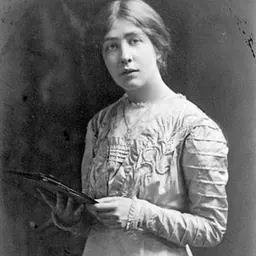
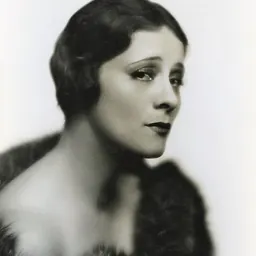
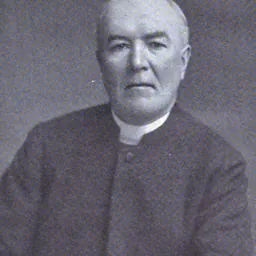
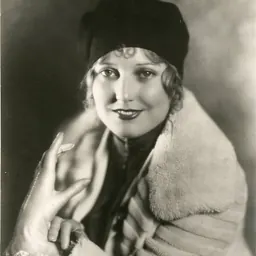


Related people
Same field, nearest in time

Contemporaries
People whose lives overlapped Gertie de S. Wentworth-James's


Frequently asked questions
Who was Gertie de S. Wentworth-James?
UK author (1874-1933)
When was Gertie de S. Wentworth-James born?
Gertie de S. Wentworth-James was born in 1874.
When did Gertie de S. Wentworth-James die?
Gertie de S. Wentworth-James died in 1933.
What was Gertie de S. Wentworth-James's occupation?
Gertie de S. Wentworth-James was a writer.
What nationality was Gertie de S. Wentworth-James?
Gertie de S. Wentworth-James was British.
Sources & further reading
· Wikipedia: Gertie de S. Wentworth-James
· DBpedia: Gertie de S. Wentworth-James
Cite this page
APA: Biography.guide. (2026). Gertie de S. Wentworth-James. https://biography.guide/gertie-de-s-wentworth-james/
MLA: "Gertie de S. Wentworth-James." Biography.guide, https://biography.guide/gertie-de-s-wentworth-james/.
Chicago: "Gertie de S. Wentworth-James." Biography.guide. https://biography.guide/gertie-de-s-wentworth-james/.
Data last updated: 2026-09-20 · Spot an error? Report a correction.
Page generated 2026-09-27 05:12 UTC