
About Gert Molière
Lived 1909 – 1964 (aged 54–55). Gert Molière was a German physicist.
Paul Friederich Gaspard Gert Molière (7 April 1909, Butzbach, Hessen – 1964, Tübingen) was a German theoretical physicist, specializing in nuclear physics and particle physics. He is known for the Molière radius, which is useful in studying Bhabha scattering.
Education and career Gert Molière received in 1935 from the Humboldt University of Berlin his doctorate (Promotion) under the supervision of Max von Laue. In the same year Molière became a research assistant (and first theoretical physicist) at the Kaiser Wilhelm Institute (KWI) for physical chemistry and electrochemistry in Berlin-Dahlem (today's Fritz Haber Institute). At the institute he developed a quantum mechanical approach to X-ray scattering in extension of Laue's classical dynamic theory of diffraction. (At KWI, his younger brother Kurt Molière (1912–1994) completed his doctoral dissertation in 1939 on a related subject and after World War II headed a department.
At the KWI for Physics, Molière devoted himself (at the suggestion of Werner Heisenberg) to researching cosmic radiation and the associated high-altitude showers. The concept of the Molière radius, which is a measure of the transverse extent of a particle shower, is based on his results. His best-known publications date from the period immediately after the war and deal with the problem of quantum mechanical individual and multiple scattering. Molière's high-energy approximation for single scattering was interpreted by Roy J. Glauber as semiclassical approximation and is also known under the name eikonal approximation. Hans Bethe confirmed Molière's results on multiple scattering shortly after their publication.
Molière's extensive correspondence with Heisenberg shows that he was dissatisfied with his permanent position in Brazil and therefore decided on a temporary position at CERN. He also mentions his illness from ankylosing spondylitis. Many of his letters describe his financial difficulties: In Europe, Molière was mainly employed only under temporary contracts. In 1950, for example, when he switched from the KWI to the research center for spectroscopy, he was immediately under threat of non-renewal of his contract. From October 1951, at Heisenberg's request, the Max Planck Society financed Molière's research by repeatedly renewing temporary contracts.
One of his doctoral students in Tübingen was Hans Joos.
Don’t just read it —
keep it.
Full-length biographies made to live with: read them, listen on the way to work, watch them tonight.
- E-book
- Audio
- Video
Instant download · yours to keep · every purchase keeps this site free
Important facts
People in Gert Molière's life
Named in this biography and alive at the same time

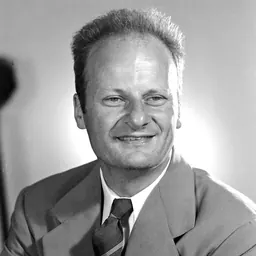

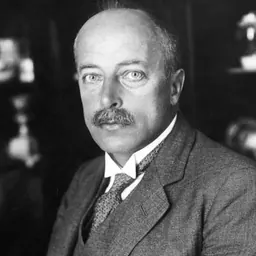
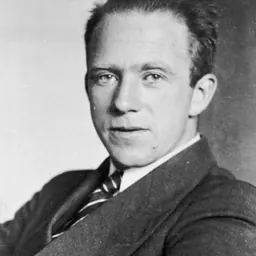


Related people
Same field, nearest in time




Contemporaries
People whose lives overlapped Gert Molière's



Frequently asked questions
Who was Gert Molière?
German theoretical physicist
When was Gert Molière born?
Gert Molière was born on 7 April 1909 in Butzbach.
When did Gert Molière die?
Gert Molière died in 1964 in Tübingen.
What was Gert Molière's occupation?
Gert Molière was a physicist.
What nationality was Gert Molière?
Gert Molière was German.
Sources & further reading
Cite this page
APA: Biography.guide. (2026). Gert Molière. https://biography.guide/gert-moliere/
MLA: "Gert Molière." Biography.guide, https://biography.guide/gert-moliere/.
Chicago: "Gert Molière." Biography.guide. https://biography.guide/gert-moliere/.
Data last updated: 2026-09-20 · Spot an error? Report a correction.
Page generated 2026-09-27 05:22 UTC