
About Gerald Heaney
Lived 1918 – 2010 (aged 92). Gerald Heaney was an American lawyer and judge.
Gerald William Heaney (January 29, 1918 – June 22, 2010) served for nearly forty years as a United States Circuit judge of the United States Court of Appeals for the Eighth Circuit, from his appointment by President Lyndon B. Johnson in November 1966 until his full retirement in August 2006.
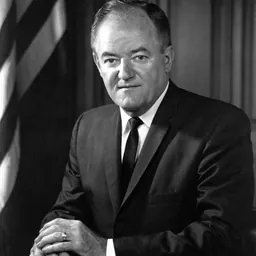
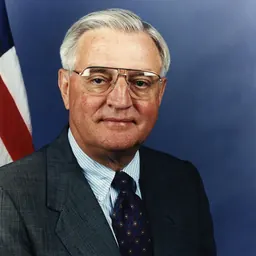
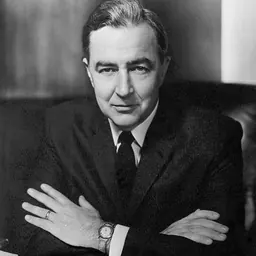
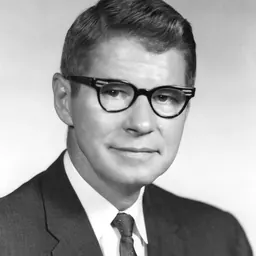
Between the end of World War II and his appointment to the federal bench, he rewrote the Free State of Bavaria's labor laws, and was a valued political advisor and organizer for several liberal Democratic politicians, including Hubert Humphrey, Adlai Stevenson, Orville Freeman, Eugene McCarthy, and Walter Mondale. As an appellate court judge, Heaney typically favored broad interpretations of the Bill of Rights and civil rights, labor and employment rights statutes.
Personal background Heaney was born in the farming community of Goodhue, in southeastern Minnesota, on January 29, 1918. Heaney's involvement in political campaigns began with the 1928 presidential election, when, as a ten-year-old, he assisted in posting campaign signs for New York Governor and Democratic Nominee Al Smith. Upon graduation he enrolled in the University of Minnesota Law School. Unlike Ranger Task Force A (which scaled Pointe du Hoc, as depicted in The Longest Day) and Ranger Task Force C (which landed in Dog Green sector of Omaha Beach as depicted at the outset of Saving Private Ryan), the story of Task Force B on D-Day is lesser-known. In the first minutes of the invasion's amphibious landing, Task Force B disembarked in "Charlie" sector of Omaha Beach. That sector was located at Omaha Beach's far western end, where the beach abruptly terminates in a rocky promontory of 100-foot cliffs called Pointe de la Percee. The Task Force's mission included taking out the four German pillboxes at the top of the cliffs, as part of coordinated actions with Rangers' efforts to take the Vierville draw (to the east) and Pointe du Hoc (to the west). The Task Force's preferred route to the high ground – through the Vierville draw in Dog Green sector – had quickly become a killing zone, forcing Task Force B to find a route directly up the face of the cliff. For his courage in battles after D-Day, Heaney was awarded a Bronze Star. Among that group, Heaney was considered "one of the shrewdest politicians in Minnesota", In Minnesota Senator Hubert Humphrey's unsuccessful run for the democratic presidential nomination in 1960, Heaney served as a campaign manager. In 1964 he was appointed by the Minnesota Legislature to fill a vacancy on the Board of Regents of the University of Minnesota.
Heaney's political career was not without its setbacks. In May 1960, during the DFL convention, he was unseated as a member of the Democratic National Committee. Newspapers reported that "his foes called him high-handed, arrogant and ruthless." In 1965, the Minnesota Legislature ended his career as a university regent, even though he was an incumbent and the governor's nominee for reappointment, and the legislature had not failed to reappoint a regent for twelve years. His rejection was attributed to conservatives in the legislature. Freeman noted in his letter to President Johnson that Heaney was a close personal friend, had served as a Democratic National Committee member from Minnesota, was an excellent lawyer, and a supporter of Johnson's Great Society program. He entered active service in December 1966.
School desegregation in St. Louis, Missouri
During Heaney's tenure on the Eighth Circuit, school desegregation suits arising in cities such as Little Rock, St. Louis and Kansas City were among the court's most complex and lengthy proceedings. Judge Heaney played a particularly personal role in the St. Louis desegregation case, and wrote every appellate opinion in the case after 1980. The case involved implementation of a voluntary city-county transfer plan, and eventually drew 13,000 black students to county schools from the city, which Heaney credits for an increase in the percentage of black students who graduated from high school and went on to college.
Influential opinions
In Chess v. Widmar, 635 F.2d 1310, 1320 (8th Cir. 1980), members of a religious student organization at the University of Missouri-Kansas City alleged that university officials violated their right to free exercise of religion under the First Amendment by refusing to grant them equal access to university facilities. Writing for the Eighth Circuit, Judge Heaney agreed, holding that once a university opens its facilities for certain groups, it must keep them open for all groups. The United States Supreme Court granted certiorari, and in Widmar v. Vincent, 454 U.S. 263 (1981) affirmed this ruling.
In Brenden v. Independent School District No. 742, 477 F.2d 1292, 1300 (8th Cir. 1973), two female students who requested to participate in non-contact sports at schools that offered no varsity teams for females brought an action claiming that a state high school league rule prohibiting females from participating with males in interscholastic sports violated the Fourteenth Amendment's Equal Protection Clause. Writing for the court, Judge Heaney found the rule unconstitutional, holding that the activities were non-contact and the females displayed the ability to compete with males.
In U.S. v. City of Black Jack, Missouri, 508 F.2d 1179 (8th Cir. 1974), cert. denied, 422 U.S. 1042 (1975), the Eighth Circuit became one of the first United States Courts of Appeals to decide what standards should apply to challenges under the Civil Rights Act of 1968, otherwise known as the Fair Housing Act, to zoning decisions that allegedly had a disproportionate impact on the ability of residents of segregated communities to move to desegregated communities. Writing for the court, Judge Heaney found that the city's actions violated the act because of its disparate impact on the ability of minority group residents of St. Louis to relocate to suburban Black Jack, and because Black Jack's justification did not satisfy a rigorous standard. The Supreme Court declined to review the case, and for many years Judge Heaney's analysis was cited approvingly by other federal courts interpreting the act.
In Consolidated Freightways Corp. of Delaware v. Kassel, 612 F.2d 1064 (8th Cir. 1979), aff'd, 450 U.S. 662 (1981), Iowa's prohibition of extra-long semitrailer trucks was alleged to unconstitutionally burden interstate commerce, in violation of what is known as the dormant Commerce Clause. The court upheld the claim and struck down the requirement. In the court's opinion, Judge Heaney reasoned that, while "some burdening of interstate commerce will be tolerated" for the sake of safety, The Iowa regulation failed because it burdened interstate commerce and failed to directly protect a state safety interest. Two years later, the United States Supreme Court affirmed this ruling.
Later activities
Gerald and Eleanor Heaney continued to live in Duluth, where he worked to raise money for scholarships for students attending the University of Minnesota-Duluth. In the fall of 2007 he served as co-chair of Don Ness's successful campaign for mayor of Duluth.
Honors
The federal courthouse and customhouse in Duluth, and residence hall at the University of Minnesota-Duluth, are named in Heaney's honor. In 2001 he received an honorary Doctor of Laws Degree for Public Service from the University of Minnesota-Duluth.
Death
Heaney died June 22, 2010, in Duluth, Minnesota.
Don’t just read it —
keep it.
Full-length biographies made to live with: read them, listen on the way to work, watch them tonight.
- E-book
- Audio
- Video
Instant download · yours to keep · every purchase keeps this site free
Important facts
People in Gerald Heaney's life
Named in this biography and alive at the same time



Related people
Same field, nearest in time



Contemporaries
People whose lives overlapped Gerald Heaney's



Frequently asked questions
Who was Gerald Heaney?
U.S. Army ranger, politician, attorney, and judge (1918–2010)
When was Gerald Heaney born?
Gerald Heaney was born on 29 January 1918 in Goodhue.
When did Gerald Heaney die?
Gerald Heaney died on 22 June 2010 in Duluth.
What was Gerald Heaney's occupation?
Gerald Heaney was a lawyer and judge.
What nationality was Gerald Heaney?
Gerald Heaney was American.
Sources & further reading
Cite this page
APA: Biography.guide. (2026). Gerald Heaney. https://biography.guide/gerald-heaney-lawyer/
MLA: "Gerald Heaney." Biography.guide, https://biography.guide/gerald-heaney-lawyer/.
Chicago: "Gerald Heaney." Biography.guide. https://biography.guide/gerald-heaney-lawyer/.
Data last updated: 2026-09-20 · Spot an error? Report a correction.
Page generated 2026-09-27 05:22 UTC