
About Georgy Gruzinsky
Lived 1762 – 1852 (aged 89). Georgy Gruzinsky was a Russian military personnel and royalty.
Prince Georgy Aleksandrovich Gruzinsky (; 2 November 1762 – 15 May 1852) was a Russian nobleman of royal Georgian descent. An influential landowner and official in Nizhny Novgorod, he was known for his authoritarian rule over his estates as well as charity. During Napoleon's invasion of Russia in 1812, he raised a local militia force to fight the French.
Family background Prince Georgy Gruzinsky was born into the family of Alexander Gruzinsky of the House of Mukhrani, claimant to the throne of Georgia, and his wife Daria Menshikova. Georgy was, thus, grandson of Bakar of Kartli and great-grandson of King Vakhtang VI on his father's side and great-grandson of the Russian statesman Aleksandr Menshikov on his mother's side.
Career
Prince Georgy succeeded to the familial domain of Lyskovo on the Volga, which he ruled as a local "tsar". Beyond Lyskovo, Gruzinsky owned estates in the cities of Nizhny Novgorod and Moscow. Lyskovo at that time housed St. Nino's Cross, the principal relic of Georgian Christianity, brought from Ottoman-occupied Georgia for Georgy's grandfather Bakar.
Prince Georgy was enlisted in the Saint-Petersburg Infantry Regiment in 1768 and retired with the rank of major in 1778. Beyond Georgian and Russian, he commanded French, German, and Italian, and was interested in history, geography, architecture, mathematics, physics, military engineering, and artillery. A theatre lover, he formed and sponsored a troupe for his own entertainment.
He was elected marshal of the nobility of the Nizhny Novgorod Governorate for two consecutive three-year terms in 1795 and again in 1798. Soon Gruzinsky fell in disfavor with the tsar Paul I. He was found guilty of cruel treatment of his peasants and various machinations, but Gruzisnky evaded the court sentence by faking death and staging his own funeral, having bribed local officials. He remained in obscurity until the accession of Alexander I who made him, in 1802, an Actual Chamberlain and appointed to a Court of Conscience in Nizhny Novgorod whence he resigned in 1804. He was reelected as the governorate's marshal of nobility in 1807 and continued to serve in this capacity for the following 21 years until removed by Nicholas I for disregard of the Russian laws. In 1852, Gruzinsky died at the age of 89 at his estate, allegedly in a fury at the sight of a peasant entering his house with a hat. He was interred at a familial burial ground at the Transfiguration Church of Lyskovo.
Don’t just read it —
keep it.
Full-length biographies made to live with: read them, listen on the way to work, watch them tonight.
- E-book
- Audio
- Video
Instant download · yours to keep · every purchase keeps this site free
Important facts
Family & relationships
People in Georgy Gruzinsky's life
Named in this biography and alive at the same time
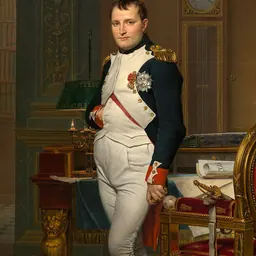

Related people
Same field, nearest in time
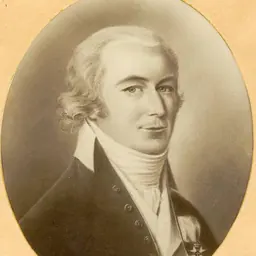

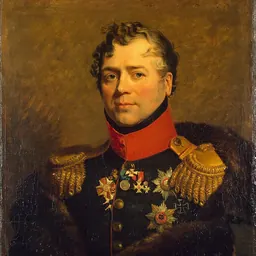


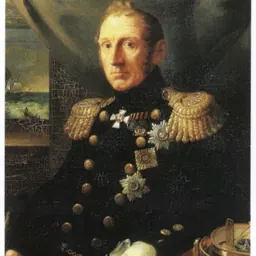
Contemporaries
People whose lives overlapped Georgy Gruzinsky's




Frequently asked questions
Who was Georgy Gruzinsky?
Russian nobleman
When was Georgy Gruzinsky born?
Georgy Gruzinsky was born on 2 November 1762.
When did Georgy Gruzinsky die?
Georgy Gruzinsky died on 15 May 1852.
What was Georgy Gruzinsky's occupation?
Georgy Gruzinsky was a military personnel and royalty.
What nationality was Georgy Gruzinsky?
Georgy Gruzinsky was Russian.
Sources & further reading
Cite this page
APA: Biography.guide. (2026). Georgy Gruzinsky. https://biography.guide/georgy-gruzinsky/
MLA: "Georgy Gruzinsky." Biography.guide, https://biography.guide/georgy-gruzinsky/.
Chicago: "Georgy Gruzinsky." Biography.guide. https://biography.guide/georgy-gruzinsky/.
Data last updated: 2026-09-20 · Spot an error? Report a correction.
Page generated 2026-09-27 05:20 UTC