
About Georgie Abrams
Lived 1918 – 1994 (aged 75). Georgie Abrams was an American boxer.
Georgie Abrams (November 11, 1918 – June 30, 1994) was an American boxer who came very close to winning the World Middleweight Championship in November 1941 against Tony Zale and was a top contender for the title in the early 1940s. In his unique boxing career, he fought eight former or future world champions. He was managed by Bo Bregman, and Chris Dundee. Abrams was inducted into the World Boxing Hall of Fame in 2005.
Early life and career Georgie Abrams was born the son of a shoemaker in Roanoke, Virginia on November 11, 1918. He was given the middle name "Freedom" for being born on Armistice Day. His family eventually moved to Washington, D.C., where he was raised and began his ring career. A gifted athlete and top student in high school, he had to forgo completing college due to the economic pressures of the Great Depression, even though he was offered partial athletic scholarships by two colleges, Notre Dame and Catholic University, in swimming and boxing. He briefly attended Tri-State College in Angola, Indiana, having to leave for financial reasons.
An outstanding amateur boxer, with a record of 62–3, he won the Washington, D.C. AAU Welterweight Title. Later, he took a Golden Gloves championship in Chicago in 1937 at 147 pounds. Yarosz had previously taken the NYSAC World Middleweight Championship in September 1934 against Vince Dundee in Pittsburgh.
On April 11, 1938, he defeated Jimmy Jones in an eight-round points decision at Turner's Arena in Washington, D.C. Abrams had previously lost to Jones on March 21 in a fifth-round knockout that ended when Jones landed a wild right to his jaw.
On June 29, 1938, he defeated Phil Furr at Griffith Stadium in Washington, D.C., in a ten-round unanimous decision. Furr was rated the number six welterweight in the country in a standing released by the National Boxing Association (NBA) the following month. The fighting was fast, and Furr had Abrams down on the mat at one point in the match.
On April 28, 1939, Abrams defeated Harry Balsamo in the main event at New York's Hippodrome in an eight-round points decision. Abrams, who may have taken every round, was on the offensive throughout, never giving Balsamo a chance to lead with his strong right. Balsamo may have not yet been in top condition having had an appendectomy several months prior to the fight, though Abrams' win was decisive. Abrams was given seven of the eight rounds by most of the judges, and numerous facial cuts at the end, though Balsamo led 3 to 1 in the pre-fight betting.
Win over former middle champ Lou Brouillard, 1939
On June 20, 1939, Abrams defeated Lou Brouillard in a ten-round points decision at Griffith Stadium at Abram's home turf in Washington, D.C., in a ten-round points decision. Brouillard was a former October 1931, NBA World Welterweight Champion, and an August 1933 NYSAC World Middleweight Champion against Ben Jeby, making Abram's win more significant. The Pittsburgh Press and Post Gazette, though both were hometown papers of Burley, both wrote that Burley probably should have received the decision.
On September 9, 1940, lost to Polish boxer Henry Chmielewski at 160 pounds at the auditorium in Milwaukee, Wisconsin in a ten-round points decision. According to The Ring magazine, the decision was somewhat controversial as Abrams had fought in a more polished manner, and possibly thrown more punches.
On January 20, 1941, Abrams defeated Jimmy Leto in a unanimous decision at Carlin's Park in Baltimore, Maryland. Leto lost the first and seventh due to low blows, though they may have been the only rounds in which he had an edge. Abrams scored with rights and lefts throughout the bout, probably having an edge in all but the first and seventh rounds.
Boxing at 160, On March 7, 1941, he defeated Coley Welsh, a Polish middleweight, at Madison Square Garden in an eight-round points decision. The bout was at the important venue of the Garden and Welsh would take the USA New England Middleweight Title on March 21, 1941, and hold it for several years, but he would never contend for a World Middleweight title.
Close bout for World middle title, Tony Zale, 1941 He met Gary, Indiana native Tony Zale in Madison Square Garden in a World Middleweight Championship match on November 28, 1941, before a crowd of nearly 10,000. Abrams was already serving in the Navy at an air station in Jacksonville, Florida as a boxing Boatswain's Mate under the invitation of Lt. Commander Gene Tunney, and required a pass to meet Zale in New York. Despite knocking down Zale in the first round, a poke in the eye from Zale's glove in the second left him with pain and blurred vision. From the fourth round on, he fought with his left eye nearly closed. Blood from a cut opened above his right eye in the third from an accidental head butt from Zale caused additional vision problems from blood that dripped from the wound. Despite fighting half blind, Abrams fought courageously for fifteen rounds, taking the sixth round due to a low blow from Zale, and the eighth when he staggered Zale with a hard right to the jaw. The Associated Press actually placed Abrams with the win at eight rounds to Zale's seven. He lost in a somewhat close match, due to the incessant body attacks of Zale in the late rounds, particularly the ninth where he received a severe two handed attack to the midsection.
Rushed to Polyclinic Hospital across the street from his bout with Zale, a doctor felt his eye injury was severe enough to consider surgery to remove it. The Abrams family declined, and Georgie recovered full vision. After recuperating for six months, he returned to boxing and defeated Steve Mamakos in a ten-round points decision on May 25, 1942.
Bout with Marcel Cerdan, December 1946
Abrams next challenged the French middleweight Marcel Cerdan before 17,000 spectators at Madison Square Garden. Marcel would become a World Middleweight Champion in September 1948, after having held the equivalent title in France and Europe. Abrams lost a close ten round decision on December 6, 1946, though it was a unanimous ruling among the judges, who included Ruby Goldstein. The Des Moines Register agreed that the match was close, but that Cerdan put on a fierce display of punching in the closing rounds accounting for his victory. The Associated Press gave five rounds to Cerdan, four to Abrams, and one even. Cerdan had not lost a match on points or by knockout in 97 previous bouts and was considered to be the greatest European boxer of the era.
Close bout with Sugar Ray Robinson, May 1947
On May 16, 1947, he lost a split ten round decision before a crowd of 15,000, against Sugar Ray Robinson, the reigning welterweight world champion, at New York's Madison Square Garden. The shorter armed but heavier Abrams was able to maneuver inside of Robinson's longer reach keeping much of the fighting at close quarters. But Abrams was unable to land a knockout blow against the skilled Robinson.
Second bout with Steve Belloise, July 1947 In a second match with Steve Belloise on July 11, 1947, Abrams lost in a fifth-round technical knockout at Madison Square Garden. He was down in the first and second rounds before the bout was stopped in the fifth. Abram's knockdowns were the first any boxer had scored on him in eight years, probably demonstrating that his reign at the top of contenders was ending. Belloise had served with Abrams in the Navy in 1941 as a Boatswain's Mate. The crowd of a little under 8,000 was a poor turnout for the Garden.
Loss to former middle champ Fred Apostoli, November 1947
On November 17, 1947, Abrams lost to Fred Apostoli, also a former navy veteran, in a close ten round mixed decision at the Civic Auditorium in San Francisco. Apostoli was a former NYSAC (New York State) World Middleweight Champion from November 1938. In front of nearly 9,000 fans, Apostoli faced a more aggressive attack from Abrams than his typical scientific, cautious defense, but Apostoli slowed Abrams with a flurry of blows to the midsection in five rounds. The only knockdown was caused from a right to the jaw by Abrams, but it was brief occurring at the end of the fifth. The crowd seemed to be rooting for Abrams, though Apostoli was fighting in his hometown, and the decision for Apostoli was met with boos, and there was loud applause when Abrams left the fight. Apostoli was cautioned on several occasions for low blows in the fifth and sixth rounds, and lost points as a result. Both boxers weighed in at 162.
Loss to Anton Raadik, retirement, April 1948 Abrams lost to Anton Raadik in a tenth round technical knockout on April 21, 1948, at the International Amphitheatre in Chicago, Illinois. He was down in the ninth, and twice in the tenth, and according to the United Press, he was battered around the ring so badly that his manager, Chris Dundee, announced he was through. Following the advice of his manager, Abrams never boxed in professional competition again.
Life after boxing After retiring from boxing in 1948, Abrams attempted unsuccessfully to make a living as an illustrator in Brooklyn, New York, drawing portraits. He had one exhibition of his paintings in New York in July 1947 while he was still boxing which was not a great success. He worked at various times as an auto dealer, liquor salesman, and owner of a tavern. After living for a while in Florida in the late 1950s where he parked cars in Miami Beach, he eventually settled down in Las Vegas where he worked as a security guard at the Tropicana. He suffered a serious heart attack in the early 1980s. He married his third wife, Vicki Lee, a former singer in Tommy Dorsey's band, in 1984 and was previously married to Terrie Tumin when he lived in New York. Tumin, whose father was a merchant in Flatbush, married Abrams shortly after his return from the Navy in 1946. By the 1980s Abrams was suffering from a progressive dementia common to boxers which affected him the rest of his life.
He died on June 30, 1994, in Las Vegas after suffering a stroke.
He was posthumously inducted into the World Boxing Hall of Fame in 2005.
Professional boxing record
Don’t just read it —
keep it.
Full-length biographies made to live with: read them, listen on the way to work, watch them tonight.
- E-book
- Audio
- Video
Instant download · yours to keep · every purchase keeps this site free
Important facts
People in Georgie Abrams's life
Named in this biography and alive at the same time

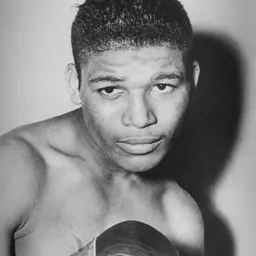
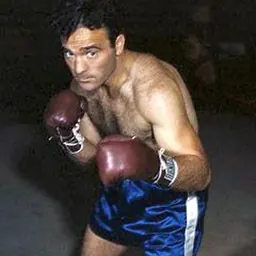





Related people
Same field, nearest in time



Contemporaries
People whose lives overlapped Georgie Abrams's


Frequently asked questions
Who was Georgie Abrams?
boxer (1918–1994)
When was Georgie Abrams born?
Georgie Abrams was born on 11 November 1918 in Roanoke.
When did Georgie Abrams die?
Georgie Abrams died on 30 June 1994 in Las Vegas.
What was Georgie Abrams's occupation?
Georgie Abrams was a boxer.
What nationality was Georgie Abrams?
Georgie Abrams was American.
Sources & further reading
Cite this page
APA: Biography.guide. (2026). Georgie Abrams. https://biography.guide/georgie-abrams/
MLA: "Georgie Abrams." Biography.guide, https://biography.guide/georgie-abrams/.
Chicago: "Georgie Abrams." Biography.guide. https://biography.guide/georgie-abrams/.
Data last updated: 2026-09-20 · Spot an error? Report a correction.
Page generated 2026-09-27 05:29 UTC