
About Georges-Antoine Belcourt
Lived 1803 – 1874 (aged 71). Georges-Antoine Belcourt was a Canadian missionary and catholic priest.
Georges-Antoine Belcourt (April 22, 1803 – May 31, 1874), also George Antoine Bellecourt, Born in Baie-du-Febvre, Quebec, Belcourt was ordained in 1827. He established missions in areas of Quebec and Manitoba. On the frontier, he became involved in a political dispute between the local First Nations population and the Hudson's Bay Company, the monopoly fur trading company.
At the urging of the Company's Governor, Belcourt was recalled to Montreal. He was next assigned to Pembina, North Dakota. He established two missions in the 1840s to convert the local Ojibwe (also called Chippewa) and Métis to Catholicism. In 1859, Belcourt left Pembina for Quebec, but was quickly redeployed to North Rustico, Prince Edward Island. He established the Farmers' Bank of Rustico (the first community-based bank in Canada).
Belcourt retired from his post in 1869 to live out his life in New Brunswick, but was recalled in 1871, this time to the Magdalen Islands. In May 1874, Belcourt was forced to retire due to ill health. He died in Shediac, New Brunswick, on May 31, 1874. He was designated a National Historic Person by the Government of Canada in 1959.
Early life Georges-Antoine Belcourt was born on April 22, 1803, at Baie-du-Febvre, Quebec, to Antoine Belcourt and Josephte Lemire, who had married on February 23, 1802. His parents, devout Roman Catholics, brought their son up in the same faith, and the young Belcourt received his first Holy Communion in 1814. At age 13, Belcourt enrolled in Le Petit Séminaire de Québec to undertake a philosophical course of study, which he completed in 1823. Belcourt studied to become a priest, and on March 10, 1827, Bernard-Claude Panet, the Archbishop of Quebec, performed Belcourt's ordination in the chapel at the Seminary.
Belcourt was appointed as an assistant at several parishes in the area, before becoming pastor of a parish at Sainte-Martine, Quebec, in 1830. As he was bilingual and spoke English as well as French, he was able to minister to his parish of mostly Irish Catholic Canadians.
Early missionary work During his time at Sainte-Martine, the young priest aspired to do missionary work in the west of British North America and applied for it. In 1830, Archbishop Panet requested that the young priest accompany him on a journey to Manitoba. Following an interview in February 1831, Belcourt was enlisted to go on the trip. After spending two months learning the Algonquian language, Belcourt departed from his home town on April 27 of that year in a canoe of the Hudson's Bay Company. On June 17, the priest's party arrived at Saint Boniface, Manitoba, and Belcourt was assigned as one of three priests there. He was to assist the Bishop at the town's cathedral, and study the Anishinaabe language. He was to work with the Ojibwe people to convert them to Christianity. Although the language was not yet documented in written form, Belcourt made rapid progress. Within a year, he had learned enough to be considered ready to work directly with those whom he termed the "savages," as was customary at the time.
Arrival in North Dakota In 1847, in response to perceived discrimination against First Nations people by the Hudson's Bay Company in the fur trade, Belcourt prepared a petition to Queen Victoria to seek redress. The petition was signed by 977 First Nations people, but the Colonial Secretary, Earl Grey, consulted with advisors who had little sympathy for the natives and took no action in the case. The Company criticised Belcourt for what it saw as his inciting discontent among the local First Nations. The Company administrators decided that the priest should not be allowed to remain in British North America. The missionary was arrested, but was released after the charges against him were discovered to be unfounded. At the urging of the Company's Governor, the Archbishop of Quebec asked Belcourt to return to Montreal. Belcourt asked the Governor of the Company to retract the charges for which he was arrested. The Governor apologised for what he described as a mistake on the part of the Company's chief Factors. In November 1849, the young and recently ordained priest Albert Lacombe arrived in Pembina and immediately started to learn the Chippewa language. Despite claiming to have to resort to manual labour to pay for his food, Belcourt supported a household that included a school teacher, a housekeeper, a Chippewa cook and several servants.
A strong advocate of prohibition of alcohol, especially among Native Americans and First Nations peoples, Belcourt petitioned the US Congress to prevent the illicit trafficking of liquor from Canada into the United States. In March 1859, Belcourt left North Dakota to return to Canada.
Belcourt remained pastor of his parish at Rustico until 1869, when he retired. The priest intended to live on a farm at Shediac, New Brunswick, but was called back to the church in August 1871. He was asked to pastor a parish on the Magdalen Islands. Ill health forced his retirement from there in May 1874, and he returned to Shediac before dying on May 31, 1874. In 1959, Belcourt was designated a National Historic Person by the Government of Canada.
Don’t just read it —
keep it.
Full-length biographies made to live with: read them, listen on the way to work, watch them tonight.
- E-book
- Audio
- Video
Instant download · yours to keep · every purchase keeps this site free
Important facts
People in Georges-Antoine Belcourt's life
Named in this biography and alive at the same time


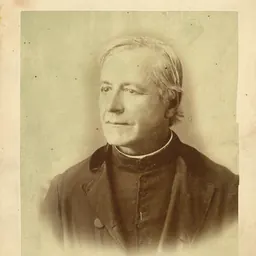
Related people
Same field, nearest in time
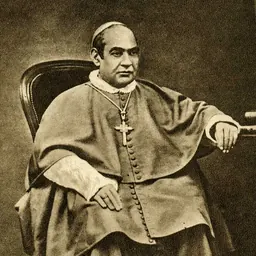



Contemporaries
People whose lives overlapped Georges-Antoine Belcourt's





Frequently asked questions
Who was Georges-Antoine Belcourt?
Priest and missionary
When was Georges-Antoine Belcourt born?
Georges-Antoine Belcourt was born on 22 April 1803 in Baie-du-Febvre.
When did Georges-Antoine Belcourt die?
Georges-Antoine Belcourt died on 31 May 1874 in Shediac.
What was Georges-Antoine Belcourt's occupation?
Georges-Antoine Belcourt was a missionary and catholic priest.
What nationality was Georges-Antoine Belcourt?
Georges-Antoine Belcourt was Canadian.
Sources & further reading
· Wikipedia: Georges-Antoine Belcourt
· DBpedia: Georges-Antoine Belcourt
Cite this page
APA: Biography.guide. (2026). Georges-Antoine Belcourt. https://biography.guide/georges-antoine-belcourt/
MLA: "Georges-Antoine Belcourt." Biography.guide, https://biography.guide/georges-antoine-belcourt/.
Chicago: "Georges-Antoine Belcourt." Biography.guide. https://biography.guide/georges-antoine-belcourt/.
Data last updated: 2026-09-22 · Spot an error? Report a correction.
Page generated 2026-09-27 05:33 UTC