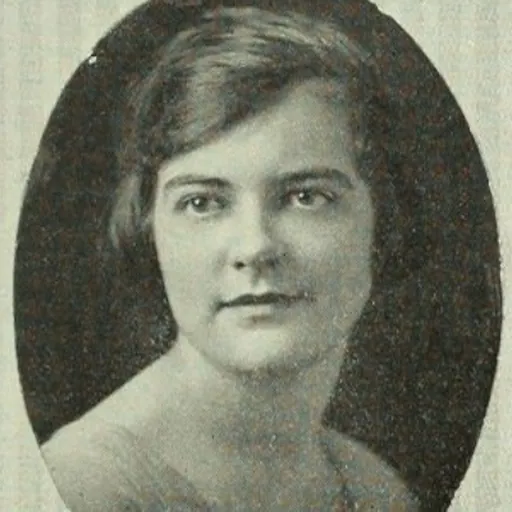
About Georgene Hoffman Seward
Lived 1902 – 1992 (aged 90). Georgene Hoffman Seward was an American psychologist.
Georgene Hoffman Seward (January 21, 1902 – September 19, 1992), an early feminist psychologist, was best known for her research on sex roles and sex behavior. Having experienced much sex discrimination in academia herself, she dedicated her life to researching sex differences and minority experiences, and encouraging women to pursue leadership in science.
Biography
Georgene Janet Hoffman was born in Washington, D.C., on January 21, 1902, to Georgene and Carl Henry Hoffman. While she was young her mother died and her father remarried, leaving Georgene to be raised by her grandfather and great aunt in New York City. She obtained her B.A. from Barnard College for Women in 1922; her initial interest had been the classics, but instead she majored in psychology. She completed graduate work at Columbia University, became a Curtis Scholar, and obtained her master's degree in 1924. During this time she met another graduate student, John Perry Seward Jr., whom she would marry in 1927 and with would begin a lifelong professional collaboration.
Her husband, John, died in 1985; Georgene died on September 19, 1992, in Los Angeles, California. During this time, her husband taught at Columbia University. During her professional career at Barnard College Seward was consistently overlooked for promotion in favour of her less experienced, less competent, male counterparts. This anecdote would repeat itself during her seven-year professional career running the psychology department at Connecticut College for Women with her husband.
In 1944, the Sewards left Connecticut College for Women; Georgene Seward took at teaching position at Simmons College and John Seward took a position at Boston University. She found that attitudes toward women and the roles they filled varied and were based largely on context (post-war American families were transitioning from a patriarchal to a more democratic structure), leading her to believe that these attitudes were the result of the socialization of sex roles. She returned to these interests again later in her career, coauthoring two additional books: Sex Roles in Changing Society (1970) and Sex Differences: Mental and Temperamental (1980).
During her time in California, Seward also began to explore how culture and minority status impact clinical practice. It was then that she published two additional important books: Psychotherapy and Culture Conflict (1956) and Clinical Studies in Culture Conflict (1958). In these books, Seward investigated the unique neuroticisms and stress experienced by minorities. and the specificity of the sex drive in male guinea pigs. Seward's early feminist works included The Psychological Effects of the Menstrual Cycle on Women Workers (1944) and an experimental study called Culture Conflict and the Feminine Role (1945). These works would be the prelude to a more comprehensive collection of social sex differences called Sex and the Social Order (1946).
Psychological effects of the menstrual cycle on women workers (1944) The close of World War Two called for rapid re-evaluation of women's perceived ‘biological handicaps’; in particular the focus was upon the menstrual cycle, historically seen as a time of bed rest and delicacy. The cultural setting of the time cemented the male/female dichotomy as an absolute; this view idolized the male/female identity as something that was beyond human control and was most likely biologically driven (Seward, 1945). Seward (1945) rebutted this view through redefinition of the feminine role as a cultural aspect that was assigned to women to their role depending on the social pressures of the time. The core of the argument suggested that the feminine role was not an absolute across all cultural groups; even the traditional predominately patriarchal Western culture had variations in the expectations of the feminine role across time (Seward, 1945).
From clinical studies of psychologically sick women of the time Seward (1945) observed that a portion of these women's illnesses emerged from a conflict between social expectations of who they should be and who they were. The psychoanalytical theories of the time felt that this ‘masculine complex’ was an illness – the fallacy was grouping women with the motivation and talent to achieve outside of their expected domestic duties as being psychologically ill (Seward, 1945). Using Kurt Lewin’s Approach-Avoidance paradigm Seward (1945) argued that conflict arises from giving all children equal opportunity to learn and achieve; but with the expectation that women chose between family and their goals when they marry.
Seward (1945) surveyed 147 first-year female psychology students on their attitudes towards the evolving female role to find the most extreme liberal and extreme conservative individuals. Seward (1945) modified two inventories, Kitay's attitudes towards women and Kirkpatrick's feminism-antifeminism attitude tests. After these inventories were administered the 15 most extreme attitudes at either ends of the scales were selected for further analysis (Seward, 1945). A follow-up interview was conducted to collect background information on home life, religious affiliations, and other potentially discrepancies between the groups. Seward (1945) found that in the most extreme groups a pattern emerged, a dichotomy in female attitudes toward the single female and the married female. Women whom were single could be independent, hold down a job and support themselves. The single female was awarded greater equality with men given that they had to compete with them in the workforce (Seward, 1945). The drawback to this freedom results from the greater uncertainty in security, resulting in conflict (Seward, 1945). Conservative individuals ranked lower on the feminism scale and projected traditional attitudes toward the wife role. These attitudes included adherence to social parasitism, which involved becoming completely depended upon the husband – including social and financial matters (Seward, 1945).
Liberal women ranked higher in feminism traits than their conservative counterparts, and also came from non-traditional/nuclear homes. These homes did not typically have the father/mother dynamic and in comparison to their conservative counterparts were not particularly religious. The conservative group came from the traditional/nuclear family set up and the majority (14 out of 15 subjects) were regular church attendees (Seward, 1945). For the liberal females conflict occurs when shifting from single feminist to the role of traditional wife/subordinate and the social expectation that accompanies the role (Seward, 1945).
Sex Differences: Mental and Temperamental (1980)
Following the Sewards’ retirement in 1972, they began an active collaboration to bring their respective fields together to produce Sex Differences: Mental and Temperamental (1980). Prior to Dr. John Seward's death in 1985 a follow-up work had begun, but was never completed. The working hypothesis of the book was based upon a couple key assumptions, the first being that sex differences were a by-product of evolution. The other assumption was that with the increased development of the human brain and its by-products (such as language, context and memory) increase humans’ ability to manipulate the environment have made some biological adaptations obsolete. The objective was an attempt to isolate sex-specific traits that were resistant to cultural change and persist as biologically ingrained dispositions (Seward & Seward, 1980).
Seward and Seward (1980) predicted that the most stable sex differences would be those most closely related to behaviours related to reproduction. Mental/cognitive processes were predicted to be less stable and subject to social expectation (Seward & Seward, 1980). Careful examination of historical and current cultures was required for the elimination or confirmation of sex differences (Seward & Seward, 1980). Historically men are more likely to interact with their environment through exploration and reconstruction, while women are more prone to interact through communications which correspond to evolutionary expectations (Seward & Seward, 1980). Seward and Seward (1980) wished to determine the extent to which biological processes corresponded to sex differences and the extent to which social expectation influence accepted sex differences.
Mental abilities
In chapter three of Sex Differences the focus was upon mental differences. The use of intellectual measures of behaviour was seen as more objective as it was often attributed to genetics or hormones. Overall intelligence differences were often related to three subsets of intelligent behaviour; verbal, numerical and spatial. The data on intelligence was in abundance, ranging in people from kindergarten to college. Seward and Seward (1980) reviewed Diane McGuiness's (1975) experimental study that had found a trend favouring females in hearing task and favouring males in sight-related tasks. Seward and Seward (1980) caution the quick conclusion of a biological aspect to the differences, instead suggesting that the differences observed were the result of biases in social roles. The development of these differences was likely the result of social biases that have risen through evolutionary history of men as providers and women as caretakers (Seward & Seward, 1980).
Studies reviewed by Seward and Seward (1980) found most consistently was females tend to perform better in all forms of communication (verbal, written or read) and infant females made more frequent vocalizations and from an earlier age. Women also typically had a more global cognitive style to their mental abilities, while men traditionally had a more analytical cognitive approach (Seward & Seward, 1980). However, evidence was arising for male dominance in spatial abilities and problem solving with a potential role of androgenic hormone. Evidence for biological innateness suggested a greater susceptibility for men because learning disorders such as dyslexia were more frequently reported (Seward & Seward, 1980). The Differentiation Hypothesis presented by Garrett (1946) suggested that all skills start out with a general ability that is specialized over time (Seward & Seward, 1980).
Masculinity and femininity
Seward and Seward (1980) explored the variations in terms of understandings of Masculine and Feminine in three distinct ways. The first was the Essential Core; religious/spiritual dichotomies such as heaven/male, earth/female, yin representing the female, negative and passive in opposite to the yang which was male, positive and active (Bakan, 1966 as cited in, Seward & Seward, 1980). Secondly there were social stereotypes of the ‘typical’ man and the ‘typical’ woman held by real men and women in cultural groups. The last was to review self-reported attitudes of people in terms of how they measured up to the stereotype. Seward and Seward (1980) found in their literature review that real men and women often mirrored the stereotype with a few variations. An example given by Seward and Seward (1980) was that women were not found to be more neurotic or suspicious than men. Stable tendencies included male characteristic of ‘toughness’ and ‘self-assertion’ and female characteristic of ‘sensitivity’ and ‘social need’ (Seward & Seward, 1980).
Activity
Seward and Seward (1980) reviewed literature on the activity levels of male and female children. From a young age (second year to puberty) male children tend to be more active than their female counterparts, with more reports of hyperactivity in male children. This statistical data helped to support biological sex differentiation component (Seward & Seward, 1980). Social Factors in Gender Development The differences in parental expectation between male and female children could have an important role upon their behaviour; however determining the extent was difficult with observational methods (Seward & Seward, 1980). These behaviours of gender development were analyzed in chapter six through a number of research studies under a number of popular paradigms of the day. These included, but not limited to; psychoanalytical, cognitive-developmental, and social learning. However the most detailed was modeling, covering research that included parental, peer and media (books and television) as sources of modelling (Seward & Seward, 1980).
Temperamental
Chapters nine to 12 deal with temperamental traits that were traditionally aligned with a particular gender. These temperamental aspects included; aggressiveness and dominance, fear and anxiety, compliance and nurturance, and need to achieve (Seward & Seward, 1980). It was acknowledged by most psychologists that men on average are more aggressive than females and females tended to be more anxious and nurturing than males (Seward & Seward, 1980). However, social learning theorists postulated that this difference was primarily the result of environmental learning/observation rather than innate biological drive; both sexes shared the same impulses, but in varying proportions (Seward & Seward, 1980). Additionally, the operant conditioning paradigm had gained momentum and psychologists’ knowledge of rewards and punishments assisted in their understanding of behaviour. However, despite this knowledge the effective rewards and punishments that strength or weaken certain behaviours in sex differences were not well understood (Seward & Seward, 1980).
Notable publications
Seward, G. H. (1946). Sex and the social order. New York: McGraw Hill. Seward, G. H. (1956). Psychotherapy and culture conflict. New York: Ronald Press. Seward, G. H. (1958). Clinical studies in culture conflict. New York: Ronald Press. Seward, G. H. & Seward, J. P. (Eds.). (1958). Current psychological issues: Essays in honor of Robert S. Woodworth. New York: Holt. Seward, G. H. & Williamson, R. (Eds.). (1970). Sex roles in changing society. New York: Random House.
Seward, G. H. & Seward, J. P. (1980). Sex differences: Mental and temperamental. Lexington, MA: Lexington Books.
Don’t just read it —
keep it.
Full-length biographies made to live with: read them, listen on the way to work, watch them tonight.
- E-book
- Audio
- Video
Instant download · yours to keep · every purchase keeps this site free
Important facts
People in Georgene Hoffman Seward's life
Named in this biography and alive at the same time



Related people
Same field, nearest in time


Contemporaries
People whose lives overlapped Georgene Hoffman Seward's




Frequently asked questions
Who was Georgene Hoffman Seward?
Early feminist psychologist
When was Georgene Hoffman Seward born?
Georgene Hoffman Seward was born on 21 January 1902 in Washington, D.C..
When did Georgene Hoffman Seward die?
Georgene Hoffman Seward died on 19 September 1992.
What was Georgene Hoffman Seward's occupation?
Georgene Hoffman Seward was a psychologist.
What nationality was Georgene Hoffman Seward?
Georgene Hoffman Seward was American.
Sources & further reading
· Wikipedia: Georgene Hoffman Seward
· DBpedia: Georgene Hoffman Seward
Cite this page
APA: Biography.guide. (2026). Georgene Hoffman Seward. https://biography.guide/georgene-hoffman-seward/
MLA: "Georgene Hoffman Seward." Biography.guide, https://biography.guide/georgene-hoffman-seward/.
Chicago: "Georgene Hoffman Seward." Biography.guide. https://biography.guide/georgene-hoffman-seward/.
Data last updated: 2026-09-22 · Spot an error? Report a correction.
Portrait: Wikimedia Commons · author & licence
Page generated 2026-09-27 05:04 UTC