
About George Yuzawa
Lived 1915 – 2011 (aged 95–96). George Yuzawa was an American military personnel.
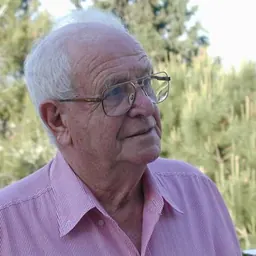
George Katsumi Yuzawa (, 1915–2011) was a Japanese-American community activist. He was involved in numerous social and political causes fighting racial discrimination against Asians and Asian Americans, providing aid for senior citizens, and organizing Japanese cultural events around New York City.
Family and early life George Katsumi Yuzawa was born in Los Angeles, California on February 21, 1915. His parents, Tamasaburo "James" and Bun "Mary" Yuzawa named their Nisei (second-generation Japanese American) son after George Washington. George's parents emigrated to the United States from Nagano, Japan. In 1917, James Yuzawa started the Vermont Flower Shop in downtown Los Angeles. He served a term as president of the Southern California Floral Association.
George was a founding member of Boy Scout Troop 64 in Los Angeles and achieved the rank of Life Scout. In 1932, he and other young Nisei establish the Japanese Athletic Union (JAU) to coordinate Nisei high school baseball, basketball, football and track competitions in southern California. He served as president of the JAU from 1935 to 1938. He graduated from Manual Arts High School in 1933 and attended Los Angeles City College where he earned an associate degree in Business. After college, George began working with his father.
In 1940, George married Kimiko Hattori (1917-2011). She was the 23-year-old Nisei daughter of Tora and Seikichi "Walter" Hattori. Walter was the proprietor of Nippon Produce Market in Los Angeles. He was also an official in a local southern California produce union.
Japanese internment and World War II After the attack on Pearl Harbor, President Franklin D. Roosevelt signed Executive Order 9066 on February 19, 1942. The Yuzawa and Hattori families were forcibly removed from their homes and incarcerated in concentration camps under the direction of the Wartime Civilian Control Agency (WCCA). They were among the 120,000 Americans of Japanese ancestry who were sent to ten concentration camps in the western and south central United States.
The Yuzawas and Hattoris lived with approximately 20,000 other Japanese Americans at the Santa Anita racetrack, a temporary detention facility converted from stables. George served as the assistant director of men's athletics at Santa Anita. In September 1942, they were moved to the Granada War Relocation Center in the southeastern region of Colorado, near the small town of Granada. The Center incarcerated over 7,000 persons of Japanese ancestry, the majority of whom were American citizens or longtime permanent U.S. residents who were ineligible for citizenship under American immigration laws. At the Center, George's father served as a block manager and George worked as the purchasing officer for the camp school system.
George's younger sister, 19-year-old Chieko "Patricia," was not permitted to go with her family to Santa Anita or the Granada War Relocation Center because she contracted tuberculosis shortly before the evacuation. The U.S. government moved her to Hillcrest Sanitarium located in the mountains of northwest Los Angeles. She died there in 1942, never having seen her parents again. During her stay, George was given permission to leave the camp (with an army escort) only once to visit her. After she died, George claimed her body.
In September 1943, the Wartime Relocation Authority (WRA) released George from the Center because he had promise of employment from the Annenberg and Erickson Florist Shop in New York City. Once in New York, George arranged for his wife and their parents to join him. In 1944, George volunteered for the U.S. Army. He completed his basic training at Fort McClellan in Alabama and was then attached to an Army Intelligence unit. George was stationed in Tokyo as part of the American Occupation of Japan, where he served as a special officer for entertainment for enlisted U.S. military servicemen. He received an honorable discharge in 1946 and returned to New York City.
George attended City College of New York from 1946 to 1947 on the G.I. Bill, earning a certificate in foreign trade. After forming and operating the HATCO Trading Company, Inc., George assisted his father's floral business, Park Central Florist. Clientele included actors, musicians, and Japanese businesses and corporations. George's father retired in the late 1950s due to ill health. George continued operating the shop until his own retirement in 1982.
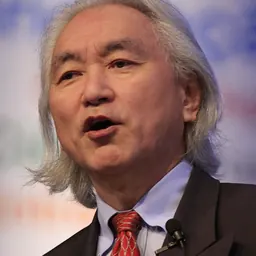
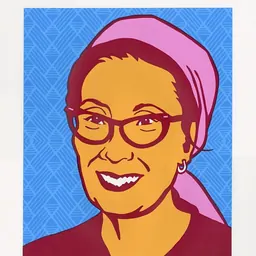
Social and political activism George made the time to volunteer for social, religious, political, and other charitable work. In the early 1970s, he worked with other Nisei and Sansei (third-generation Japanese American) civil rights activists to combat racial discrimination against Asians. These activists included Mitziko Sawada (academic historian and author), Kazu Iijima, Min Matsuda, Kazu Obayashi and Tami Ogata (founders of Asian Americans for Action), Yuri Kochiyama (human rights activist), Suki Terada Ports (AIDS advocate), Michio Kaku (Princeton University theoretical physicist), and Aiko Herzig-Yoshinaga, who was instrumental in the Redress Movement for Japanese American incarceration.
Kenzo Takada and the ILGWU This same core group of activists confronted Paris clothing designer, Kenzo Takada.
Don’t just read it —
keep it.
Full-length biographies made to live with: read them, listen on the way to work, watch them tonight.
- E-book
- Audio
- Video
Instant download · yours to keep · every purchase keeps this site free
Important facts
People in George Yuzawa's life
Named in this biography and alive at the same time




Related people
Same field, nearest in time


Contemporaries
People whose lives overlapped George Yuzawa's




Frequently asked questions
Who was George Yuzawa?
Japanese-American activist (1915–2011)
When was George Yuzawa born?
George Yuzawa was born in 1915 in Los Angeles.
When did George Yuzawa die?
George Yuzawa died in 2011.
What was George Yuzawa's occupation?
George Yuzawa was a military personnel.
What nationality was George Yuzawa?
George Yuzawa was American.
Sources & further reading
Cite this page
APA: Biography.guide. (2026). George Yuzawa. https://biography.guide/george-yuzawa/
MLA: "George Yuzawa." Biography.guide, https://biography.guide/george-yuzawa/.
Chicago: "George Yuzawa." Biography.guide. https://biography.guide/george-yuzawa/.
Data last updated: 2026-09-22 · Spot an error? Report a correction.
Page generated 2026-09-27 05:10 UTC