
About George Woods
Lived 1898 – 1963 (aged 64–65). George Woods was a New Zealand artist.
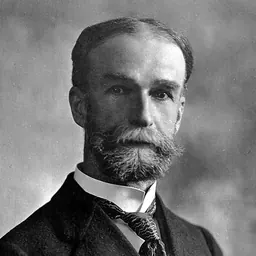
George Woods (1898 – 4 April 1963) was a New Zealand draughtsman, illustrator, and artist. His works show the influence of Māori culture and the Pacific Islands; he had a reputation as an excellent colourist.
Education Woods undertook night study at the Wellington Technical College (forerunner to the Wellington Polytechnic) under Harry Linley Richardson, and Frederick Vincent Ellis in 1936.
Commercial career Woods' worked at a number of advertising agencies in New Zealand and Australia. While studying at the Wellington Technical College he worked at the Goldberg and Ilott Advertising studios. He also worked in Sydney before moving to the Carlton Caruthers advertising agency in Wellington. While at Carlton Caruthers, he mainly designed posters for the Majestic Theatre, which was across the road from the agency, but also met Ernest Mervyn Taylor. In 1937, Taylor and Woods established a small freelance studio in Willis St, Wellington creating a number of illustrations for the Reed Publishing Company.
Art As a modernist, George Woods is best known for his graphic, stylised images and is most readily contextualised alongside contemporaries Russell Clark (1905–1966) and E. Mervyn Taylor (1906–1964). His early work, particularly illustration of books, is associated with the New Zealand Nationalist art movement, with his work set firmly in a native environment. He recognised nature as the bottom line for artists, commenting: "I think artists should begin where Nature leaves off." His colour linocuts exhibited a strong linear image, and his skills as a draughtsman allowed him to develop a sculptural element to his work. Woods frequently employed the technique of simplifying his subject matter by accentuating physical characteristics and omitting others entirely. He had an ability to capture form and light through simple line forms and use of unbroken colour. Many of his works show a flirtation with eroticism and exoticism.
His etching Nude (c. 1939) was one of the few prints selected for inclusion in the Centennial Exhibition of International and New Zealand Art at the National Gallery in Wellington. Woods was also included in the New Zealand Society of Artists Exhibition of Works by Contemporary New Zealand Artists, 1939.
Woods was intensely interested in Māori culture and had a keen appreciation of Polynesian art and sculpture, borne out of his travels in the region after finishing studies at the Wellington Technical College. Both Woods and his contemporary E. Mervyn Taylor, reinterpreted Māori mythology from a New Zealand European perspective Woods and Taylor were the country's most prominent book illustrators in the early 20th century. Many of the prints they created as illustrations for books were included in their solo and group exhibitions. The scraper-board print Battle of the Wind and the Sea Gods (1945), won Woods the Esther Glen Award from the New Zealand Library Association for outstanding contribution to children's literature.
Woods' scraper-board print Māori Navigators (c. 1940) was inspired by the Māori myth of the great fleet of canoes departed from the legendary Hawaiki on a voyage of discovery making landfall in New Zealand in 1350. His image of a canoe cresting a wave appealed to New Zealanders celebrating the centenary of the 1840 arrival of settlers' ships. The image was published as a frontispiece to A.H. Reed's The Story of New Zealand in 1945, placing it firmly in the public's imagination as an icon of nationhood.
Woods also created a series of colour linocuts based on The Rubáiyát of Omar Khayyám; using rich colour and patterns to create the appearance of Persian miniatures.
Illustrations Poppa passes: the adventures of the Vedgie people, by A.W. Reed (c. 1943) At the bottom of the garden: my own seed book, by A.W. Reed (1944) Introduction to New Zealand, by New Zealand Department of Internal Affairs (1945) Stories of fairies, by A.W. Reed (1962) A song of praise for Māoriland (filmstrip), by A.H. Reed (195?) Myths and legends of Māoriland, by A.W. Reed (1958) Building the main trunk, by New Zealand Railways Department (1960) Commissioned to illustrate the 1950 Imperial Chemical Industries calendar – Design Review: Volume 2, Issue 5 (February – March 1950) Contributed an essay on Design in Year Book Of The Arts In New Zealand, No. 4 (1948)
Works of art Title Medium Date Image Nude Monotype 1930s–40s Nude No 1 Linocut 1930s–50 Nude No 2 Linocut 1930s–50 The Artist's Wife Aquatint 1930s–50 Girl Dressing Her Hair Monotype 1930s–50 Girl Monotype 1930s–50 Man Reading Monotype 1930s–50 Cat Monotype 1930s–50 Figures Monotype 1930s–50 Reflections Linocut 1931 Meditation Drypoint 1932 Nocturne Aquatint 1933 Portrait Study Aquatint 1933 Nude Etching 1939 Malama Aquatint 1940 Mamu Aquatint 1940 Maori Navigators Scraper-Board 1940 Joan Asleep Aquatint 1940s Marine Pattern 2 Colour Linocut 1940s Nude Aquatint 1940s Design with Blue Girl Colour Linocut 1940s Beethoven Aquatint 1943 Malama Scraper-Board 1943 Figure 1 Linocut 1944 Figure 2 Linocut 1944 Reclining Nude Linocut 1944 Maori Head Woodcut 1945 Standing Nude Colour Linocut 1945 Hinemoa Scraper-Board 1945 Battle of the Sea and Shore Birds Scraper-Board 1945 Ruarangi and the Turehu Scraper-Board 1945 Young Hatupatu Scraper-Board 1945 Tawhaki the Bold Scraper-Board 1945 Tawhaki Calls on the Gods Scraper-Board 1945 Battle of the Wind and the Sea Gods Scraper-Board 1945 Kahukura and the Fairy Fisherman Scraper-Board 1945 The Flying Taniwah Namu and Naeroa Scraper-Board 1945 Rupe as a Pigeon Scraper-Board 1945 Decorative Design No 1 Colour Linocut 1946 Marine Pattern 1 Colour Linocut 1946 Moorish Idol Colour Linocut 1946 Toy Fish Colour Linocut 1946 Banded File Fish (Topical Fish) Colour Linocut 1946 Decorative Design No 2 Colour Linocut 1946 Decorative Design No 3 (Woman with Foal) Colour Linocut 1946 Triangle Colour Linocut 1946 Figure and Landscape Colour Linocut 1946 Silver Morning Colour Linocut 1947 Wind (Strong Wind) Colour Linocut 1947 Leda Colour Linocut 1947 Woman Colour Linocut 1947 - Polynesian Mask Wood-Engraving 1947 Malia Colour Linocut 1947 Head Aquatint 1947 Come with Old Khayyam Colour Linocut 1950 And Leave with Wise to Talk Colour Linocut 1950 I Sent My Soul Through the Invisible Colour Linocut 1950 A Book of Verse and Thought Colour Linocut 1950 Driftwood Form Linocut 1950 William Colenso, botanist-printer Scraper-Board 1950
Don’t just read it —
keep it.
Full-length biographies made to live with: read them, listen on the way to work, watch them tonight.
- E-book
- Audio
- Video
Instant download · yours to keep · every purchase keeps this site free
Important facts
People in George Woods's life
Named in this biography and alive at the same time





Related people
Same field, nearest in time




Contemporaries
People whose lives overlapped George Woods's



Frequently asked questions
Who was George Woods?
New Zealand artist (1898–1963)
When was George Woods born?
George Woods was born in 1898 in Kumara.
When did George Woods die?
George Woods died on 4 April 1963.
What was George Woods's occupation?
George Woods was an artist.
What nationality was George Woods?
George Woods was New Zealand.
Sources & further reading
· DBpedia: George Woods (artist)
Cite this page
APA: Biography.guide. (2026). George Woods. https://biography.guide/george-woods-artist/
MLA: "George Woods." Biography.guide, https://biography.guide/george-woods-artist/.
Chicago: "George Woods." Biography.guide. https://biography.guide/george-woods-artist/.
Data last updated: 2026-09-20 · Spot an error? Report a correction.
Page generated 2026-09-27 05:19 UTC