
About George Witt
Lived 1804 – 1869 (aged 64). George Witt was a physician.
George Witt (25 March 1804 – 20 February 1869) was a medical doctor, banker and mayor known for his collection of erotic objects.
Biography
George Witt was born at Swaffham Prior, Cambridgeshire, the fifth son of Matthew Witt, a farmer, and Sarah (née Woollard). He was baptised on 23 May 1805, at the Anglican St. Mary's Church, Swaffham Prior.
Witt studied to become a physician at Northampton General Infirmary before he worked briefly for the East India Company. He notably took charge of a cholera epidemic on board a ship at Calcutta. He became a surgeon at Bedford Infirmary from where he visited Leiden for just three months. Based on his work in Calcutta he graduated as a Doctor of Medicine at the University. Witt married Elizabeth Hedley in Bedford in 1832. He practised as a doctor in Bedford where he rose to be the medical lead at Bedford Infirmary and by 1834 he was elected to the Mayor of Bedford. Witt was also elected to be a Fellow of the Royal Society the same year. Witt however failed to become an Alderman in Bedford until 1845 as his first application was turned down as he was not thought to have been a first class mayor a decade before. Witt shared these objects with an international group of correspondents who appreciated these artefacts.
In the 1860s there was a lot of interest in the theories concerning the worship of Priapus and Witt organised for Richard Payne Knight's Discourse on the worship of Priapus and its connection with the mystic theology of the ancients to be republished with additional material and illustrations in 1865. Panizzi did not think twice as he considered the collection to be of the right quality for his museum. The collection appeared to be chosen primarily on the basis of its obscenity. The collection included modern photographs of women partially dressed as gladiators which were not thought to be academic artefacts but they were designed to be erotic. One of the artefacts was a toothed chastity belt which was thought to be medieval but was in fact a contemporary invention. Witt was one of the first who acted upon this suggestion, converting a room in his Knightsbridge home into an effective Turkish bath as early as 1858. Although it was only a single room, bathing in the hot air at different temperatures was achieved by arranging seating at different levels. Witt became a strong advocate of the Turkish bath and was responsible for introducing many friends, especially medical practitioners, to its therapeutic possibilities. Among his guests were dermatologist Erasmus Wilson (who went on to write a book on the bath), Thomas Spenser Wells, Queen Victoria's surgeon and president of the Royal College of Surgeons, Charles Lockhart Robertson (who successfully introduced the bath into the Sussex and District Lunatic Asylum at Haywards Heath), and William Joseph Goodwin, Queen Victoria's personal vet (who installed a Turkish bath for the Queen's horses at Hampton Court Palace Mews).
Legacy Witt died on 20 February 1869, at his home, 20 Princes' Terrace, Hyde Park, London. He was buried at Swaffham Prior. His wife, Elizabeth (née Hedley), died at the same house in 1871 and was also buried at Swaffham Prior.
Witt's collection remained together in the Secretum until the Second World War. In 1939 the first set of artefacts were removed from the collection, which was based on taste, and each item was classified according to its provenance. An interesting anecdote arose when an enquiry was received at the museum to view the remaining items. The request was challenged by the curators. They wanted to know why the researcher was making an application to view the collection's index. The museum also not only wanted to know what the list would be used for but what arrangements would be made to dispose of the list after the researcher's death.
As of 2014 the "secret" collection contained half of Witt's legacy which has not been reclassified. The curators of the museum think that these remaining items, and another 100 items from other sources, will be kept as a single collection as these items record Victorian values and the changing attitude to obscenity.
Don’t just read it —
keep it.
Full-length biographies made to live with: read them, listen on the way to work, watch them tonight.
- E-book
- Audio
- Video
Instant download · yours to keep · every purchase keeps this site free
Important facts
People in George Witt's life
Named in this biography and alive at the same time

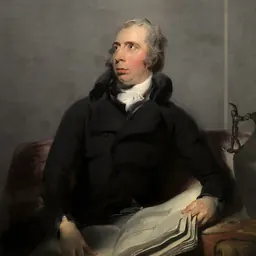


Related people
Same field, nearest in time

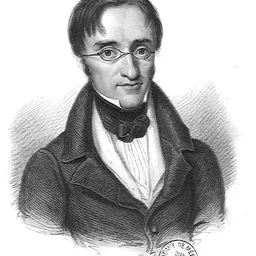




Contemporaries
People whose lives overlapped George Witt's






Frequently asked questions
Who was George Witt?
Collector of erotic objects
When was George Witt born?
George Witt was born on 25 March 1804 in Swaffham Prior.
When did George Witt die?
George Witt died on 20 February 1869 in London.
What was George Witt's occupation?
George Witt was a physician.
Sources & further reading
· DBpedia: George Witt (collector)
Cite this page
APA: Biography.guide. (2026). George Witt. https://biography.guide/george-witt/
MLA: "George Witt." Biography.guide, https://biography.guide/george-witt/.
Chicago: "George Witt." Biography.guide. https://biography.guide/george-witt/.
Data last updated: 2026-09-20 · Spot an error? Report a correction.
Page generated 2026-09-27 05:13 UTC