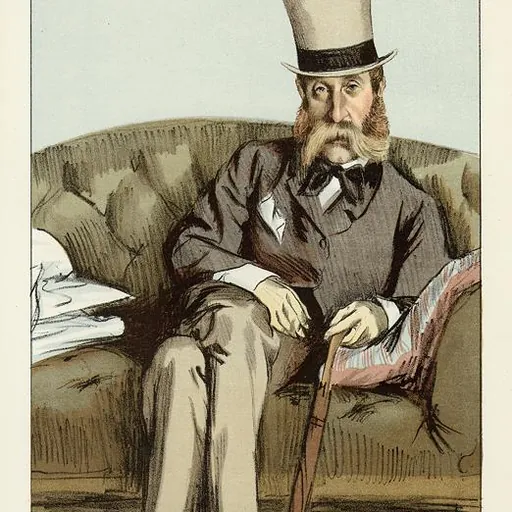
About George Whyte-Melville
Lived 1821 – 1878 (aged 57). George Whyte-Melville was a British poet and writer.
George John Whyte-Melville (19 June 1821 – 5 December 1878) was a Scottish novelist much concerned with field sports, and also a poet. He took a break in the mid-1850s to serve as an officer of Turkish irregular cavalry in the Crimean War.
Life and work Whyte-Melville (far left) playing in a foursome golf match about 1852. J. O. Fairlie stands second from the right. George John Whyte-Melville was born in 1821, at Mount Melville near St Andrews, Scotland, as a son of Major John Whyte-Melville and Lady Catherine Anne Sarah Osborne and a grandson on his mother's side of the 5th Duke of Leeds. His father was a well-known sportsman and Captain of The Royal and Ancient Golf Club of St Andrews.
George was tutored privately at home by the young Robert Lee, then educated at Eton, before entering the army with a commission in the 93rd Highlanders in 1839.
Bones and I, or The Skeleton at Home, is an anomaly in his work, as it is far from the realms of the hunting field or historical romance. It centres on an urban recluse living in a small, modern villa in a London cul de sac, looking out on "the dead wall at the back of an hospital". His most famous lyric is also unusual in its unexpected melancholy – the words to Paolo Tosti's song "Good-bye!" Several of his novels are historical, The Gladiators being the best known. Whyte-Melville also wrote Sarchedon, a historical novel set in Ancient Babylon. He also published volumes of poetry, including Songs and Verses (1869) and Legend of the True Cross (1873). However, it is for his portrayal of contemporary sporting society that he is most regarded.
Henry Hawley Smart is said to have taken Whyte-Melville as one of his models when he too set out to be a sporting novelist. Mrs. Lovett Cameron (18441921) acknowledged that her novel A Grass Country was inspired by Whyte-Melville. He also served as one of the two models for the writing of Mrs. Robert Jocelyn. He was the first person to encourage Florence Montgomery (18431923) to publish her children's stories, and persuaded her to do so. The novelist John Galsworthy admired the "bright things" in Whyte-Melville's novels, and wrote that Digby Grand was Jolyon Forsyte's first idol (in the Forsyte Saga).
The catch phrase for which he is best remembered comes from a song about hunting: "Drink, Puppy, Drink". This recurs also in The Flashman Papers by George MacDonald Fraser, as a frequently mentioned favourite song of the anti-hero. In 1876, Whyte-Melville penned the rarely attributed, but widely recognized opening line to the short poem The Object of a Life: "To eat, drink, and be merry, because to-morrow we die."
Crimean War When the Crimean War broke out, Whyte-Melville went out as a volunteer major into the Turkish irregular cavalry, The Dublin Evening Mail said that it was "strange that he, so gallant and accomplished a horseman, who had dared danger with a light heart so often, should have perished, not while jumping a difficult fence, but simply while galloping across a ploughed field." He, a skilled horseman, had often boasted that he had only fallen once in the twenty years from 1847 to 1867.
He had moved to Tetbury, Gloucestershire, in about 1875, the better to follow the Beaufort and Vale of White Horse hunts. George Whyte-Melville was buried in the churchyard of St Mary's, Tetbury, within a few feet of his property, Barton Abbotts. When he rented the house, a friend criticised the choice because it was so near the graveyard. Whyte-Melville replied that perhaps it was, but that it was a good choice for a hunting man, as his friends would not have to carry him far. His estate was valued at under £70,000.
Memorials It has been claimed that Whyte-Melville's death inspired the well-known hunting song "John Peel" – although John Peel was a real-life huntsman in the Lake District, the author of the lyrics, John Woodcock Graves, was a close friend of Whyte-Melville. After imbibing a quantity of alcohol at Whyte-Melville's funeral, Graves penned some verses in tribute to Whyte-Melville, set to the melody of a traditional folk song entitled, "Bonnie Annie".
The Scottish Border poet and Australian bush balladeer Will H. Ogilvie (1869–1963) was strongly influenced by Whyte-Melville, so much so that he addressed two poems to him. These lines are from the Scattered Scarlet anthology of 1923: How good it is, how good, to fling aside The last new garbage-novel of the day And turn again with pleasure and with pride To your long line of volumes silver-grey, And with you, gallant heart, to ride away Through that clean world where your Sir Galahads ride!
At the instigation of Whyte-Melville's mother, Lady Catherine Melville, a memorial fountain to him was erected by public subscription in Market Street, St Andrews, Fife, in 1880. The three-tier cascading fountain is about 14 foot (427 cm) high, composed of sandstone and Dalbeattie granite. It features four marble plaques dedicated to Whyte-Melville, which show his bust, the family coat of arms, the arms of the Coldstream Guards, and a memorial inscription. Due to corrosion of its internal pipes, it fell into disuse – possibly in the 1930s – and was treated as a flower bed for many decades. A local councillor and the St Andrews Merchants' Association led a campaign that ended in its resuming function as a fountain on Wednesday 8 July 2015.
The novelist Rosemary Sutcliff said in her memoir Blue Remembered Hills (1983) that her first complete (and unpublished) novel Wild Sunrise was 'as Victorian-English as anything in Whyte-Melville's The Gladiators'''. This early work went on to be reworked as her award-winning The Eagle of the Ninth (1954), on which she based her highly successful writing career.
Books by Whyte-Melville The list is based on the "complete list of Whyte-Melville's writings" presented in the 1898 edition of "Riding Recollections".Digby Grand (1852) General Bounce (1854) Kate Coventry (1856)The Interpreter: A Tale of War (1858)Holmby House (1860)Good for Nothing (1861)Market Harborough (1861)Tilbury Nogo (1861)The Queen's Maries (1862)The Gladiators (1863)Brookes of Bridlemere (1864)Cerise (1866)The White Rose (1868)Bones and I, or The Skeleton at Home (1868)M. or N. (1869)Songs and Verses (Chapman and Hall, 1869) – several editions followedContraband (1870)Sarchedon: A Legend of the Great Queen (1871)Satanella (1873)Uncle John (1874)Katerfelto (1875) – after a famous, possibly mythical, stallion on Exmoor in the early 19th centurySister Louise (1875)Rosine (1875)Riding Recollections (1878) Roy's Wife (1878)Black but Comely (1879)
Example of illustrations for "Riding Recollections" Whyte-Melville's "Riding Recollections", essentially a manual of horsemanship, was a popular work widely cited as an authority in the following decades. More than twenty years after his death the Illustrated Sporting and Dramatic News was recommending Riding Recollections to those who wanted to learn to really ride rather than just being carried by their horse, saying that every word of the book "breathes not only of the practised and practical horseman, but also of the love he bore for the noblest of all animals." It ran to at least seven editions in the first year of publication. The importance of Riding Recollections'' in White-Melville's output is signalled by it being selected as the first volume of a 24-volume deluxe edition of his work in 1898. All of the volumes are available online at the British Library.
Illustrations by Edgar Giberne (24 June 1850 – 21 September 1889) for the 1878 edition of "Riding Recollections" (Chapman and Hall, London) by Whyte-Melville (1821–1878) By courtesy of the Biodiversity Heritage Library.
The differences between the illustrations for the 1878 and the 1898 editions show how illustration had changed in the late 1800s. Illustrations by Hugh Thomson (1 June 1860 – 7 May 1920) for the 1898 edition of "Riding Recollections" (W. Thacker, London) by Whyte-Melville by courtesy of the Biodiversity Heritage Library.
Don’t just read it —
keep it.
Full-length biographies made to live with: read them, listen on the way to work, watch them tonight.
- E-book
- Audio
- Video
Instant download · yours to keep · every purchase keeps this site free
Important facts
People in George Whyte-Melville's life
Named in this biography and alive at the same time


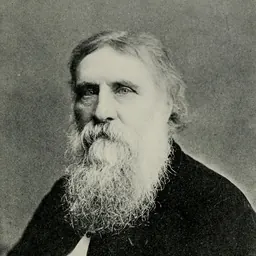
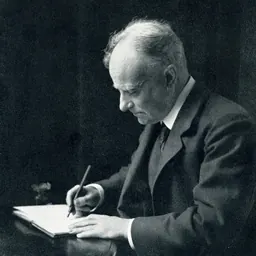



Related people
Same field, nearest in time
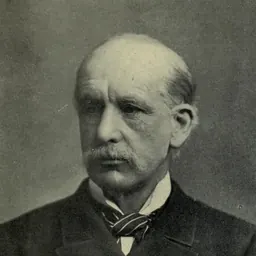

Contemporaries
People whose lives overlapped George Whyte-Melville's




Frequently asked questions
Who was George Whyte-Melville?
Scottish writer
When was George Whyte-Melville born?
George Whyte-Melville was born on 19 June 1821 in Mount Melville.
When did George Whyte-Melville die?
George Whyte-Melville died on 5 December 1878 in Abingdon-on-Thames.
What was George Whyte-Melville's occupation?
George Whyte-Melville was a poet and writer.
What nationality was George Whyte-Melville?
George Whyte-Melville was British.
Sources & further reading
· Wikipedia: George Whyte-Melville
· DBpedia: George Whyte-Melville
Cite this page
APA: Biography.guide. (2026). George Whyte-Melville. https://biography.guide/george-whyte-melville/
MLA: "George Whyte-Melville." Biography.guide, https://biography.guide/george-whyte-melville/.
Chicago: "George Whyte-Melville." Biography.guide. https://biography.guide/george-whyte-melville/.
Data last updated: 2026-09-22 · Spot an error? Report a correction.
Page generated 2026-09-27 05:09 UTC