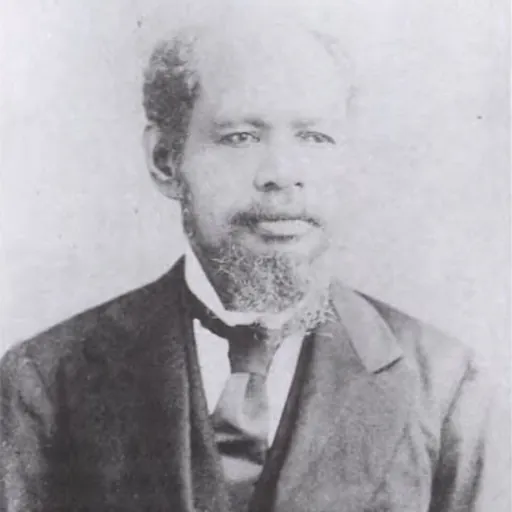
About George Washington Pilipō
Lived 1828 – 1887 (aged 59). George Washington Pilipō was a politician.
George Washington Pilipō (February 22, 1828 – March 27, 1887) was a politician of the Kingdom of Hawaii. He served as a member of the House of Representative from North Kona (1860–1884) and Reverend of Kaumakapili Church. Considered one of the leading Hawaiian politicians of his generation, he was known as "Ka Liona o Kona Akau", or "The Lion of North Kona".
Early life Pilipō was born, on February 22, 1828, in Holualoa, North Kona, on the island of Hawaii. He had eleven siblings but only himself and another sibling survived to maturity.
Pilipō was ordained in 1864 at the Mokuaikaua Church at Kailua-Kona and worked there for seven years as the assistant of Reverend Asa Thurston, who came to Hawaii with the first company of ABCFM missionaries in 1820. In 1871, he was appointed the pastor of Kaumakapili Church, the church for common people in Honolulu, succeeding Reverend Anderson Oliver Forbes. He served as a pastor until 1874 when he was succeeded by Moses Kuaea.
Political career Between 1860 and 1884, Pilipō was elected to serve as the House for his district in North Kona with a few non-consecutive gaps. He sat in on the legislative assemblies of 1860, 1868, 1870, 1876, 1878, 1880, 1882, and 1884. In his long political career, Pilipō served under the reigns of four monarchs: Kamehameha IV and Kamehameha V, Lunalilo and Kalākaua. During the 1874 election, following the death of Lunalilo, Pilipō, although not serving on the legislature at the time, actively supported and campaigned for the candidacy of Queen Emma of Hawaii against Kalākaua. He was suspected of being involved with the 1874 Honolulu Courthouse riot which occurred after Emma's defeat.
After the controversial election, Pilipō became a member of the Queen Emma Party and joined with Representative Joseph Nāwahī of Hilo in forming the native opposition against Kalākaua. In 1876, he and Nāwahī led the opposition to the Reciprocity Treaty of 1875, which they viewed as a step towards American annexation and only beneficial to the elite number of Euro-American businessmen at the expense of Native Hawaiian subsistence farmers. He was influential in bringing down the appointment of the Italian adventurer Celso Caesar Moreno as a cabinet minister in 1880. In the election of 1886, Kalākaua personally journeyed to the districts of Pilipō and Nāwahī, on Hawaii, and John William Kalua, on Maui, to sway the vote against these three politicians. This resulted in the electoral defeat of Pilipō in his home district of Kona.
According to the later testimony of Charles T. Gulick in the Blount Report, Pilipō and his contemporary Luther Aholo were considered "some of the brightest [native leaders] then living ... in the house". His prowess as a politician gained him the epithet of "Ka Liona o Kona Akau", "The Lion of North Kona". Pilipō and Nāwahī were given the moniker of "Nā Pū Kuni Ahi o ka ʻAhaʻōlelo" (the Cannons of the Legislature) for their steadfast defense of Hawaiian sovereignty.
Death Pilipō died on March 27, 1887, at his residence in the Pālama neighborhood of Honolulu. The cause of death was brain fever; he was fifty-nine years old. He was buried from the Kaumakapili Church and a memorial service was held at Kawaiahaʻo Church. Joseph Oliver Carter, who later became the personal secretary of Queen Liliuokalani, praised Pilipō as "one of the Hawaii's truest and stanchest friends."
Don’t just read it —
keep it.
Full-length biographies made to live with: read them, listen on the way to work, watch them tonight.
- E-book
- Audio
- Video
Instant download · yours to keep · every purchase keeps this site free
Important facts
People in George Washington Pilipō's life
Named in this biography and alive at the same time







Related people
Same field, nearest in time




Contemporaries
People whose lives overlapped George Washington Pilipō's




Frequently asked questions
Who was George Washington Pilipō?
hawaiian politician
When was George Washington Pilipō born?
George Washington Pilipō was born on 22 February 1828 in Holualoa.
When did George Washington Pilipō die?
George Washington Pilipō died on 27 March 1887 in Kapālama.
What was George Washington Pilipō's occupation?
George Washington Pilipō was a politician.
What nationality was George Washington Pilipō?
George Washington Pilipō's recorded nationality: Kingdom of Hawaii.
Sources & further reading
· Wikipedia: George Washington Pilipō
· DBpedia: George Washington Pilipō
Cite this page
APA: Biography.guide. (2026). George Washington Pilipō. https://biography.guide/george-washington-pilipo/
MLA: "George Washington Pilipō." Biography.guide, https://biography.guide/george-washington-pilipo/.
Chicago: "George Washington Pilipō." Biography.guide. https://biography.guide/george-washington-pilipo/.
Data last updated: 2026-09-22 · Spot an error? Report a correction.
Portrait: Wikimedia Commons · author & licence
Page generated 2026-09-27 05:02 UTC