
About George Washington Gale
Lived 1789 – 1861 (aged 71–72). George Washington Gale was a clergyman and educator.
George Washington Gale (December 13, 1789 – September 13, 1861) was an American Presbyterian minister who founded the Oneida Institute of Science and Industry. He later purchased land in Illinois that became Galesburg, Illinois, named in his honor, and was instrumental in founding Knox College.
Early life Gale was born in Stanford, New York, the youngest of nine siblings, and became a Presbyterian minister in Western New York State. At the time, the transportation center of Utica was the intellectual capital of western New York.
A graduate with honors from Union College in 1814, he attended Princeton Theological Seminary, but he withdrew because of poor health (dyspepsia). Although he briefly served at the Female Missionary Society, he received his ordination in the St. Laurence Presbytery. He settled down to preach in the Burned-over district. traveled to the southern United States, visiting Georgetown College, Hampden-Sydney College, and Central College, which was later renamed the University of Virginia. He disapproved of Thomas Jefferson's decision to remove religion from the university's operation. the seven young men paying him through their labor. This successful experiment would be the start in the United States of the manual labor college. Among the students there was Charles Finney, a lawyer who, through Gale's efforts, found a new faith in Christ and undertook to become a Christian minister.
In 1827, Gale founded the Oneida Institute of Science and Industry in Whitesboro, New York, an institution with a strong religious component, incorporating manual labor as a means by which students could pay for their education and simultaneously receive the spiritual (psychological) and physical benefits of exercise. Most of the Western students followed him there.
Although the details are not known, ) Gale was not effective as the Institute's leader; he described his own status as "straitened". He was "too indifferent to money to handle it carefully or account for it consistently."
John C. Smith, of Oneida County, New York, one of the subscribers to Gale's labor college, owned a number of boats used on the Erie canal. He suggested that such a boat could be used to make the 1,000 mile trip by water. A number of individuals formed company and bought a canal boat on shares. It was equipped for passenger service and provisioned for the journey. Thirty-seven men, women and children, ranging in age from a babe of three weeks to men and women of forty or fifty years, boarded the boat. Smith was captain and his wife was the cook and housekeeper. When it became obvious it was too much for her, Clarissa Root Phelps and the wife of Colonel Isaac Mills assisted.
Prayer meetings were held daily. The boat traversed the Erie Canal, and at Buffalo, New York, the passengers, goods, and live stock were transferred to a lake steamboat bound for Cleveland. The canal boat was towed behind until a fierce storm off Ashtabula, Ohio forced the steamboat captain to cut the tow lines to the canal boat. He landed the passengers at Cleveland. Some of the goods were damaged by the rain until the canal boat was recovered. They then journeyed down the Ohio and Erie Canal to Cincinnati. After a stay there, they travelled south on the Ohio towards Louisville, where the Louisville and Portland Canal around the rapids had recently been completed. At St. Louis they refused an offer of $1000 for their boat, which they refused although they regretted it later on. Several members of the party took sick. The Mississippi was low and the mosquitoes left many sick with malaria. They dispatched one rider to contact the first group of settlers, who returned with a rescue party with teams, blankets, and supplies to help the invalids. Captain Smith died at Knoxville and Isaac Mills dies soon after.
In 1837 the Knox Manual Labor College (later Knox College, site of one of the famous Lincoln-Douglas debates of 1858). Gale became a professor of rhetoric and moral philosophy at Knox.
Gale died on September 13, 1861.
Don’t just read it —
keep it.
Full-length biographies made to live with: read them, listen on the way to work, watch them tonight.
- E-book
- Audio
- Video
Instant download · yours to keep · every purchase keeps this site free
Important facts
People in George Washington Gale's life
Named in this biography and alive at the same time
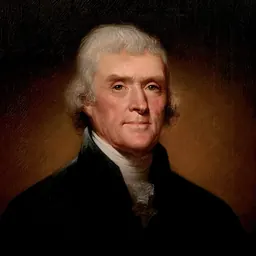
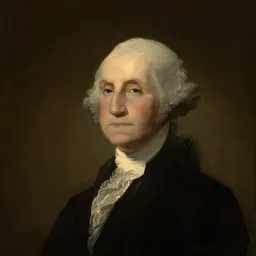
Related people
Same field, nearest in time
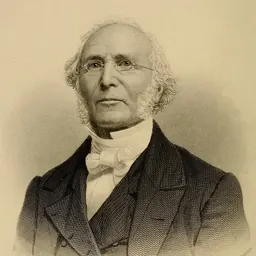



Contemporaries
People whose lives overlapped George Washington Gale's




Frequently asked questions
Who was George Washington Gale?
American academic founder
When was George Washington Gale born?
George Washington Gale was born in 1789 in Stanford.
When did George Washington Gale die?
George Washington Gale died on 13 September 1861.
What was George Washington Gale's occupation?
George Washington Gale was a clergyman and educator.
Sources & further reading
· Wikipedia: George Washington Gale
· DBpedia: George Washington Gale
Cite this page
APA: Biography.guide. (2026). George Washington Gale. https://biography.guide/george-washington-gale/
MLA: "George Washington Gale." Biography.guide, https://biography.guide/george-washington-gale/.
Chicago: "George Washington Gale." Biography.guide. https://biography.guide/george-washington-gale/.
Data last updated: 2026-09-20 · Spot an error? Report a correction.
Page generated 2026-09-27 05:18 UTC