
About Convers Francis
Lived 1795 – 1863 (aged 67). Convers Francis was an American clergyman and professor.
Convers Francis (November 9, 1795 – April 17, 1863) was an American Unitarian minister from Watertown, Massachusetts.
Life and work He was born the son of Susannah Rand Francis and Convers Francis, and named after his father. His sister, Lydia Maria, later became an important reformer.
Francis studied to become a minister at Harvard Divinity School. He was minister of the Watertown, Massachusetts, Unitarian Church from 1819 to 1842. Francis taught Theodore Parker beginning in 1832 and preached at his ordination ceremony in 1840. Francis encouraged Parker when his translations and books were not selling well. He wrote of his "astonishment at your labors and learning", but criticized the recent lack of interest in reading, writing "the cry is all for action—for doing something, not moping over books as they say".
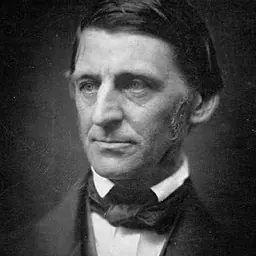
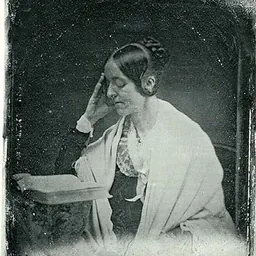
Both Francis and Parker joined the Transcendental Club in the 1830s, an organization which included members such as Ralph Waldo Emerson, Henry David Thoreau and Margaret Fuller.
One of the elders of the group, in fact the eldest member who was also a moderator of the Club, Francis influenced other members. Preaching at a time when Unitarians were breaking into sometimes-hostile factions in New England, he wrote that "the condition of things with us in the religious world is anything but pleasant... The cauldron is kept boiling, & all sorts of materials are thrown into it".
After 1842, Francis was Parkman Professor of Pulpit Eloquence at Harvard. His books and writings include Christianity as a Purely Internal Principle, Life of John Eliot, Apostle to the Indians and A Historical Sketch of Watertown (1830). In May 1833, Francis delivered "Popery and its kindred Principles unfriendly to the Improvement of Man" as a Dudleian Lecture in Cambridge.
In 1863 Francis donated two thousand six hundred books to the Harvard libraries. In a study of Francis' reconstructed library Carlson and Russell noted, "Francis was a bibliophile’s bibliophile. He loved books: he read them, collected them, loaned them, borrowed them, discussed them, and wrote them."
He died in 1863, one year after Transcendental Club co-member Henry David Thoreau died.
Don’t just read it —
keep it.
Full-length biographies made to live with: read them, listen on the way to work, watch them tonight.
- E-book
- Audio
- Video
Instant download · yours to keep · every purchase keeps this site free
Important facts
People in Convers Francis's life
Named in this biography and alive at the same time



Related people
Same field, nearest in time

Contemporaries
People whose lives overlapped Convers Francis's





Frequently asked questions
Who was Convers Francis?
American clergyman
When was Convers Francis born?
Convers Francis was born on 9 November 1795 in Cambridge.
When did Convers Francis die?
Convers Francis died on 17 April 1863 in Cambridge.
What was Convers Francis's occupation?
Convers Francis was a clergyman and professor.
What nationality was Convers Francis?
Convers Francis was American.
Sources & further reading
Cite this page
APA: Biography.guide. (2026). Convers Francis. https://biography.guide/convers-francis/
MLA: "Convers Francis." Biography.guide, https://biography.guide/convers-francis/.
Chicago: "Convers Francis." Biography.guide. https://biography.guide/convers-francis/.
Data last updated: 2026-09-20 · Spot an error? Report a correction.
Page generated 2026-09-27 05:29 UTC