
About George Warner
Lived 1845 – 1936 (aged 90–91). George Warner was a British curator, palaeographer, librarian and archivist.
Sir George Frederic Warner, FBA, FSA (7 April 1845 – 17 January 1936) was an English archivist; he was Keeper of Manuscripts and Egerton Librarian at the British Museum from 1904 to 1911.
Career Warner was born on 7 April 1845, the son of a solicitor, Isaac Warner, and his wife Susanna (nee Witt). He was educated at Christ's Hospital before going up to Pembroke College, Cambridge, to read classics, graduating in 1868. Three years later, he joined the British Museum's Department of Manuscripts. He was promoted to Assistant Keeper in 1888, and then Keeper of Manuscripts and Egerton Librarian in 1904. He retired from those positions in 1911, and lived out his retirement successively in Beaconsfield, Ealing and Weybridge, before dying on 17 January 1936; his wife, Marian Amelia (née Painter) survived him, as did their daughter, but their son predeceased him.
Warner was a specialist in palaeography (in 1903 he founded the New Palaeographical Society) and illuminated manuscripts. He started A Catalogue of Western Manuscripts in the Old Royal and King's Collections in 1894, although he did not oversee its eventual publication nearly thirty years later. He produced facsimiles for several illuminated manuscripts and a multi-volume set of the British Museum's principal manuscripts. According to F. G. Kenyon, his "most important works of scholarship" were The Buke of John Maundeuill (1889) and The Libell of Englyshe Polycye (1926). he was elected a Fellow of the British Academy (FBA) four years later, and in 1911 he was knighted (the same year that he was elected to an honorary fellowship at Pembroke College). He was also a Fellow of the Society of Antiquaries of London (FSA).
Selected publications Miracles de Nostre Dame: Collected by Jean Miélot, Secretary to Philip the Good, Duke of Burgundy (Nichols & Sons, 1885). The Buke of John Maundeuill: Being the Travels of Sir John Mandeville, Knight, 1322–1356 (Nichols & Sons, 1889). The Library of James VI, 1573–1583, from a Manuscript in the Hand of Peter Young, his Tutor (T. & A. Constable for the Scottish History Society, 1893). The Stowe Missal: MS. D. II. 3 in the library of the Royal Irish Academy, Dublin, 2 vols. (Henry Bradshaw Society, 1893). The Voyage of Robert Dudley, Afterwards Styled Earl of Warwick and Leicester and Duke of Northumberland, to the West Indies, 1594–5 (Hakluyt Society, 1899). Facsimiles of Ancient Manuscripts, etc. (Oxford University Press for New Palaeographical Society, 1903–12). Catalogue of Additions to the Department of Manuscripts, for 1900–05 (British Museum, 1907). The Benedictional of St Æthelwold, Bishop of Winchester, 963–984: Reproduced in Facsimile from the Manuscript in the Library of the Duke of Devonshire at Chatsworth (Roxburghe Club, 1910). Queen Mary's Psalter: Miniatures and Drawings by an English Artist of the 14th Century, Reproduced from Royal MS. 2 B. VII in the British Museum (British Museum, 1912). The Gospels of Matilda, Countess of Tuscany, 1055–1115: Nineteen Plates in Gold and Colour and Twelve in Monochrome from the Manuscript in the Library of John Pierpont Morgan (Roxburghe Club, 1917) The Libell of Englyshe Polycye: A Poem on the Use of Sea-power, 1436 (Clarendon Press, 1926). The Guthlac Roll: Scenes from the Life of St. Guthlac of Crowland by a Twelfth-century Artist Reproduced from Harley Roll Y. 6 in the British Museum (Roxburghe Club, 1928).
Likenesses Sir George Frederic Warner by Walter Stoneman (bromide print, 1917). National Portrait Gallery, London (NPG x185924).
Don’t just read it —
keep it.
Full-length biographies made to live with: read them, listen on the way to work, watch them tonight.
- E-book
- Audio
- Video
Instant download · yours to keep · every purchase keeps this site free
Important facts
People in George Warner's life
Named in this biography and alive at the same time


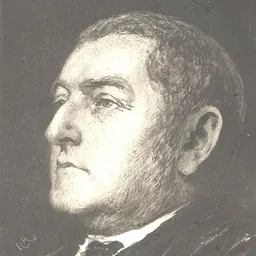



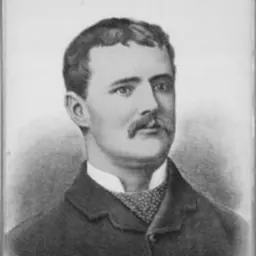
Related people
Same field, nearest in time
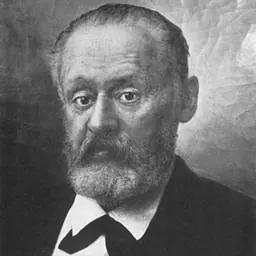


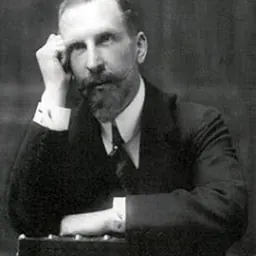
Contemporaries
People whose lives overlapped George Warner's

Frequently asked questions
Who was George Warner?
archivist (1845–1936)
When was George Warner born?
George Warner was born in 1845 in Winchester.
When did George Warner die?
George Warner died in 1936 in Weybridge.
What was George Warner's occupation?
George Warner was a curator, palaeographer, librarian and archivist.
What nationality was George Warner?
George Warner was British.
Sources & further reading
· DBpedia: George Frederic Warner
Cite this page
APA: Biography.guide. (2026). George Warner. https://biography.guide/george-warner-curator/
MLA: "George Warner." Biography.guide, https://biography.guide/george-warner-curator/.
Chicago: "George Warner." Biography.guide. https://biography.guide/george-warner-curator/.
Data last updated: 2026-09-20 · Spot an error? Report a correction.
Page generated 2026-09-27 05:19 UTC