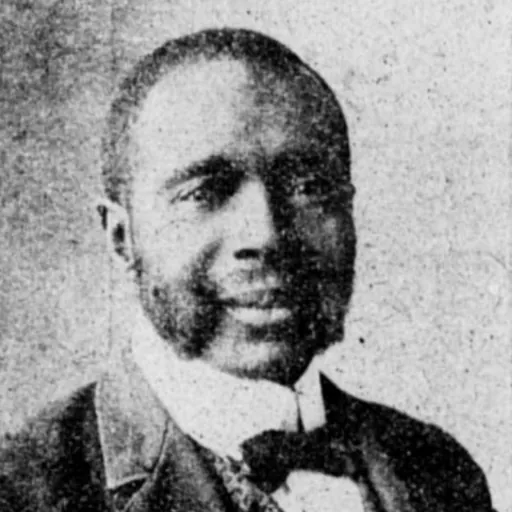
About George W. Woodbey
Lived 1854 – 1937 (aged 82). George W. Woodbey was an American politician and minister (Christianity).
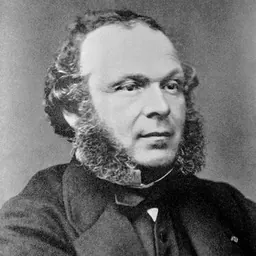
George Washington Woodbey (October 5, 1854 – August 27, 1937) was an influential African-American minister, author and Socialist. He wrote several influential papers about Socialism and African Americans, ministered in churches in the Midwestern United States and California, and served as the sole Black delegate to the Socialist Party of America conventions in 1904 and 1908.
Early life George Washington Woodbey was born into slavery in Johnson County, Tennessee, on October 5, 1854, to Charles Woodbey and Rachel Wagner. He learned how to read after being freed from slavery and was mostly self-educated, but attended common school for some time. He was ordained as a Baptist minister in Emporia, Kansas, in 1874 He ministered in churches in Nebraska, Kansas and Missouri.
Politics In Missouri and Kansas, Woodbey was active in the Republican. He joined the Prohibition Party and moved to Nebraska, where he was a Prohibitionist candidate for lieutenant governor and U.S. Congress. In 1896, he read Edward Bellamy's Looking Backward and became a subscriber to Appeal to Reason.
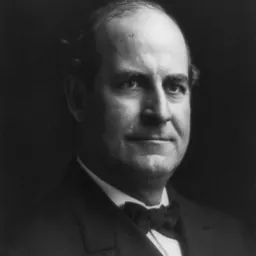
During the 1900 presidential election he joined the Populists and supported William Jennings Bryan for president. He saw speeches by Eugene Debs during the campaign. The Democrats invited Woodbey to deliver speeches, but then cut him off as he was too strongly socialist.
Woodbey became a member of the Socialist Party. He never took the Socialist Party to task on the question of race, even after his own nomination for vice presidential candidate was met with only one vote. Woodbey believed the Socialist Party could help solve racial problems in the United States because of its emphasis on economic changes to the system. Woodbey also saw the struggle for socialism as an extension of the struggle against slavery: as the Civil War had ended chattel slavery, so would the replacement of capitalism with socialism abolish wage slavery. Woodbey directly compared the means of repression used to discipline slaves and the working class, stating: "In the days of chattel slavery the masters had a patrol force to keep the negroes in their place and protect the interests of the masters. Today the capitalists use the police for the same purpose".
He promoted the causes of socialism across California and was recognized as one of the great socialist orators of the time. His ability to bring his message to the common man made him a reputation on the streets. On one occasion, Woodbey was denied access to a restaurant due to his race. He turned the situation around by putting together a successful boycott of the restaurant and hotel with the help of socialist comrades.
In 1902 Woodbey moved to San Diego, where he was pastor of Mt. Zion Baptist Church. He served on the executive board of the Socialist Party of California, and traveled around the state in his work. He believed that the socialist message of helping the poor was consistent with his Christian beliefs.
Because of the inflammatory nature of his message, Woodbey was in and out of jail for several years. In 1905, after one particular incident, the police hospitalized the orator. He organized a protest and went to the county jail to lodge a formal complaint. His complaint was met by being physically thrown from the building. Woodbey would then press charges of assault and battery on the officer. The case was taken to court and a jury found the defendant not guilty. The verdict was not what Woodbey was looking for, but it gave him an unexpected boost with the community. The event also allowed him to demonize the police as shills for the capitalist machine.
On January 8, 1912, the city council of San Diego passed legislation prohibiting street-corner meetings, including religious ones, within a district of 49 blocks in the center of town claiming that these were blocking traffic. The Industrial Workers of the World stated that this was an attempt to suppress them. Two days before the new rules went into effect the IWW and other socialists, including Woodbey, held a meeting in the center of the restricted area, but were broken up by the police.
Later life According to Philip Foner, there is no record of Woodbey or his activities after 1915; however, an article by Woodbey was printed in a Chicago publication in 1909. He was said to have been active in California as late as 1923.
Works The Bible and Socialism: A Conversation Between Two Preachers. San Diego, CA: G.W. Woodbey, 1904. The Distribution of Wealth. San Diego, CA: G.W. Woodbey, 1910. Why the Negro Should Vote the Socialist Ticket. Chicago: Socialist Party of America, n.d. [1910s]. Method of Procedure in Baptist Church Trials. Nashville, TN: National Baptist Pub. Board, 1916.
Don’t just read it —
keep it.
Full-length biographies made to live with: read them, listen on the way to work, watch them tonight.
- E-book
- Audio
- Video
Instant download · yours to keep · every purchase keeps this site free
Important facts
People in George W. Woodbey's life
Named in this biography and alive at the same time



Related people
Same field, nearest in time






Contemporaries
People whose lives overlapped George W. Woodbey's



Frequently asked questions
Who was George W. Woodbey?
American activist (1854-1937)
When was George W. Woodbey born?
George W. Woodbey was born on 5 October 1854 in Johnson County, Tennessee.
When did George W. Woodbey die?
George W. Woodbey died on 27 August 1937 in Los Angeles.
What was George W. Woodbey's occupation?
George W. Woodbey was a politician and minister (Christianity).
What nationality was George W. Woodbey?
George W. Woodbey was American.
Sources & further reading
· Wikipedia: George W. Woodbey
Cite this page
APA: Biography.guide. (2026). George W. Woodbey. https://biography.guide/george-w-woodbey/
MLA: "George W. Woodbey." Biography.guide, https://biography.guide/george-w-woodbey/.
Chicago: "George W. Woodbey." Biography.guide. https://biography.guide/george-w-woodbey/.
Data last updated: 2026-09-22 · Spot an error? Report a correction.
Page generated 2026-09-27 05:09 UTC