
About Edward Bellamy
Lived 1850 – 1898 (aged 48). Edward Bellamy was an American writer, novelist, journalist, science fiction writer and social reformer.
Edward Bellamy (; March 26, 1850 – May 22, 1898) was an American author, journalist, and political activist most famous for his utopian novel Looking Backward. Bellamy's vision of a harmonious future world inspired the formation of numerous "Nationalist Clubs" dedicated to the propagation of state ownership of the main pillars of the economy, achieved through nationalization.
After working as a journalist and writing several novels, Bellamy published Looking Backward in 1888. It was the third best-selling novel of the 19th century in the United States, and it especially appealed to a generation of intellectuals alienated by the perceived dark side of the Gilded Age. In the early 1890s, Bellamy established a newspaper known as The New Nation and began to promote united action between the various Nationalist Clubs and the emerging Populist Party. He published Equality, a sequel to Looking Backward, in 1897, and died the following year.
Biography
Early life
Edward Bellamy was born in Chicopee, Massachusetts. His father was Rufus King Bellamy (1816–1886), a Baptist minister and a descendant of Joseph Bellamy. His mother, Maria Louisa Putnam Bellamy, was a Calvinist. She was the daughter of a Baptist minister named Benjamin Putnam, who was forced to withdraw from the ministry in Salem, Massachusetts, following objections to his becoming a Freemason.
Bellamy attended public school at Chicopee Falls before leaving for Union College of Schenectady, New York, where he studied for just two semesters.
A turn to utopian science fiction with Looking Backward, 2000–1887, published in January 1888, captured the public imagination and catapulted Bellamy to literary fame. The book gained an extensive readership in the United Kingdom as well, more than 235,000 copies being sold there between 1890 and 1935.
In Looking Backward, a non-violent revolution had transformed the American economy and thereby society; private property had been abolished in favor of state ownership of capital and the elimination of social classes and the ills of society that he thought inevitably followed from them. In the new world of the year 2000, there was no longer war, poverty, crime, prostitution, corruption, money, or taxes. His vision of a country relieved of its social ills through abandonment of the principle of competition and establishment of state ownership of industry proved an appealing panacea to a generation of intellectuals alienated from the dark side of Gilded Age America. By 1891 it was reported that no fewer than 162 Nationalist Clubs were in existence.
Bellamy's use of the term "Nationalism" rather than "socialism" as a descriptor of his governmental vision was calculated, as he did not want to limit either sales of his novel or the potential influence of its political ideas. In an 1888 letter to literary critic William Dean Howells, Bellamy wrote:
Bellamy himself came to actively participate in the political movement which emerged around his book, particularly after 1891 when he founded his own magazine, The New Nation, and began to promote united action between the various Nationalist Clubs and the emerging People's Party. For the next three and a half years, Bellamy gave his all to politics, publishing his magazine, working to influence the platform of the People's Party, and publicizing the Nationalist movement in the popular press. This phase of his life came to an end in 1894, when The New Nation was forced to suspend publication owing to financial difficulties.
With the key activists of the Nationalist Clubs largely absorbed into the apparatus of the People's Party (although a Nationalist Party did run three candidates for office in Wisconsin as late as 1896 ), Bellamy abandoned politics for a return to literature. He set to work on a sequel to Looking Backward titled Equality, attempting to deal with the ideal society of the post-revolutionary future in greater detail. In this final work, he addressed the question of feminism, dealing with the taboo subject of female reproductive rights in a future, post-revolutionary America. Other subjects overlooked in Looking Backward, such as animal rights and wilderness preservation, were dealt with in a similar context. was designated a National Historic Landmark in 1971.
Bellamy was the cousin of Francis Bellamy, famous for writing the original version of the Pledge of Allegiance.
Bellamy Road, a residential road in Toronto, is named for the author.
In July, 1967 a street in Co-op City, the Bronx, New York was named in honor of Bellamy (Bellamy Loop).
Published works
Novels
Six to One (1878) Dr. Heidenhoff's Process (1880) Miss Ludington's Sister (1885) Looking Backward, 2000–1887 (1888) Equality (1897) The Duke of Stockbridge; a Romance of Shays' Rebellion (1900)
Short stories
"At Pinney's Ranch" "The Blindman's World" "Deserted" "An Echo Of Antietam" "Hooking Watermelons" "Lost" "A Love Story Reversed" "The Old Folks' Party" "A Positive Romance" "Potts's Painless Cure" "A Summer Evening's Dream" "To Whom This May Come" "Two Days' Solitary Imprisonment" "With The Eyes Shut" "The Cold Snap" "The Old Folks' Party"
Other
Edward Bellamy Speaks Again! (1937) Talks on Nationalism (1938)
Don’t just read it —
keep it.
Full-length biographies made to live with: read them, listen on the way to work, watch them tonight.
- E-book
- Audio
- Video
Instant download · yours to keep · every purchase keeps this site free
Important facts
People in Edward Bellamy's life
Named in this biography and alive at the same time


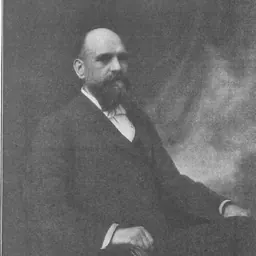
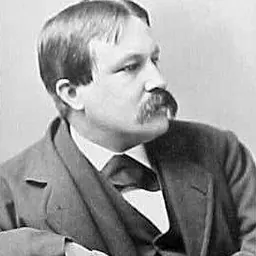
Related people
Same field, nearest in time
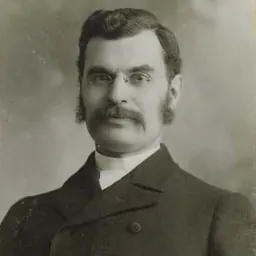
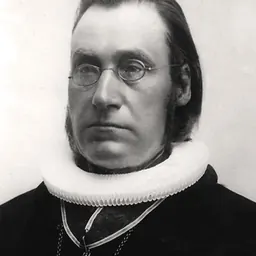



Contemporaries
People whose lives overlapped Edward Bellamy's


Frequently asked questions
Who was Edward Bellamy?
American author and socialist (1850–1898)
When was Edward Bellamy born?
Edward Bellamy was born on 26 March 1850 in Chicopee.
When did Edward Bellamy die?
Edward Bellamy died on 22 May 1898 in Chicopee.
What was Edward Bellamy's occupation?
Edward Bellamy was a writer, novelist, journalist, science fiction writer and social reformer.
What nationality was Edward Bellamy?
Edward Bellamy was American.
Sources & further reading
Cite this page
APA: Biography.guide. (2026). Edward Bellamy. https://biography.guide/edward-bellamy/
MLA: "Edward Bellamy." Biography.guide, https://biography.guide/edward-bellamy/.
Chicago: "Edward Bellamy." Biography.guide. https://biography.guide/edward-bellamy/.
Data last updated: 2026-09-20 · Spot an error? Report a correction.
Page generated 2026-09-27 05:20 UTC