
George W. McClusky
Headed NYPD Detective Bureau from 1897–1900 and 1902-1905; credited for the arrests of confidence man John McDermott and murderer Roland B. Molineux.
About George W. McClusky
Lived 1861 – 1912 (aged 50–51). George W. McClusky was an American police officer, known for Roland B. Molineux.
George W. McClusky or McCluskey (1861 – December 17, 1912) was an American law enforcement officer and police inspector in the New York City Police Department. He was popularly known as "Gentleman" or "Chesty McCluskey", the latter name given to him by NYPD Police Chief William "Big Bill" Devery, and was the longtime head of the NYPD Detective's Bureau at the turn of the 20th century. He was also, at one time, the youngest inspector on the police force.
Biography
Early life and police career Born in New York City, George McClusky joined the New York City Police Department as a patrolman in 1882. He rose more slowly in rank than many of his peers, becoming a roundsman in 1895, then sergeant and police captain within the next two years. When Theodore Roosevelt was appointed head of the Board of Police Commissioners, McClusky was reassigned as a patrolman. His rank would rise and fall more than any other officer in his 30 years on the police force. Indeed, he soon regained his former rank under Mayor William Strong and was considered one of the rising stars in the NYPD during the 1890s.
McClusky was considered an ideal undercover detective as his clothes and "aristocratic" manner provided him with an excellent cover. He was credited for a number of high-profile arrests during his early career as a police detective. Among these was the capture of the confidence man John McDermott whom he pursued through Europe until finally tracking him down at New York's popular Delmonico's on May 28, 1890. McDermott was dining with Sir Robert Peel and Viscount Clifford Talbot, having befriended them on his return voyage to the United States, when McClusky confronted the trickster. An altercation then occurred, the English noblemen angered at McClusky's accusations towards their friend, however McClusky was able to convince the men of McDermott's intentions and prevented them from becoming another of his victims.
"Chesty" George and the NYPD Detective's Bureau In 1897, McClusky was made chief of the NYPD Detective's Bureau. Through evidence largely collected by himself, he was able to arrest murderer Roland B. Molineux. He remained in the bureau for three years before his demotion by Police Chief William "Big Bill" Devery in 1900. Devery was alleged to have been part of a gambling syndicate consisting of himself, Frank Farrell and Timothy "Big Tim" Sullivan which, at the time of McClusky's removal, generated around $3 million from payoffs to corrupt politicians and police officials according to the New York Times.
He later marched the Morellos through the streets of Little Italy, a move that has been described as an early version of the perp walk that later become a common practice of law enforcement in New York and the country as a whole. Although McClusky claimed that the three paddy wagons which had been scheduled to transport them to the courthouse had not shown, it has been speculated that he really wanted to humiliate the Morellos by parading them "before their countrymen as the Romans had paraded their captives". Italian police were also known to use this tactic. What happened to the film is unknown. It was never displayed to the public.
McCluskey's return lasted only a short while and he was removed once more in 1905 when William McAdoo succeeded Greene as commissioner. His career did not improve under the Cropsey administration as he was demoted to captain and sent to Morrisania Station. His rank was eventually restored under Police Commissioner Rhinelander Waldo after Waldo's appointment in 1911.
Death In late 1912, McClusky became mysteriously ill while in charge of the Fourteenth Inspection District. It was first believed he had become sick with ptomaine poisoning after eating shellfish at a recent shore dinner and took a leave of absence on September 18. His condition did not improve however and a physical examination found he was suffering from acute anemia. The following day, a more thorough examination by Dr. Charles E. Nammack found his blood contained only 27% of red corpuscles found in normal blood. McClusky's health grew continually worse over the next few months. Dr. Nammack later diagnosed his condition as a rare form of anemia. The doctor later explained further "Little is known of the rare form of anemia from which the Inspector suffered. It is called progressive pernicious anaemia, and of the 1,200 cases known to the medical profession, only six recoveries are reported". A blood transfusion, he claimed, would be been ineffective as McClusky's heart and other organs were undergoing a general breakdown. In the last weeks of his life, the red corpuscles in his blood fell to 9%.
Don’t just read it —
keep it.
Full-length biographies made to live with: read them, listen on the way to work, watch them tonight.
- E-book
- Audio
- Video
Instant download · yours to keep · every purchase keeps this site free
Important facts
People in George W. McClusky's life
Named in this biography and alive at the same time

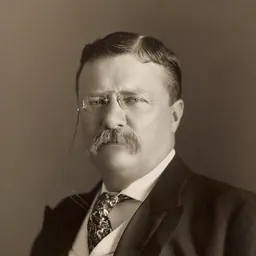


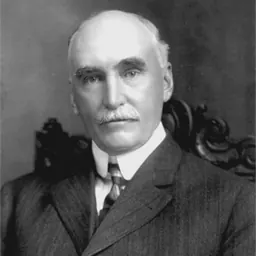

Related people
Same field, nearest in time


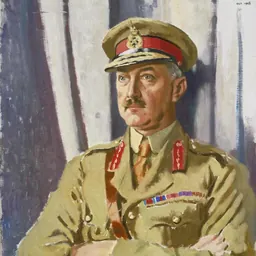

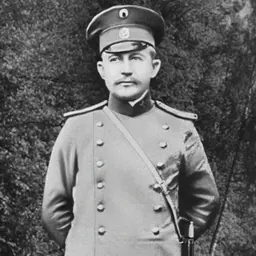

Contemporaries
People whose lives overlapped George W. McClusky's
Frequently asked questions
Who was George W. McClusky?
Headed NYPD Detective Bureau from 1897–1900 and 1902-1905; credited for the arrests of confidence man John McDermott and murderer Roland B. Molineux.
When was George W. McClusky born?
George W. McClusky was born in 1861 in New York City.
When did George W. McClusky die?
George W. McClusky died on 17 December 1912 in Manhattan.
What was George W. McClusky's occupation?
George W. McClusky was a police officer.
What was George W. McClusky known for?
George W. McClusky was known for Roland B. Molineux.
What nationality was George W. McClusky?
George W. McClusky was American.
Sources & further reading
· Wikipedia: George W. McClusky
Cite this page
APA: Biography.guide. (2026). George W. McClusky. https://biography.guide/george-w-mcclusky/
MLA: "George W. McClusky." Biography.guide, https://biography.guide/george-w-mcclusky/.
Chicago: "George W. McClusky." Biography.guide. https://biography.guide/george-w-mcclusky/.
Data last updated: 2026-09-26 · Spot an error? Report a correction.
Page generated 2026-09-27 05:14 UTC