
George W. Harkins
Choctaw Chief
About George W. Harkins
Lived 1810 – 1890 (aged 79–80). George W. Harkins was a tribal chief.
George Washington Harkins (1810 – October 23, 1861) was an attorney and prominent chief of the Choctaw tribe during Indian removal.
Elected as principal chief after the national council deposed his maternal uncle, Greenwood LeFlore, Harkins was elected judge of the Red River District in Indian Territory in 1834. In 1850, he was chosen as chief of the Apukshunnubbee District (one of three) of the Choctaw Nation and served until 1857.
Early life and education Harkins was born into a high-status Choctaw clan through his mother, Louisa "Lusony" LeFlore. His father was Willis J Harkins. His oldest maternal uncle, traditionally the most important mentor to a boy child, was Greenwood LeFlore, the chief of the Choctaw. Harkins learned from both his cultures but identified as Choctaw first and foremost.
Harkins was educated at Centre College in Danville, Kentucky. He earned a law degree from Cumberland University.
Marriage and family Harkins married Salina Gardner and Lily Folsom, Daughter of Chief David Folsom and Rhoda Nail. It is said that he also married Laris Narcissy Leflore and had two children, but no evidence of that has been found.
He had several children with them who survived to adulthood: Richard, Sarah, Catherine, Ellen, David Folsom "Dave" Harkins (1828 - 1879), Susan (b. 1830- ), Cornelia, Henry Clay Harkins (1833-1886), Loren (b. 1835- ), and Mary Jane Harkins (b. 1837- ). All belonged to their mother's clans and gained status in the tribe through them.
His brother Willis had a son, George Willis Harkins (1835-1890), who was known as "The Rawhide Orator". See Leaders and Leading Men of the Indian Territory (Chicago : American Publishers' Association, 1891), page 254.
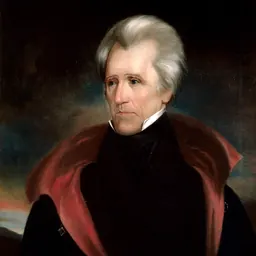
Career In October 1830, the national council led a coup to depose Greenwood LeFlore as chief after he signed the treaty for removal. It proceeded to elect Harkins, who belonged to the same clan and was a nephew of LeFlore through his mother. In the Choctaw matrilineal system, the mother's clan was the one that was most important to a person's status. To proceed with Indian Removal, President Andrew Jackson refused to recognize Harkins's authority with the tribe.
After Indian Removal, Harkins rose in influence in the tribe. Following the creation of a new Choctaw Constitution in 1834, he was elected judge of the Red River District in Indian Territory. The council of chiefs of the Indian District elected him as principal chief of the District (one of three in the Choctaw Nation), where he served from 1850 to 1857.
Harkins wrote in part:
Don’t just read it —
keep it.
Full-length biographies made to live with: read them, listen on the way to work, watch them tonight.
- E-book
- Audio
- Video
Instant download · yours to keep · every purchase keeps this site free
Important facts
People in George W. Harkins's life
Named in this biography and alive at the same time


Related people
Same field, nearest in time


Contemporaries
People whose lives overlapped George W. Harkins's






Frequently asked questions
Who was George W. Harkins?
Choctaw Chief (1810–1890)
When was George W. Harkins born?
George W. Harkins was born in 1810 in Mississippi Territory.
When did George W. Harkins die?
George W. Harkins died in 1890 in Fort Towson.
What was George W. Harkins's occupation?
George W. Harkins was a tribal chief.
What nationality was George W. Harkins?
George W. Harkins's recorded nationality: Choctaw.
Sources & further reading
· Wikipedia: George W. Harkins
Cite this page
APA: Biography.guide. (2026). George W. Harkins. https://biography.guide/george-w-harkins/
MLA: "George W. Harkins." Biography.guide, https://biography.guide/george-w-harkins/.
Chicago: "George W. Harkins." Biography.guide. https://biography.guide/george-w-harkins/.
Data last updated: 2026-09-22 · Spot an error? Report a correction.
Page generated 2026-09-27 05:31 UTC