
George Vaughan Maddox
Nineteenth-century British architect and builder
About George Vaughan Maddox
Lived 1802 – 1864 (aged 61–62). George Vaughan Maddox was a British architect and master builder.
George Vaughan Maddox (1802–27 February 1864) was a nineteenth-century British architect and builder, whose work was undertaken principally in the town of Monmouth, Wales, and in the wider county. Working mainly in a Neo-Classical style, his extensive output made a significant contribution to the Monmouth townscape. The architectural historian John Newman considers that Monmouth owes to Maddox "its particular architectural flavour. For two decades from the mid-1820s he put up a sequence of public buildings and private houses in the town, in a style deft, cultured, and only occasionally unresolved." The Market Hall and 1-6 Priory Street are considered his "most important projects".
Life and works Maddox was born in 1802, the son of a builder, John Maddox, who also worked in the county. Howard Colvin suggests he was related to George Maddox. Maddox undertook a range of building commissions, including public works, churches and private domestic and commercial buildings.
Public works Maddox designed some of Monmouth's most notable buildings including "his major work" the Market Hall. In the early 1830s, he won a competition organised by the borough council in Monmouth. The council had two main objectives: to relieve Church Street, then the major route into the town from the east, of through traffic; and to provide a new market hall, to allow the removal of the existing market from beneath the Shire Hall, enabling the expansion of that building to accommodate the new Assizes court. Maddox proposed a new carriage road running above the bank of the River Monnow, supported by a viaduct. The Market Hall, with a crescent-shaped frontage of Bath Stone in a Doric style, and an Ionic cupola and clerestory above the central part of the building, was built on one side of the road, and a long convex stuccoed frontage, 1-6 Priory Street, on the opposite side. A range of slaughterhouses, the Shambles, comprising 24 rooms with openings onto the river so that their waste would drain directly into it, were sited beneath the sandstone arches of the viaduct. The new road, now Priory Street, was opened in 1834, and the Market Hall in 1840. John Newman notes the ingenuity and innovation of Maddox's scheme, which created "a remarkably early inner bypass".
Churches In Monmouth, Maddox designed the Methodist Church. The Victoria County History notes that Maddox undertook work at Hempsted, and Colvin suggests he undertook further ecclesiastical work at Clearwell, Gloucestershire. He drew up plans for the reconstruction of the interior of the Priory Church of St Mary, Abergavenny but these were not carried out. The local historian, Keith Kissack notes that Maddox designed new side galleries for St Mary’s in 1824 but this work was removed in George Edmund Street’s remodelling of the 1880s.
Private commissions Maddox's domestic and commercial buildings in the town and environs include the Beaufort Arms Hotel, Pentwyn at Rockfield, which he built as his own residence in 1834–37; and Croft-y-Bwla, a villa midway between Monmouth and Rockfield which was the home of Alexander Rolls and his first wife Kate Steward Rolls. Further works include the Masonic Hall, Kingsley House and Hendre House, the former of which he designed as his own townhouse, Oak House, and, possibly, 18 St James Street. Keith Kissack notes that Charles Heath, the Monmouth antiquarian, attributed the house to Maddox, but suggests that it may be by one of his family, rather than George Vaughan.
Within the wider county, he undertook a limited early re-building of The Hendre, and carried out work in Commercial Street, Pontypool. Cadw suggests that Maddox was also the architect of the main block of Piercefield House, near Chepstow, working to designs by Sir John Soane. Given the date of Maddox's birth, and the construction period for Piercefield, this seems unlikely. Newman follows the more conventional attribution to Soane himself.
Maddox died at Hempsted Rectory, Gloucestershire on 27 February 1864.
Gallery
Don’t just read it —
keep it.
Full-length biographies made to live with: read them, listen on the way to work, watch them tonight.
- E-book
- Audio
- Video
Instant download · yours to keep · every purchase keeps this site free
Important facts
People in George Vaughan Maddox's life
Named in this biography and alive at the same time



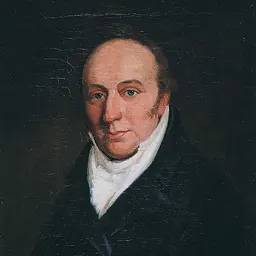
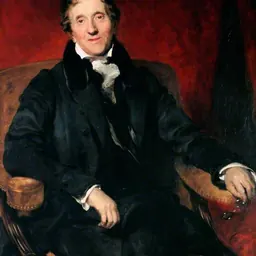

Related people
Same field, nearest in time
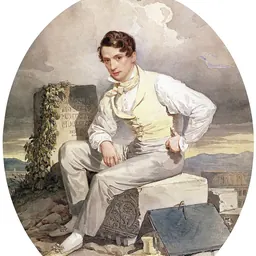

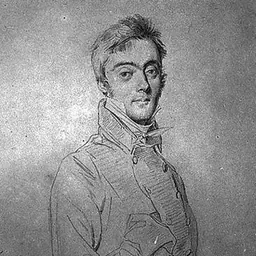

Contemporaries
People whose lives overlapped George Vaughan Maddox's





Frequently asked questions
Who was George Vaughan Maddox?
nineteenth-century British architect and builder
When was George Vaughan Maddox born?
George Vaughan Maddox was born in 1802 in Monmouth.
When did George Vaughan Maddox die?
George Vaughan Maddox died on 27 February 1864 in Hempsted.
What was George Vaughan Maddox's occupation?
George Vaughan Maddox was an architect and master builder.
What nationality was George Vaughan Maddox?
George Vaughan Maddox was British.
Sources & further reading
· Wikipedia: George Vaughan Maddox
· DBpedia: George Vaughan Maddox
Cite this page
APA: Biography.guide. (2026). George Vaughan Maddox. https://biography.guide/george-vaughan-maddox/
MLA: "George Vaughan Maddox." Biography.guide, https://biography.guide/george-vaughan-maddox/.
Chicago: "George Vaughan Maddox." Biography.guide. https://biography.guide/george-vaughan-maddox/.
Data last updated: 2026-09-22 · Spot an error? Report a correction.
Page generated 2026-09-27 05:14 UTC