
About George Turnbull
Lived 1809 – 1889 (aged 79). George Turnbull was a British civil engineer and engineer.
George Turnbull (2 September 1809 – 26 February 1889) was a Scottish engineer. He was responsible from 1851 to 1863 for the construction of the first Indian long-distance railway line: Calcutta to Benares up beside the Ganges river, 541 miles (871 kilometres), (601 miles including branches). The main line was later extended to Delhi. He had some 100 British civil engineers and 118,000 Indian workers. All railway lines, engines etc etc were brought from Britain in ships (before the Suez Canal existed) -- most then went in Indian ships up the Ganges river, despite monsoons.
On completion, Turnbull was gazetted by the Indian government as the "First railway engineer of India". He declined a British knighthood.
Early life George Turnbull was born in Luncarty, 5 miles north of Perth, Scotland in 1809, the 11th and last child of William Turnbull and Mary Sandeman. Eight children were still living when the family moved in 1814 to nearby Huntingtower village, where his father successfully developed a linen bleachfield. His two grandfathers Hector Turnbull and William Sandeman had jointly developed bleachfields in Luncarty. Initially largely schooled by his older sister Mary, George in 1819 from age 10 rode a pony to Perth Grammar School. In 1824 he attended Edinburgh University learning Latin, Greek and mathematics. With one year for his father, he learned linen-manufacturing engineering and book-keeping.
Career in England In 1828 he sailed from Dundee to London to train under the famous civil engineer Thomas Telford building St Katharine Docks. In 1830 he became Telford's draughtsman and clerk, living in Telford's house in 24 Abingdon Street. He became an Associate of the Institution of Civil Engineers at age 19 and eventually the oldest member.
From 1840 to 1842 Turnbull built Middlesbrough Dock which was later bought by the Stockton and Darlington Railway. In 1841 he travelled through deep snow to Stirling to agree a contract to supply sleepers for the railway. In 1843 he was resident engineer for William Cubitt for the railway line from the Shakespeare Tunnel along the shore to Dover station (he entertained the Duke of Wellington, "pale, old and shaky on his legs", who visited the works) and built a pier and landing stages at Folkestone.
In 1845 he was the engineer in Birkenhead for the complex Seacombe Wall sea defence that helped drain the marshes behind the town of Seacombe.
In 1846-9 he was the resident engineer for the Great Northern Railway making cuttings and the South Mimms, Copenhagen and three other tunnels for the first 20 miles out of London, and making the first plans for King's Cross station.
East Indian Railway
In 1850 he was appointed Chief Engineer of the East Indian Railway, building 1851–1862 India's first main-line railway 541 miles (871kms) from Calcutta to Benares, (on the route to Delhi); 601 miles (967kms) including branches. He designed Calcutta's terminus at Howrah which now has 23 platforms and the highest passenger and freight train-handling capacity of any station in India. The monsoon-ravaged Ganges tributaries, such as the wide Sone River were particularly challenging to bridge. Major constraints for Turnbull were the lack of both quality clay and local brick-building skills resulting in the change to importing nearly all ironwork from England (before the Suez canal) for the many bridges, rails, engines, etc as no Indian steel works existed. Another constraint was the difficulty of moving enormous volumes of materials from Calcutta up the Ganges on its primitive "country boats", particularly during the period of the Indian Mutiny when many boats were sunk and materials stolen. Cholera and other diseases killed hundreds of Indians and many of the over 100 English civil engineers.
Calcutta University Syndicate In 1861 Turnbull was appointed a member of the Syndicate of the Calcutta University.
Sulkea Dock In Calcutta in 1861 the Peninsular and Oriental Steam Navigation Company employed Turnbull to redesign the Sulkea Graving Dock, at Sulkea, and widen its entrance.
Personal life In 1845 he married Jane Pope in St. Margaret's, Westminster. She died of fever on 23 August 1850 in Calcutta, only four months after arriving there. In 1855, after leave in England and on his way again to India, he married Fanny Thomas, the engineer William Cubitt's niece (in Neuchâtel, Switzerland because of concern that UK marriage to his deceased wife's half-sister might not be legal in England). Their first child [Ellen] Nelly was born on 14 July 1856 in Calcutta 9 months after their wedding. They had six children: their infants Jane and later Rose were born in Calcutta and successively buried in the same grave in Circular Road. Born in Calcutta on 17 March 1860 was their son George. Born in London were their son Alexander Duncan Turnbull on 10 March 1863 and daughter Katie on 4 June 1864.
The family retired to Cornwall Gardens in London and then in 1875 to Rosehill, Abbots Langley, Hertfordshire, England. The house Rosehill was built in the 1820s and demolished circa 1952. The house stood on Gallows Hill where the Gade View flats are today. He was the Vice-Chairman of the Assam Tea Company – his younger son (Alexander) Duncan Turnbull worked for the company in London and then Assam, where Duncan's daughter Doris was born in 1898. George Turnbull's wife Fanny died in 1903.
Abbots Langley Applying his engineering skills, Turnbull wrote the prospectus for the Abbots Langley Water Company and was much involved with the village's drainage and sewerage scheme in 1885. In March 1877, he also took a lease on 24 Collingham Place in London.
The village church includes a stained-glass memorial window with the inscription To the Glory of God in memory of George Turnbull C.E. born 1809 died 1889. It was donated by his widow Fanny.
Don’t just read it —
keep it.
Full-length biographies made to live with: read them, listen on the way to work, watch them tonight.
- E-book
- Audio
- Video
Instant download · yours to keep · every purchase keeps this site free
Important facts
People in George Turnbull's life
Named in this biography and alive at the same time
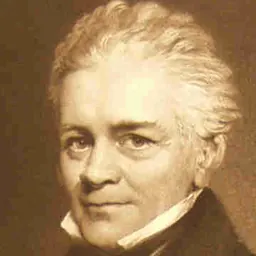
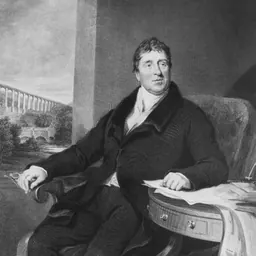



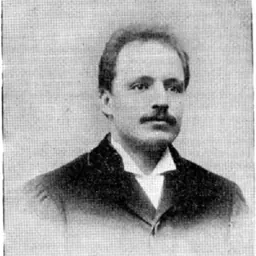
Related people
Same field, nearest in time



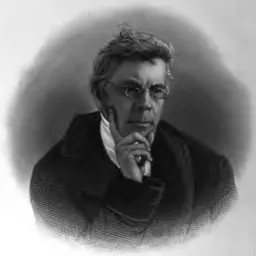
Contemporaries
People whose lives overlapped George Turnbull's




Frequently asked questions
Who was George Turnbull?
Scottish railway engineer in India (1809-1889)
When was George Turnbull born?
George Turnbull was born on 2 September 1809 in Luncarty.
When did George Turnbull die?
George Turnbull died on 26 February 1889 in Abbots Langley.
What was George Turnbull's occupation?
George Turnbull was a civil engineer and engineer.
What nationality was George Turnbull?
George Turnbull was British.
Sources & further reading
· DBpedia: George Turnbull (engineer)
Cite this page
APA: Biography.guide. (2026). George Turnbull. https://biography.guide/george-turnbull-civil-engineer/
MLA: "George Turnbull." Biography.guide, https://biography.guide/george-turnbull-civil-engineer/.
Chicago: "George Turnbull." Biography.guide. https://biography.guide/george-turnbull-civil-engineer/.
Data last updated: 2026-09-20 · Spot an error? Report a correction.
Page generated 2026-09-27 05:20 UTC