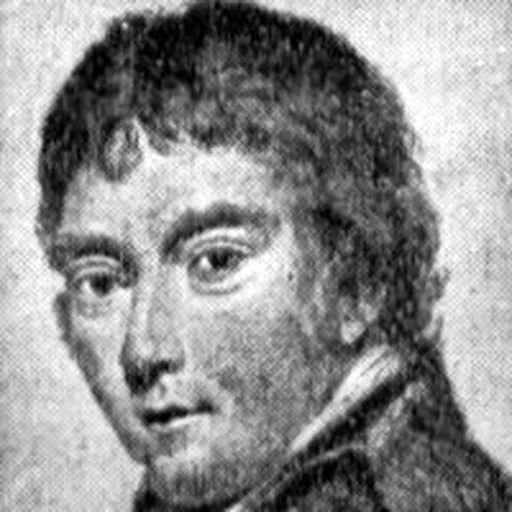
About George Tierney
Lived 1761 – 1830 (aged 68). George Tierney was a British politician.
George Tierney PC (20 March 1761 – 25 January 1830) was an Irish Whig politician. For much of his career he was in opposition to the governments of William Pitt and Lord Liverpool. From 1818 to 1821 he was Leader of the Opposition in the House of Commons.
Background and education Born in Gibraltar, Tierney was the son of Thomas Tierney, a wealthy Irish merchant of London, who was living in Gibraltar as prize agent. He was sent to Eton and Peterhouse, Cambridge, where he took the degree of Law in 1784. He was called to the bar from Lincoln's Inn in the same year,
Political career In Le Boureau (1798), James Gillray caricatured Tierney as a French executioner.
Early career Tierney contested Colchester in 1788, when both candidates received the same number of votes, but Tierney was declared elected. He was, however, defeated in the 1790 general election.
He returned to Parliament in 1796 for Southwark and sat for that seat until 1806, and then represented in turn Athlone (1806–1807), Bandon (1807–1812), Appleby (1812–1818), and Knaresborough (1818–1830). During his early years in Parliament he was known for his radical views and was a supporter of Charles James Fox. The French Revolution of 1789 was a polarising force in British Whig politics with some supporting the revolution, and others such as Edmund Burke strongly opposed to it. Because of his radical views, Tierney was often portrayed in caricatures in the costume of a French revolutionary.
Duel When Charles James Fox seceded from the House of Commons, Tierney emerged as one of the most prominent opponents of William Pitt's foreign policy. In May 1798, Pitt accused him of want of patriotism. A duel ensued at Putney Heath on Sunday, 27 May 1798; but neither combatant was injured.
Office In 1803, Tierney, partly because peace had been ratified with France at Amiens, and partly because Pitt was out of office, joined the ministry of Henry Addington as Treasurer of the Navy, and was created a Privy Councillor; but this alienated many of his supporters among the middle classes, and offended most of the influential Whigs. On the death of Fox in 1806 he joined William Grenville's Ministry of All the Talents as President of the Board of Control, with a seat in the cabinet, and thus brought himself once more into line with the Whigs. He left office the following year when Grenville's government fell and was replaced by the Tories, who were to dominate office for the next generation. Tierney was in opposition for the following twenty years.
Opposition About a year after the death of George Ponsonby in 1817, Tierney reluctantly became the recognised leader of the opposition in the House of Commons. At first he was successful, with Whig gains being made at the 1818 general election. On 18 May 1819, Tierney moved a motion in the House of Commons for a committee on the state of the nation. This motion was defeated by 357 to 178, which was a division involving the largest number of MPs until the debates over the Reform bill in the early 1830s. Foord comments that "this defeat put an effective end to Tierney's leadership... Tierney did not disclaim the leadership until 23 Jan. 1821 ..., but he had ceased to exercise its functions since the great defeat".
Final years Late in his career Tierney joined the government of Tory George Canning. In George Canning's ministry, he was Master of the Mint, and when Lord Goderich succeeded to the lead Tierney was admitted to the cabinet; but he was already suffering from ill-health and died suddenly at Savile Row, London.
Don’t just read it —
keep it.
Full-length biographies made to live with: read them, listen on the way to work, watch them tonight.
- E-book
- Audio
- Video
Instant download · yours to keep · every purchase keeps this site free
Important facts
People in George Tierney's life
Named in this biography and alive at the same time


Related people
Same field, nearest in time



Contemporaries
People whose lives overlapped George Tierney's




Frequently asked questions
Who was George Tierney?
British politician (1761-1830)
When was George Tierney born?
George Tierney was born on 20 March 1761 in Gibraltar.
When did George Tierney die?
George Tierney died on 25 January 1830 in Savile Row.
What was George Tierney's occupation?
George Tierney was a politician.
What nationality was George Tierney?
George Tierney was British.
Sources & further reading
Cite this page
APA: Biography.guide. (2026). George Tierney. https://biography.guide/george-tierney/
MLA: "George Tierney." Biography.guide, https://biography.guide/george-tierney/.
Chicago: "George Tierney." Biography.guide. https://biography.guide/george-tierney/.
Data last updated: 2026-09-22 · Spot an error? Report a correction.
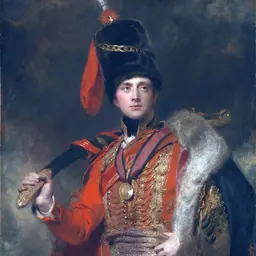
Portrait: Wikimedia Commons · author & licence
Page generated 2026-09-27 05:04 UTC