
George Thorp
British officer of the Royal Navy during the French Revolutionary Wars
About George Thorp
Lived 1777 – 1797 (aged 19). George Thorp was a British military personnel.
George Thorp (9 September 1777 – 25 July 1797) was an officer of the Royal Navy who saw service during the French Revolutionary Wars. His short, but distinguished, career culminated in service as first lieutenant of the frigate and his death, aged 19, at the side of his commanding officer, Captain Richard Bowen, in the assault on Santa Cruz, Tenerife.
Family and early life George Thorp was born on 9 September 1777, the fourth son of Dr Robert Thorp MA, DD, Rector of Ryton from 1781 to 1795, Archdeacon of Northumberland from 1792 to 1806, a distinguished mathematician (senior wrangler at Cambridge in 1758) and Latin scholar. His younger brother Charles Thorp also became rector of Ryton and later Archdeacon of Durham and a founder of Durham University.
In 1788, Pooley Onslow, a first cousin of George's and daughter of his father's sister Jane, married Rear Admiral Sir Francis Samuel Drake, 1st Baronet, brother of Sir Francis Henry Drake, 5th Baronet and last in the line of baronets descended from Sir Francis Drake, 1st Baronet, nephew of the Elizabethan naval hero Sir Francis Drake. In the year following his marriage, Sir Samuel (as he was known) was appointed a junior lord of the admiralty, though dying shortly afterwards. The marriage likely gave Lady Drake the ear of many senior naval officers in addition to those of other distinguished persons known to her father, George Onslow, Member of Parliament and an ex-army officer and her grandfather, Lieutenant-General Richard Onslow. Surviving correspondence between George and his family makes clear the patronage he received from Lady Drake throughout his short career.
Enlistment at Portsmouth
Thorp joined the Royal Navy in Portsmouth in February 1790, aged 12, and served in the following ships:
Ships in which served Ship Period served Commanding officer Thisbe 23 January 1790 – 17 July 1791 Captain Rupert George Magnificent 18 July 1791 – 15 November 1791 Captain George Cranfield Berkeley Juno 16 November 1791 - February / March 1794 Captain Samuel Hood Aigle February / March 1794 - March / April 1796 Captain Samuel Hood Victory April 1796 - 7 May 1796 Captain Gray and Captain Robert Calder Terpsichore 8 May 1796 – 24 July 1797 Captain Richard Bowen
For his arrival at Portsmouth, Lady Drake provided George with several letters of introduction. Dr Thorp, who accompanied his young son, wrote of other ships in an unsuccessful attempt to obtain authority to press local men into service to make up the difference between ships' peacetime and wartime complements, suggesting that Thisbe may have been maintained in a state of preparedness for action that provided good training for Thorp.
On Thisbe'''s return to England in July 1791, Thorp transferred to the ship-of-the-line Magnificent.
HMS Juno On 16 November 1791, Thorp reported on board the frigate (32 guns), under the command of Captain Samuel Hood, a cousin once removed of Lord Hood and later to become Vice-Admiral Sir Samuel Hood, 1st Baronet. Throughout 1792, Juno was based at Weymouth in attendance on the King and frequently embarked members of the Royal Family. Early in 1793 she joined the Mediterranean Fleet under Lord Hood. The Juno later took part in some notable events during the time Thorp served in her.
Escape from Toulon
HMS Aigle When Captain Hood transferred from the Juno to the bigger frigate (38 guns) in March 1794 he took with him a contingent of officers and men that included Midshipman Thorp.
Corsica Between April and August 1795, Aigle took part in the blockade of Corsica and the capture of Calvi.
SmyrnaAigle spent six months from May to October 1795 blockading French warships in the Turkish port of Smyrna (now İzmir) – a very unpopular operation because of its lack of opportunity for prizes and its unhealthy climate, with frequent outbreaks of the plague.
HMS Victory Thorp was transferred to Sir John Jervis' flagship in April 1796, where he was to sit the lieutenants' examination.
Promotion to lieutenant Thorp's seniority as lieutenant was 1 May 1796, at which time he would have been 18 years and 7 months old, having enlisted the aid of his sister Jane to obtain documents asserting that he was over 20 years old, the minimum age for candidates sitting the lieutenants' examination.
HMS Terpsichore
On 8 May 1796, almost immediately after his promotion, Thorp joined the frigate (32 guns) under the command of Captain Richard Bowen, as third lieutenant. He served in her during the capture of the Spanish frigate Mahonesa (34 guns) and the capture, then loss in heavy weather, of the French frigate Vestale (36 guns), though he was in command of a prize being sailed to Gibraltar at the time of the latter action. On rejoining Terpsichore, Thorp was appointed as the first lieutenant, though (presumably unbeknownst to his shipmates) little more than 19 years old and still under the minimum age for lieutenant. It was in that capacity that he served during the Terpsichore's solo encounter on 1 March 1797 with the partially disabled Spanish ship-of-the-line Santisima Trinidad (136 guns), largest warship afloat at that time, which was retreating from the Battle of Cape St Vincent. Terpsichore's subsequent 10-hour engagement from early afternoon until dark resulted in 9 killed and several seriously injured on the Santisima Trinidad but no serious injuries on the Terpsichore.
Cutting Out of the Principe Fernando In April 1797 Sir John Jervis sent the Terpsichore together with the Dido (28 guns) to reconnoitre off Tenerife, where they found the Cadiz-bound Philippine frigates Principe Fernando and El Principe d'Asturia in the Bay of Santa Cruz. On the night of 17/18 April a joint cutting out expedition was mounted by the two British frigates, each sending three boats of which those from the Terpsichore were under the command of Thorp. In correspondence to his family, and were progressing towards the town when they were mown down by grapeshot fired from a cannon that had been relocated from one of the town's forts for that purpose earlier in the day. Thorp was one of those killed at the side of his captain, Richard Bowen. After the cessation of the action, their bodies were recovered and buried at sea off Tenerife on 27 July.
Retrospect Thorp seems never to have returned home to Northumberland nor to have seen his parents again after bidding his father farewell in Portsmouth in February 1790, aged 12, spending all his time abroad save for his time in the Magnificent and the first year of his time in the Juno, waiting on the Royal Family, followed by a short period in the English Channel. He is mentioned with affection and respect in correspondence from several senior officers:
In a letter dated 16 August 1797 to his sister, Captain Cuthbert Collingwood (later Vice-Admiral Cuthbert Collingwood, 1st Baron Collingwood), close friend of Nelson and at that time captain of the ship-of-the-line Excellent as part of Sir John Jervis' squadron blockading Cadiz, wrote: "Capt. Bowen of Terpsichore and his first Lieut poor Thorp were both killed while they were spiking the guns in a battery which they had got possession of."
In a letter dated 31 August 1797 to J E Blackett Esq, his father-in-law and a former Mayor of Newcastle upon Tyne, also written aboard the Excellent, Captain Collingwood wrote: "Captain Bowen was killed, and his First Lieutenant, Thorpe, for whom I was very sorry: he was a fine young man, and promised to be an excellent officer."
The early career of Admiral of the Fleet Sir William Hall Gage mirrored that of Thorp almost identically. Gage was born three weeks after Thorp in 1777 and joined the Royal Navy in 1789, three months before Thorp. Thereafter their careers followed similar courses until April 1796 when they were together as midshipmen on board Admiral Sir John Jervisʼ flagship HMS Victory, Thorp waiting to take the Lieutenantʼs examination and Gage having just passed it and awaiting promotion. Both were only 18 years old and would not have been eligible to sit the Lieutenantʼs examination in the ordinary course until having turned 20 years of age, but in one case at least (Thorp) the date of birth is known to have been falsified to establish premature eligibility. Thorp as First Lieutenant of Terpsichore was killed together with his captain, Richard Bowen, on 25 July 1797. The next day, in a remarkable twist of fate, Gage, who had been promoted to commander in June, was appointed captain of Terpsichore.
Letters to his family Thorp wrote numerous letters to his parents and siblings throughout his career, except for his time on Thisbe in Nova Scotia during his first year of service and his subsequent time on Magnificent''. These were deposited in the National Maritime Museum in 1968 in the form of two letterbooks. Dean King’s biography “Patrick O’Brian: A Life Revealed” provides support for this hypothesis through many mentions of assistance from Richard Ollard, O'Brian's publishing agent and a recipient of the Caird Medal from the National Maritime Museum, and by the Museum forwarding copies of documents and plans at O’Brian’s request.
Don’t just read it —
keep it.
Full-length biographies made to live with: read them, listen on the way to work, watch them tonight.
- E-book
- Audio
- Video
Instant download · yours to keep · every purchase keeps this site free
Important facts
People in George Thorp's life
Named in this biography and alive at the same time





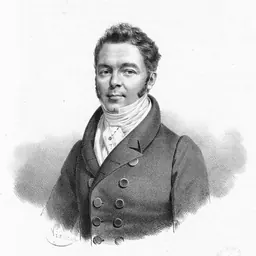

Related people
Same field, nearest in time
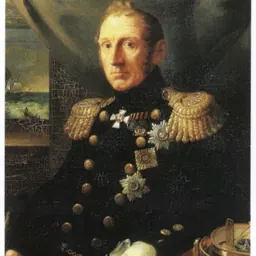
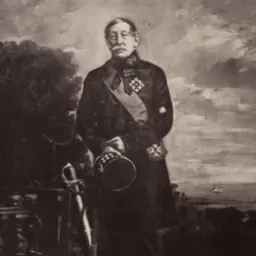
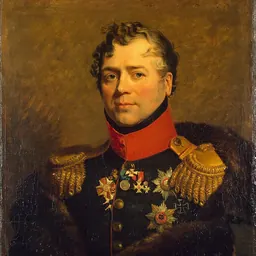

Contemporaries
People whose lives overlapped George Thorp's





Frequently asked questions
Who was George Thorp?
British officer of the Royal Navy during the French Revolutionary Wars (1777-1797)
When was George Thorp born?
George Thorp was born on 9 September 1777 in Chillingham.
When did George Thorp die?
George Thorp died on 25 July 1797 in Santa Cruz de Tenerife.
What was George Thorp's occupation?
George Thorp was a military personnel.
What nationality was George Thorp?
George Thorp was British.
Sources & further reading
· DBpedia: George Thorp (Royal Navy officer)
Cite this page
APA: Biography.guide. (2026). George Thorp. https://biography.guide/george-thorp/
MLA: "George Thorp." Biography.guide, https://biography.guide/george-thorp/.
Chicago: "George Thorp." Biography.guide. https://biography.guide/george-thorp/.
Data last updated: 2026-09-20 · Spot an error? Report a correction.
Page generated 2026-09-27 05:14 UTC