
George Stibitz
American Bell Labs researcher; one of the fathers of the modern first digital computer
About George Stibitz
Lived 1904 – 1995 (aged 90). George Stibitz was an American physicist, computer scientist, mathematician and engineer.
George Robert Stibitz (April 30, 1904 – January 31, 1995) was an American researcher at Bell Labs who is internationally recognized as one of the fathers of the modern digital computer. He was known for his work in the 1930s and 1940s on the realization of Boolean logic digital circuits using electromechanical relays as the switching element.
Early life and education Stibitz was born in York, Pennsylvania, the son of Mildred Murphy, a math teacher, and George Stibitz, a German Reformed minister and theology professor. Throughout his childhood, Stibitz enjoyed assembling devices and systems, working with material as diverse as a toy Meccano set or the electrical wiring of the family home. He received a bachelor's degree in mathematics from Denison University in Granville, Ohio, a master's degree in physics from Union College in 1927, and a Ph.D. in mathematical physics from Cornell University in 1930 with a thesis entitled "Vibrations of a Non-Planar Membrane."
Computer
Stibitz began working at Bell Labs after his doctorate, where he would remain until 1941. In November 1937 he completed a relay-based adder he later dubbed the "Model K" (after his kitchen table, on which it was purportedly assembled), which calculated using binary addition. Replicas of the "Model K" now reside in the Computer History Museum, the Smithsonian Institution, the William Howard Doane Library at Denison University and the American Computer & Robotics Museum in Bozeman, Montana.
Bell Labs subsequently authorized a full research program in late 1938 with Stibitz at the helm. He led the development of the Complex Number Calculator (CNC), completed in November 1939 and put into operation in 1940. Employing electromagnetic relay binary circuits for its operations, rather than counting wheels or gears, the machine executed calculations on complex numbers. In a demonstration at the meetings of the American Mathematical Society and Mathematical Association of America at Dartmouth College in September 1940, Stibitz used a modified teletype to send commands over telegraph lines to the CNC in New York . This was the first real-time, remote use of a computing machine.
Wartime activities and subsequent Bell Labs computers After the United States entered World War II in December 1941, Bell Labs became active in developing fire-control devices for the U.S. military. The Labs' most famous invention was the M-9 Gun Director, an ingenious analog device that directed anti-aircraft fire with uncanny accuracy. Stibitz moved to the National Defense Research Committee, an advisory body for the government, but he kept close ties with Bell Labs. For the next several years (1941–1945),
At the end of the war, Stibitz did not return to Bell Labs, but went into private consulting work. However, he simultaneously pointed to the limits of this opposition between analog and digital. He presented it as a rather theoretical opposition with no practical use, as most computers of the time would consist of both analog and digital mechanisms.
Awards Harry H. Goode Memorial Award in 1965 (together with Konrad Zuse)
IEEE's Computer Pioneer Award, 1982 election to the National Academy of Engineering, 1981 election to the National Inventors Hall of Fame, 1985
Stibitz held 38 patents, in addition to those he earned at Bell Labs. He became a member of the faculty at Dartmouth College in 1964 to build bridges between the fields of computing and medicine, and retired from research in 1983.
Computer art In his later years, Stibitz "turned to non-verbal uses of the computer". Specifically, he used a Commodore-Amiga to create computer art. In a 1990 letter, written to the department chair of the Mathematics and Computer Science department of Denison University he said:
I have turned to non-verbal uses of the computer, and have made a display of computer "art". The quotes are obligatory, for the result of my efforts is not to create important art but to show that this activity is fun, much as the creation of computers was fifty years ago.
The Mathematics and Computer Science department at Denison University has enlarged and displayed some of his artwork.
Publications (4 pages) (102 pages)
Don’t just read it —
keep it.
Full-length biographies made to live with: read them, listen on the way to work, watch them tonight.
- E-book
- Audio
- Video
Instant download · yours to keep · every purchase keeps this site free
Important facts
People in George Stibitz's life
Named in this biography and alive at the same time
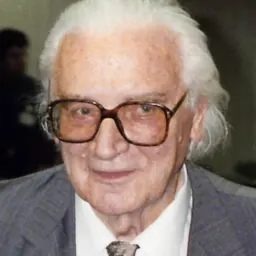


Related people
Same field, nearest in time


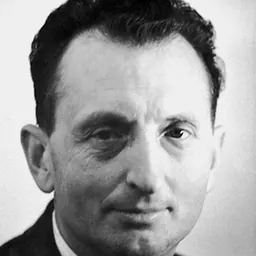

Contemporaries
People whose lives overlapped George Stibitz's

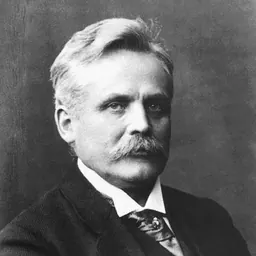
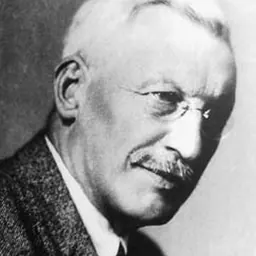



Frequently asked questions
Who was George Stibitz?
American Bell Labs researcher; one of the fathers of the modern first digital computer (1904–1995)
When was George Stibitz born?
George Stibitz was born on 20 April 1904 in York.
When did George Stibitz die?
George Stibitz died on 31 January 1995 in York, Hanover (NH).
What was George Stibitz's occupation?
George Stibitz was a physicist, computer scientist, mathematician and engineer.
What nationality was George Stibitz?
George Stibitz was American.
Sources & further reading
Cite this page
APA: Biography.guide. (2026). George Stibitz. https://biography.guide/george-stibitz/
MLA: "George Stibitz." Biography.guide, https://biography.guide/george-stibitz/.
Chicago: "George Stibitz." Biography.guide. https://biography.guide/george-stibitz/.
Data last updated: 2026-09-20 · Spot an error? Report a correction.
Page generated 2026-09-27 05:30 UTC