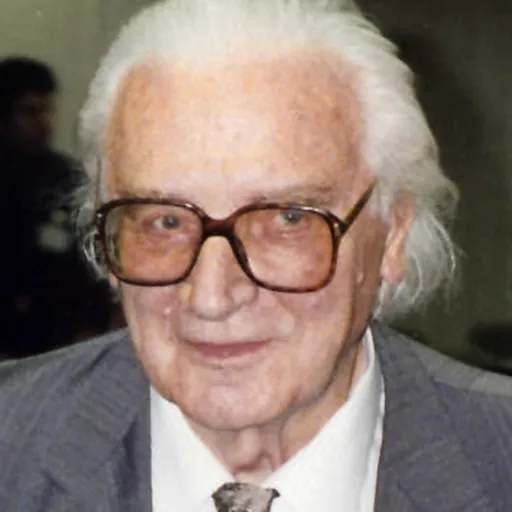
Konrad Zuse
German computer scientist and engineer
About Konrad Zuse
Lived 1910 – 1995 (aged 85). Konrad Zuse was a German inventor, entrepreneur, computer scientist, engineer, civil engineer and painter.
Konrad Ernst Otto Zuse (; ; 22 June 1910 – 18 December 1995) was a German civil engineer, pioneering computer scientist, inventor and businessman. His greatest achievement was the world's first programmable computer; the functional program-controlled Turing-complete Z3 became operational in May 1941. Thanks to this machine and its predecessors, Zuse is regarded by some as the inventor and father of the modern computer.
Zuse was noted for the S2 computing machine, considered the first process control computer. In 1941, he founded one of the earliest computer businesses, producing the Z4, which became the world's first commercial computer. From 1943 to 1945 he designed Plankalkül, the first high-level programming language. Due to World War II, Zuse's work went largely unnoticed in the United Kingdom and United States. Possibly his first documented influence on a US company was IBM's option on his patents in 1946. The Z4 also served as the inspiration for the construction of the ERMETH, the first Swiss computer and one of the first in Europe.
Early life and education Konrad Zuse was born in Berlin on 22 June 1910. In 1912, his family moved to East Prussian Braunsberg (now Braniewo in Poland), where his father was a postal clerk. Zuse attended the Collegium Hosianum in Braunsberg, and in 1923, the family moved to Hoyerswerda, where he passed his Abitur in 1928, qualifying him to enter university.
He enrolled at Technische Hochschule Berlin (now Technische Universität Berlin) and explored both engineering and architecture, but found them boring. Zuse then pursued civil engineering, graduating in 1935. He started work as a design engineer at the Henschel aircraft factory in Schönefeld near Berlin. This required the performance of many routine calculations by hand, leading him to theorize and plan a way of doing them by machine.
Beginning in 1935, he experimented in the construction of computers in his parents' flat on 38, moving with them into their new flat on 10, the street leading up the Kreuzberg, Berlin.
1939–1945
In 1939, Zuse was called to military service, where he was given the resources to ultimately build the Z2. which used his work for the production of glide bombs. Zuse built the S1 and S2 computing machines, which were special purpose devices which computed aerodynamic corrections to the wings of radio-controlled flying bombs. The S2 featured an integrated analog-to-digital converter under program control, making it the first process-controlled computer. renting a workshop on the opposite side in 7 and stretching through the block to 29 (renamed and renumbered as Mehringdamm 84 in 1947). The Z3 was a binary 22-bit floating-point calculator featuring programmability with loops but without conditional jumps, with memory and a calculation unit based on telephone relays. The telephone relays used in his machines were largely collected from discarded stock. Despite the absence of conditional jumps, the Z3 was a Turing complete computer. However, Turing-completeness was never considered by Zuse (who was unaware of Turing's work and had practical applications in mind) and only demonstrated in 1998 (see History of computing hardware).
The Z3, the first fully operational electromechanical computer, was partially financed by German government-supported DVL, which wanted their extensive calculations automated. A request by his co-worker Helmut Schreyer—who had helped Zuse build the Z3 prototype in 1938 —for government funding for an electronic successor to the Z3 was denied as "strategically unimportant".
In 1937, Schreyer had advised Zuse to use vacuum tubes as switching elements; Zuse at this time considered it a "crazy idea" ( in his own words). Zuse's workshop on 7 (along with the Z3) was destroyed in an Allied Air raid in late 1943 and the parental flat with Z1 and Z2 on 30 January the following year, whereas the successor Z4, which Zuse had begun constructing in 1942 The circuit design of the S1 was the predecessor of Zuse's Z11. detailing the first high-level programming language, ("Plan Calculus") and, as an elaborate example program, the first real computer chess engine.
1945–1995 After the 1945 Luisenstadt bombing, he fled from Berlin to the rural Allgäu. In the extreme deprivation of post-war Germany Zuse was unable to build computers.
Zuse founded one of the earliest computer companies: the . Capital was raised in 1946 through ETH Zurich and an IBM option on Zuse's patents.
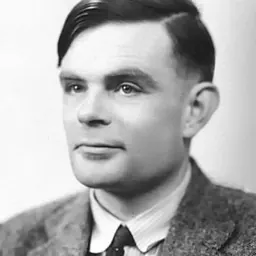
In 1947, according to the memoirs of the German computer pioneer Heinz Billing from the Max Planck Institute for Physics, there was a meeting between Alan Turing and Konrad Zuse in Göttingen. The encounter had the form of a colloquium. Participants were John Womersley, Turing, Arthur Porter from England and a few German researchers like Zuse, Helmut Schreyer, Alwin Walther, and Billing. (For more details see Herbert Bruderer, ).
It was not until 1949 that Zuse was able to resume work on the Z4. He would show the computer to the mathematician Eduard Stiefel of the ETH Zurich. The two men settled a deal to lend the Z4 to the ETH.
In November 1949, Zuse founded another company, Zuse KG, in Haunetal-Neukirchen; in 1957, the company's head office moved to Bad Hersfeld. The Z4 was finished and delivered to the ETH Zurich in July 1950, where it proved very reliable. and the second computer in the world to be sold or loaned, beaten only by the BINAC, which never worked properly after it was delivered. Other computers, all numbered with a leading Z, up to Z43, were built by Zuse and his company. Notable are the Z11, which was sold to the optics industry and to universities, and the Z22, the first computer with a memory based on magnetic storage.
Unable to do any hardware development, he continued working on , eventually publishing some brief excerpts of his thesis in 1948 and 1959; the work in its entirety, however, remained unpublished until 1972.
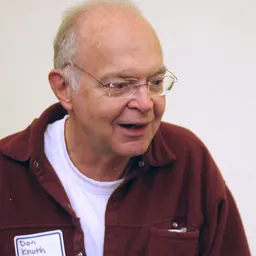
slightly influenced the design of ALGOL 58 but was itself implemented only in 1975 in a dissertation by Joachim Hohmann. Heinz Rutishauser, one of the inventors of ALGOL, wrote: "The very first attempt to devise an algorithmic language was undertaken in 1948 by K. Zuse. His notation was quite general, but the proposal never attained the consideration it deserved." Further implementations followed in 1998 and then in 2000 by a team from the Free University of Berlin. Donald Knuth suggested a thought experiment: What might have happened had the bombing not taken place, and had the PhD thesis accordingly been published as planned? and became well known also outside of the technical world thanks to Frieder Nake's pioneering computer art work. Other plotters designed by Zuse include the ZUSE Z90 and ZUSE Z9004. In 1967, Zuse suggested that the universe itself is running on a cellular automaton or similar computational structure (digital physics); in 1969, he published the book (translated into English as Calculating Space).
Personal life
Konrad Zuse married Gisela Brandes in January 1945, employing a carriage, himself dressed in tailcoat and top hat and with Gisela in a wedding veil, for Zuse attached importance to a "noble ceremony". Their son Horst, the first of five children, was born in November 1945.
While Zuse never became a member of the Nazi Party, he is not known to have expressed any doubts or qualms about working for the Nazi war effort. Much later, he suggested that in modern times, the best scientists and engineers usually have to choose between either doing their work for more or less questionable business and military interests in a Faustian bargain, or not pursuing their line of work at all. He signed his paintings as "Kuno [von und zu] See".
Zuse was an atheist.
Awards and honours
Zuse received several awards for his work: Werner von Siemens Ring in 1964 (together with Fritz Leonhardt and Walter Schottky) Harry H. Goode Memorial Award in 1965 (together with George Stibitz) Wilhelm Exner Medal in 1969.
The Zuse Institute Berlin is named in his honour.
The Konrad Zuse Medal of the Gesellschaft für Informatik, and the Konrad Zuse Medal of the Zentralverband des Deutschen Baugewerbes (Central Association of German Construction), are both named after Zuse.
A replica of the Z3, as well as the original Z4, is in the Deutsches Museum in Munich. The in Berlin has an exhibition devoted to Zuse, displaying twelve of his machines, including a replica of the Z1 and several of Zuse's paintings.
The 100th anniversary of his birth was celebrated by exhibitions, lectures and workshops.
Don’t just read it —
keep it.
Full-length biographies made to live with: read them, listen on the way to work, watch them tonight.
- E-book
- Audio
- Video
Instant download · yours to keep · every purchase keeps this site free
Important facts
People in Konrad Zuse's life
Named in this biography and alive at the same time





Related people
Same field, nearest in time



Contemporaries
People whose lives overlapped Konrad Zuse's






Frequently asked questions
Who was Konrad Zuse?
German computer scientist and engineer (1910 - 1995)
When was Konrad Zuse born?
Konrad Zuse was born on 22 June 1910 in Wilmersdorf, Berlin.
When did Konrad Zuse die?
Konrad Zuse died on 18 December 1995 in Hünfeld.
What was Konrad Zuse's occupation?
Konrad Zuse was an inventor, entrepreneur, computer scientist, engineer, civil engineer and painter.
What nationality was Konrad Zuse?
Konrad Zuse was German.
Sources & further reading
Cite this page
APA: Biography.guide. (2026). Konrad Zuse. https://biography.guide/konrad-zuse/
MLA: "Konrad Zuse." Biography.guide, https://biography.guide/konrad-zuse/.
Chicago: "Konrad Zuse." Biography.guide. https://biography.guide/konrad-zuse/.
Data last updated: 2026-09-20 · Spot an error? Report a correction.
Page generated 2026-09-27 05:09 UTC