
About George Starkey
Lived 1628 – 1665 (aged 36–37). George Starkey was an English chemist, physician and alchemist.
George Starkey (1628–1665) was a Colonial American alchemist, medical practitioner, and writer of numerous commentaries and chemical treatises that were widely circulated in Western Europe and influenced prominent men of science, including Robert Boyle and Isaac Newton. After relocating from New England to London, England, in 1650, Starkey began writing under the pseudonym Eirenaeus Philalethes. Starkey remained in England and continued his career in medicine and alchemy until his death in the Great Plague of London in 1665. After the death of his father in 1637, Starkey was sent to New England, where he continued his early education before enrolling at Harvard College in 1643 at the age of 15. Introduced to alchemical theory, he would later stylise himself as the "Philosopher by Fire." After graduating from Harvard in 1646, Starkey resided in the Boston area and earned a living practising medicine while at the same time experimenting in chemical technology.
Despite his successful medical practice, Starkey immigrated at age 22 to London, England, in November 1650 with his wife, Susanna Stoughton, whom he had married earlier that year. Susanna is believed to be the eldest daughter of Colonel Israel Stoughton, and sister of William Stoughton, a future Lt. Governor of Massachusetts. Around this same time he changed his surname to Starkey for reasons that are unknown.
Once in England, Starkey's reputation as an alchemist and chymical furnace maker grew among the scientific community and he soon acquired a network of colleagues from the circle of friends and correspondents of Samuel Hartlib – a group of social reformers, utopians, and natural philosophers. Within a few years, however, Starkey found himself in financial trouble and was consequently incarcerated because of debt—possibly twice sometime in late 1653 and again in mid-1654. Imprisoned for a brief period of time, Starkey returned to the practice of alchemy and medicine upon his release in late 1654. Additionally, he wrote and published a number of popular treatises. Yet, his most important work was written under several pseudonyms during the period prior to imprisonment when he was associated with the Hartlib circle. The most famous of these works, the Introitus apertus ad occlusum regis palatium, was published in 1667 after his death. His studies soon focused on chemical philosophy and alchemist theory. Starkey earned his A.B. in 1646 and his A.M. by 1649, although the exact date is uncertain. During his years at Harvard, Starkey was introduced to alchemy through the physics curriculum, which included subjects on metallic transmutation and potable gold. In addition, he acquired a thorough understanding of corpuscular matter theory that was important to his alchemist work throughout his career.
Career
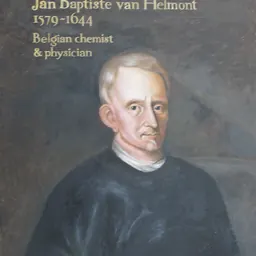
During his final years at Harvard, Starkey became increasingly occupied with the practice of medicine. He was a devoted follower of the Flemish iatrochemist Jan Baptist van Helmont, and had been tutored in the practical applications of metallurgy. His medical practice appears to have been highly successful, which included iatrochemistry. Despite his flourishing practice, Starkey decided England could provide better access to the tools required by an alchemist, which prompted him to sail for London with his wife in November 1650. It was at this time that the transplanted New England alchemist became involved with the Hartlib circle and the fictitious identity of Eirenaeus Philalethes (a peaceful lover of truth) emerged as a result of currents swirling within the group. For example, Starkey's "sophic mercury" was an amalgam of antimony, silver, and mercury, which was supposed to dissolve gold into a mixture that when heated, would produce the mythical philosopher's stone, an agent for transmuting base metals into noble ones. It is also believed that Starkey's interest in concealing his work was driven by a desire to fashion himself as the "master of secrets" whose discoveries were "divinely sanctioned revelations." Certainly this might lift Starkey's socioprofessional standing in the minds of influential patrons within the Hartlib circle.
A few years after arriving in London, Starkey began to suffer from his own success. A variety of projects, from the manufacture of perfumes and pharmaceuticals to the production of sophic mercuries, were pulling him in different directions, straining professional relationships, and failed to generate sufficient income. The cost to personally fund these projects was leaving him financially unstable as debts increased. Finally, in 1653–1654, Starkey's creditors caught up with him. He was imprisoned twice for debt, and when not in prison, he avoided creditors by concealing his whereabouts. To make matters worse, he had lost the support of the Hartlib circle. It was necessary that a beleaguered Starkey reestablish his financial footing, restore his reputation, and attract new patronage.
The final years of Starkey's life were devoted to resurrecting his medical practice and manufacturing income-producing medicines. However, he never wandered far from his chymistry lab and his quest for Van Helmont's alchahest or the philosophers' stone. No doubt he continued his search for the perfect liquor alchahest, a medicinal solvent whose purpose was similar to theriac, an antidotal compound that was consumed to preserve health and prevent illness. Starkey's success in producing his alchahest was limited, and his quest for the philosophers' stone never came to fruition. Although he continued to produce medical treatises, three political pamphlets that he wrote in 1660 along with public disputes he engaged in with other medical practitioners and the Royal College of Physicians further tainted his career.
In 1665, the plague found London and George Starkey. For all of his belief in the ability of the Helmontian medicines to cure disease and prevent illness, the Helmontian alchahest Starkey prepared to combat the plague was ineffective. To the end, Starkey remained faithful to the Flemish iatrochemist that he revered.
Legacy
George Starkey's alchemical laboratory expertise and formalised methodology were highly respected by the scientific community and became the basis for later practices in eighteenth-century experimental chemistry. His influence on Boyle's work and discoveries in chymistry is indisputable. It is perhaps the survival of Starkey's laboratory journals that is most important, for they provide the least opaque window through which to view the laboratory operations and methodological practices of a seventeenth-century alchemist. Also, Starkey's written works, especially under the name Philalethes, were widely circulated and enormously popular. They were read by notable men of science in the seventeenth century and well into the eighteenth century, to include Boyle, Locke, Leibniz, and Newton. Indeed, his writings were influential in the emerging field of chymistry by advancing the doctrine that chemical phenomena are the result of the interaction of insensible particles accompanied by chemical forces.
The Reformed Commonwealth of Bees (1655). Nature's Explication and Helmont's Vindication; or a short and sure Way to a long and sound life (London, 1657). Pyrotechny asserted and illustrated (London, 1658). The admirable efficacy of oyl which is made of Sulphur-Vive (1660). The dignity of kinship asserted (1660). Britains Triumph FOR HER Imparallel'd Deliverance (1660). Royal and other innocent blood crying aloud to heaven for due vengeance (1660). An appendix to the Unlearned Alchimist Wherein is contained the true Receipt of that Excellent Diaphoretick and Diuretick PILL (1663). George Starkey's Pill vindicated From the unlearned Alchymist and all other pretenders, (undated). A brief Examination and Censure OF Several Medicines (1664). A smart Scourge for a silly, sawcy Fool, an answer to letter at the end of a pamphlet of Lionel Lockyer (1664). An Epistolar discourse to the Learned and Deservingauthor of Galeno-pale (1665). Loimologia A Consolatory Advice And some brief observations Concerning the Present Pest, 1665. Liquor Alchahest, or a discourse of that Immortal Dissolvent of Paracelsus & Helmont, 1675.
Works published under the name of Philalethes.
Don’t just read it —
keep it.
Full-length biographies made to live with: read them, listen on the way to work, watch them tonight.
- E-book
- Audio
- Video
Instant download · yours to keep · every purchase keeps this site free
Important facts
People in George Starkey's life
Named in this biography and alive at the same time




Related people
Same field, nearest in time



Contemporaries
People whose lives overlapped George Starkey's





Frequently asked questions
Who was George Starkey?
Early Colonial American alchemist
When was George Starkey born?
George Starkey was born in 1628 in Bermuda.
When did George Starkey die?
George Starkey died in 1665 in London.
What was George Starkey's occupation?
George Starkey was a chemist, physician and alchemist.
What nationality was George Starkey?
George Starkey was English.
Sources & further reading
Cite this page
APA: Biography.guide. (2026). George Starkey. https://biography.guide/george-starkey/
MLA: "George Starkey." Biography.guide, https://biography.guide/george-starkey/.
Chicago: "George Starkey." Biography.guide. https://biography.guide/george-starkey/.
Data last updated: 2026-09-20 · Spot an error? Report a correction.
Page generated 2026-09-27 05:12 UTC