
About George St Lo
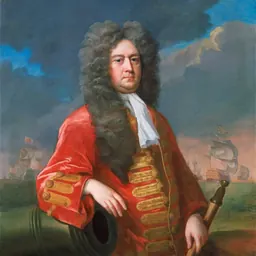
Lived 1655 – 1718 (aged 63). George St Lo was a British politician.
George St Lo (sometimes written as St Loe; 19 April 1655 – 20 September 1718) was a British naval officer and politician.
An officer of the Royal Navy who saw service during the Nine Years' War, and the War of the Spanish Succession. His career cut short by injuries, he embarked on a political career, holding offices as a commissioner of the navy and was a Member of Parliament.
St Lo entered on a naval career, and after service in the Mediterranean on several ships, rose to the rank of captain with his own commands. Controversy occasionally followed his career, such as an investigation on murder charges while a lieutenant. He supported the Glorious Revolution in 1688, claiming to have had an important part in its success. His active seagoing career came to an end after 1689, when his ship was captured by French warship and St Lo was wounded. After time in France as a prisoner of war, he returned to England and took up various political positions, while writing about his observations and thoughts on naval administration. Holding administrative posts, and serving as commissioner for some of the dockyards, he was also an extra commissioner for the navy. As commissioner at Plymouth he had an important role in supporting the construction of the first Eddystone Lighthouse, but when he sent the project's guardship away, the crew and the architect, Henry Winstanley, were promptly captured by a French privateer. Though the men were eventually released, perhaps by the personal intervention of Louis XIV of France, St Lo was reprimanded.
St Lo entered parliamentary politics in 1701, sitting for the constituency of Weymouth and Melcombe Regis. He supported the Tory interest, until his defeat in 1705. He continued his administrative career until the accession of King George I in 1714, and was left unemployed in the subsequent redistribution of posts. He died four years later.
Family and early life St Lo was born on 19 April 1655, the fourth son of John St Lo of Little Fontmel, Dorset. His mother was Margaret, née Fawconer, the daughter of William Fawconer of Salisbury. George's grandfather was Edward St Lo, of Knighton, Wiltshire. George's family gave him important political connections, as he descended on his father's side from the Hyde family. His great-grandmother Elizabeth was the granddaughter of Laurence Hyde, of Hatch, Wiltshire, who was the grandfather of Edward Hyde, 1st Earl of Clarendon. St Lo's parentage brought him the important patronage of Laurence Hyde, 1st Earl of Rochester, which aided his rise through the navy. He was a third cousin of Queen Mary II and Queen Anne, which also was a factor in his later actions in support of the Orangist cause.
St Lo entered the navy and after a period of service, was appointed as lieutenant of on 16 January 1678, serving in the Mediterranean in operations against the Barbary States. The commander in the Mediterranean, Admiral Arthur Herbert, moved St Lo into the 46-gun under Captain Sir George Rooke, but while serving on her in May 1681, he found himself accused, with another officer, of having committed a murder in Tangier. based on his observations. His posting here was delayed for two months though as an investigation was taking place into alleged abuses during his time as a prize commissioner, for which he was eventually acquitted. Word of Winstanley's capture is supposed to have reached King Louis XIV, who ordered his release with the comment "France is at war with England, not with humanity." St Lo received a sharp reprimand from the Navy Board for this turn of events, for having neglected their orders to him. St Lo suggested that "two or three Small vessels [with] good sailors [should be sent] to cruise up & down, [and] examine all Sloops & Boates passing to & fro."
Don’t just read it —
keep it.
Full-length biographies made to live with: read them, listen on the way to work, watch them tonight.
- E-book
- Audio
- Video
Instant download · yours to keep · every purchase keeps this site free
Important facts
People in George St Lo's life
Named in this biography and alive at the same time

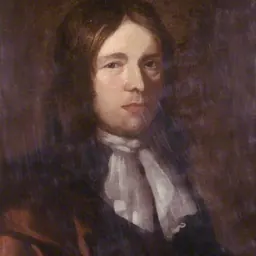
Related people
Same field, nearest in time

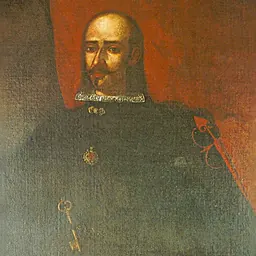

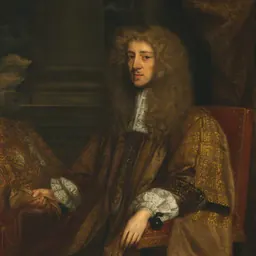

Contemporaries
People whose lives overlapped George St Lo's





Frequently asked questions
Who was George St Lo?
Royal Navy officer and administrator (1655-1718)
When was George St Lo born?
George St Lo was born on 19 April 1655.
When did George St Lo die?
George St Lo died on 20 September 1718 in Northfleet.
What was George St Lo's occupation?
George St Lo was a politician.
What nationality was George St Lo?
George St Lo was British.
Sources & further reading
Cite this page
APA: Biography.guide. (2026). George St Lo. https://biography.guide/george-st-lo/
MLA: "George St Lo." Biography.guide, https://biography.guide/george-st-lo/.
Chicago: "George St Lo." Biography.guide. https://biography.guide/george-st-lo/.
Data last updated: 2026-09-20 · Spot an error? Report a correction.
Page generated 2026-09-27 05:32 UTC