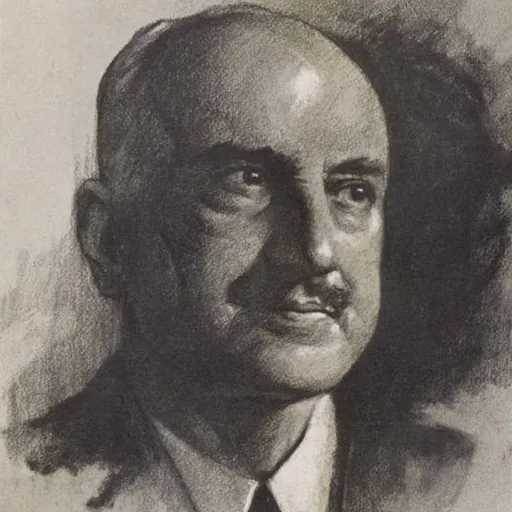
About George Santayana
Lived 1863 – 1952 (aged 88). George Santayana was a Spanish philosopher, writer, poet, novelist, essayist and university teacher.
George Santayana (born Jorge Agustín Nicolás Ruiz de Santayana y Borrás, December 16, 1863 – September 26, 1952) was a Spanish American philosopher, essayist, poet, and novelist. Born in Spain, he moved to the United States at the age of eight.
As a philosopher, Santayana is known for aphorisms, such as "Those who cannot remember the past are condemned to repeat it", and "Only the dead have seen the end of war", and his definition of beauty as "pleasure objectified".
Although an atheist, Santayana respected the culture of the Spanish Catholic values, practices, and worldview, in which he was raised. As an intellectual, George Santayana was a broad-range cultural critic in several academic disciplines.
At the age of 48, he left his academic position at Harvard University and permanently returned to Europe; his last will was to be buried in the Spanish Pantheon in the Campo di Verano, Rome.
Early life George Santayana was born on December 16, 1863, in Calle de San Bernardo of Madrid and spent his early childhood in Ávila, Spain. His mother Josefina Borrás was the daughter of a Spanish official in the Philippines and he was the only child of her second marriage. Josefina Borrás' first husband was George Sturgis, a Boston merchant with the Manila firm Russell & Sturgis. She had five children with him; two of them died in infancy. She lived in Boston for a few years following her husband's death in 1857; in 1861, she moved with her three surviving children to Madrid. There she encountered Agustín Ruiz de Santayana, an old friend from her years in the Philippines. They married in 1862. A colonial civil servant, Ruiz de Santayana was a painter and minor intellectual. The family lived in Madrid and Ávila, and Jorge was born in Spain in 1863.
In 1869, Josefina Borrás de Santayana returned to Boston with her three Sturgis children, because she had promised her first husband to raise the children in the US. She left the six-year-old Jorge with his father in Spain. Jorge and his father followed her to Boston in 1872. His father, finding neither Boston nor his wife's attitude to his liking, soon returned alone to Ávila, and remained there the rest of his life. Jorge did not see him again until he entered Harvard College and began to take his summer vacations in Spain. Although Santayana was raised and educated in the United States from the age of eight and identified as an American, he always retained a valid Spanish passport. Sometime during this period, his first name Jorge was anglicized to its English equivalent: George.
Education alt=Hollis Hall: a four-story red brick building with white trim in a courtyard.
Santayana attended Boston Latin School and Harvard College, where he studied under the philosophers William James and Josiah Royce and was involved in eleven clubs. He was founder and president of the Philosophical Club, a member of the literary society known as the O.K., an editor and cartoonist for The Harvard Lampoon, he joined one of Harvard's "Final Clubs", the Delphic Club, and co-founded the literary journal The Harvard Monthly. In December, 1885, he played the role of Lady Elfrida in the Hasty Pudding theatrical Robin Hood, followed by the production Papillonetta in the spring of his senior year. He received his A.B. summa cum laude in 1886 and was elected to Phi Beta Kappa student fraternity. In 1886, Santayana studied for two years in Berlin. He then returned to Harvard to write his dissertation on German idealist Hermann Lotze (1889). Although schooled in German idealism, Santayana was critical of it and made an effort to distance himself from its epistemology.
He was a professor at Harvard from 1889 to 1912, From 1896 to 1897, Santayana studied at King's College, Cambridge.
Later life
Santayana never married. His romantic life, if any, is not well understood. Some evidence, including a comment Santayana made late in life comparing himself to A. E. Housman, and his friendships with people who were openly homosexual and bisexual, has led scholars to speculate that Santayana was perhaps homosexual or bisexual, but it remains unclear whether he had any actual heterosexual or homosexual relationships. Some historians would disagree with this assessment. For example, Santayana's biographer concluded that he had "an intense physical affair" with Frank Russell, 2nd Earl Russell, older brother to philosopher Bertrand Russell. The historian Douglass Shand-Tucci included an extensive discussion of Santayana's sexuality in his book on Boston's homosexual subculture in the late 19th century.
In 1912, Santayana resigned his position at Harvard to spend the rest of his life in Europe. Upon his death, he did not want to be buried in consecrated land, which made his burial problematic in Italy. Finally, the Spanish consulate in Rome agreed that he be buried in the Pantheon of the Obra Pía Española, in the Campo Verano cemetery in Rome. Santayana's The Life of Reason arguably is the first extended treatment of pragmatism written. However, like many of the classical pragmatists, Santayana was committed to metaphysical naturalism. He believed that human cognition, cultural practices, and social institutions have evolved so as to harmonize with the conditions present in their environment. Their value may then be adjudged by the extent to which they facilitate human happiness. The alternate title to The Life of Reason, "the Phases of Human Progress", is indicative of this metaphysical stance.
Santayana was an early adherent of epiphenomenalism, but also admired the classical materialism of Democritus and Lucretius. (Of the three authors on whom he wrote in Three Philosophical Poets, Santayana speaks most favorably of Lucretius). He held Spinoza's writings in high regard, calling him his "master and model".
Although an atheist, he held a fairly benign view of religion and described himself as an "aesthetic Catholic". Santayana's views on religion are outlined in his books Reason in Religion, The Idea of Christ in the Gospels, and Interpretations of Poetry and Religion.
He held racial supremacist and eugenic views. He believed superior races should be discouraged from "intermarriage with inferior stock".
Legacy
Santayana is remembered in large part for his aphorisms, many of which have been so frequently used as to have become clichéd. His philosophy has not fared quite as well. He is regarded by most as an excellent prose stylist, and John Lachs (who is sympathetic with much of Santayana's philosophy) writes, in On Santayana, that his eloquence may ironically be the very cause of this neglect.
Santayana influenced those around him, including Bertrand Russell, whom Santayana single-handedly steered away from the ethics of G. E. Moore. He also influenced many prominent people such as Harvard students T. S. Eliot, Robert Frost, Gertrude Stein, Horace Kallen, Walter Lippmann, W. E. B. Du Bois, Conrad Aiken, Van Wyck Brooks, Felix Frankfurter, Max Eastman, and Wallace Stevens. Stevens was especially influenced by Santayana's aesthetics and became a friend even though Stevens did not take courses taught by Santayana.
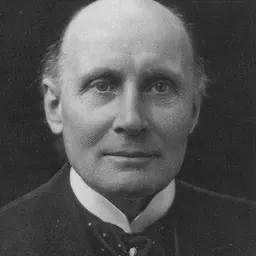
Santayana is quoted by the Canadian-American sociologist Erving Goffman as a central influence in the thesis of his famous book The Presentation of Self in Everyday Life (1959). Religious historian Jerome A. Stone credits Santayana with contributing to the early thinking in the development of religious naturalism. English mathematician and philosopher Alfred North Whitehead quotes Santayana extensively in his magnum opus Process and Reality (1929).
Along with Wendell Phillips and John F. Kennedy, Santayana is quoted on a military plaque at Veterans Memorial Park in Rhome, Texas.
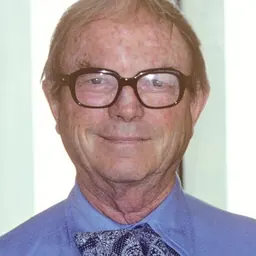
Chuck Jones used Santayana's description of fanaticism as "redoubling your effort after you've forgotten your aim" to describe his cartoons starring Wile E. Coyote and Road Runner.
In popular culture Santayana's death is referenced in the lyrics to singer-songwriter Billy Joel's 1989 single "We Didn't Start the Fire".
Santayana's quotes about fanaticism and forgetting the past are mentioned in the Batman: The Animated Series episode "I Am the Night."
The quote "Only the dead have seen the end of war" is frequently attributed or misattributed to Plato; an early example of this misattribution (if it is indeed misattributed) is found in General Douglas MacArthur's Farewell Speech given to the Corps of Cadets at West Point in 1962.
Awards Royal Society of Literature Benson Medal, 1925. Columbia University Butler Gold Medal, 1945. Honorary degree from the University of Wisconsin, 1911.
Don’t just read it —
keep it.
Full-length biographies made to live with: read them, listen on the way to work, watch them tonight.
- E-book
- Audio
- Video
Instant download · yours to keep · every purchase keeps this site free
Important facts
People in George Santayana's life
Named in this biography and alive at the same time



Related people
Same field, nearest in time


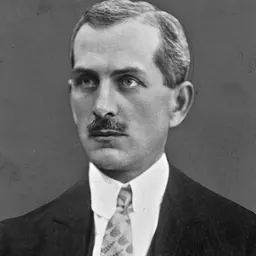

Contemporaries
People whose lives overlapped George Santayana's
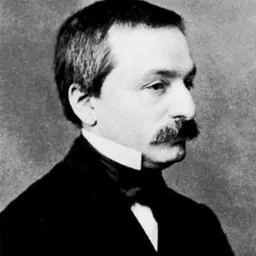


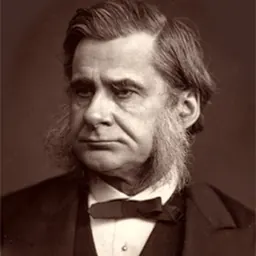
Frequently asked questions
Who was George Santayana?
Spanish-American philosopher
When was George Santayana born?
George Santayana was born on 16 December 1863 in Madrid, San Bernardo street.
When did George Santayana die?
George Santayana died on 26 September 1952 in Rome.
What was George Santayana's occupation?
George Santayana was a philosopher, writer, poet, novelist, essayist and university teacher.
What nationality was George Santayana?
George Santayana was Spanish.
Sources & further reading
Cite this page
APA: Biography.guide. (2026). George Santayana. https://biography.guide/george-santayana/
MLA: "George Santayana." Biography.guide, https://biography.guide/george-santayana/.
Chicago: "George Santayana." Biography.guide. https://biography.guide/george-santayana/.
Data last updated: 2026-09-22 · Spot an error? Report a correction.
Portrait: Wikimedia Commons · author & licence
Page generated 2026-09-27 05:04 UTC