
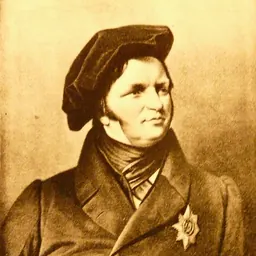
About George Ross
Lived 1829 – 1876 (aged 46–47). George Ross was a farmer, official and local politician.
George Arthur Emilius Ross (some sources say Aemilius, Æmilius, or Emileus; (When Ross advertised using his full name, the spelling was "Emilius" Ross studied at Oxford University but had a breakdown before he obtained his degree.) To improve his health, he emigrated to Canterbury, New Zealand, on the Fatima and arrived at Lyttelton on 27 December 1851.
Professional career
Ross went to Henry Tancred's Malvern Hills sheep station as a cadet. He soon became interested in local politics and in 1853 became the first clerk of the Canterbury Provincial Council. He held the position for five years until he became an elected member in July 1858. and January 1868 (to resolve an injunction obtained by Ross's trustee). Ross was bankrupted in November 1867 and a trustee (James Edwin Graham ) put in place to look after Ross's estates. Ross's homestead (Stoneycroft) and land near the Riccarton Race Course and his West Melton property were put up for auction by the mortgagee in October 1867. Ross had a mental breakdown and was too ill to attend the court hearings from November 1867 onwards. The partnership between Ross and Harper was dissolved in 1868.
After his bankruptcy, he and his family moved to his parents-in-law's property in Christchurch and his wife Sibella opened a boys' school to support the family. After his mental breakdown, nothing more was heard of Ross apart from some preaching. The family was supported by Sibella Ross through running the school. Two weeks later on 5 June, Ross first advertised announcing himself as a candidate for the upcoming by-election, with the Lyttelton Times stating a week later that the election would be unlikely to be contested. As clerk of the provincial council, Ross was their returning officer and in that function, he advertised on 10 July officially announcing the by-election, with the nomination of candidates set for 20 July and, if needed, an election to be held the following day, with the woolshed of his station as the venue for the nomination meeting and as one of two polling booths. Ross was returned unopposed and it fell to the deputy returning officer—Theodore Blunt Keele—to announce the official result. Keele also succeeded Ross as clerk for the provincial council.
Ross was appointed to the tenth Canterbury Provincial Executive Council led by Richard James Strachan Harman on 8 November 1858, with his roles as Provincial Secretary and Keeper of the Public Records. The provincial secretary and provincial solicitor (taken by Charles Wyatt) were paid positions and as such, Ross and Wyatt had to resign with effect of 8 November, but they could stand for re-election. Before this by-election could proceed, the Executive Council resigned on 15 November. John Ollivier formed the eleventh Executive Council on 21 November 1859 and Ross was again appointed to it but without taking a formal office. This executive council lasted for one month until its resignation on 21 December 1859, triggered by Ross's resignation from the executive over a policy issue. Ross was not appointed to the twelfth executive council, but was re-elected. The nomination meeting was on 3 December 1859 at Waireka Station and a vote, if needed, was to be held two days later. A result of this by-election was not reported by the Lyttelton Times, but Guy Scholefield records Ross's re-election date as 26 December 1859. Ross remained a member of the provincial council until the end of the term on 24 July 1861, but did not stand in the next election in September 1861; he was succeeded in the Rakaia electorate by John Studholme.
Studholme retired at the end of the term in March 1862 and Ross stood for re-election to the fourth council in the Rakaia electorate. This time, the nomination meeting was held at another homestead—that of Richard Westenra —and Ross was returned unopposed on 28 April 1862. On 4 December 1863, the fifteenth Canterbury Provincial Executive Council was formed and Ross was appointed without office. With the West Coast gold rush underway, the existing treasurer of the provincial council—George Sale—was appointed warden for the West Coast. Ross was appointed his successor as treasurer effective 1 April 1865 and, given that it was a paid role, he resigned his membership of the provincial council on the same day. The representation of the Rakaia electorate was contested in the resulting by-election, with Francis Stewart defeating Edward Cephas John Stevens. The resignation of Ross as provincial treasurer was gazetted on 7 January 1867.
From January 1864, Ross was an original member of the West Avon Road Board. He was chairman of the East Rakaia (also known as Courtenay) Road Board until his resignation in mid-1865.
Family
In December 1857 On 2 March 1859, the couple were married at the Church of St Michael and All Angels in Christchurch. Ross was 30 years old and Wilson was 18. Charles Bowen (a member of the Provincial Council) and Cecilia Wilson (Sibella's younger sister) were witnesses. The newlyweds first lived at Waireka Station. which made the business partners Harper and Ross brothers-in-law. Cecilia Harper died a little over a year later, aged 20, at Waireka from tuberculosis (then known as consumption). Sibella Euphemia Ross, one of his daughters, married Rev. Walter Harper in 1919; he was a younger brother of Charles Harper.
Ross died in central Christchurch on 23 November 1876; he was 48. He was buried in the cemetery of St Peter's Church in Upper Riccarton. His wife survived him by five decades and died in September 1929, still living in the building at 322 Montreal Street that used to be her school. The site is now occupied by the Christchurch Art Gallery.
Commemoration On 5 September 1866, the West Coast Times reported that the gold digging town previously known as Totara (itself named after the Totara River) had been renamed 'Ross' "for what reason we are not aware". In Place Names of New Zealand it is stated that the naming was done by James Mackay in honour of the then-treasurer of the Canterbury Province, George Ross. It was originally named as 'Rosstown' but this was soon shortened to 'Ross'.
Waireka Station homestead still exists and its location is marked on maps as "Waireka". It is located at 308 Waireka Road in Darfield adjacent to the Waianiwaniwa River, which during Ross's lifetime was known as the Waireka River. Stoneycroft homestead also still exists, but it is no longer the original house and the property is also known under other names (most commonly Hornby Lodge but also Morley's). Stoneycroft Lane is nearby.
Footnotes
Don’t just read it —
keep it.
Full-length biographies made to live with: read them, listen on the way to work, watch them tonight.
- E-book
- Audio
- Video
Instant download · yours to keep · every purchase keeps this site free
Important facts
Family & relationships
People in George Ross's life
Named in this biography and alive at the same time
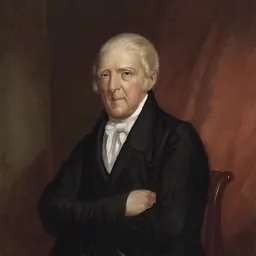

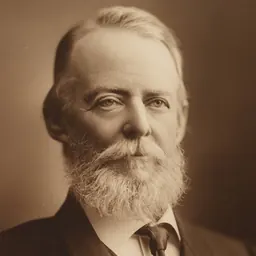

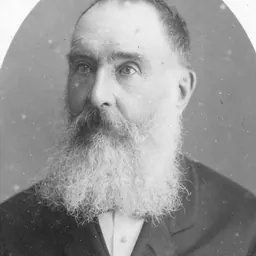

Related people
Same field, nearest in time
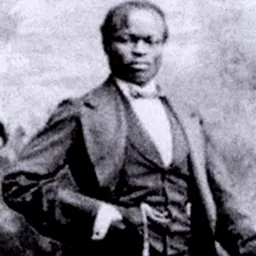

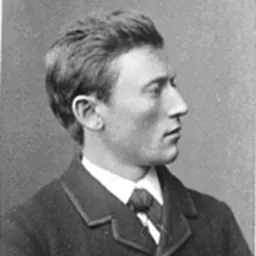
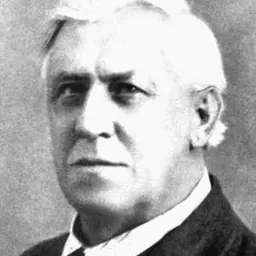
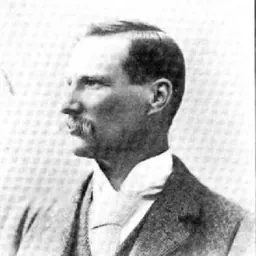
Contemporaries
People whose lives overlapped George Ross's



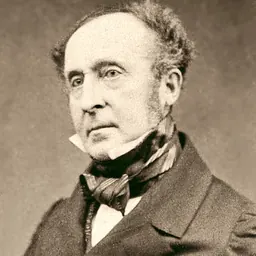
Frequently asked questions
Who was George Ross?
New Zealand farmer and provincial politician
When was George Ross born?
George Ross was born in 1829 in Dorchester.
When did George Ross die?
George Ross died on 23 November 1876 in Canterbury Region.
What was George Ross's occupation?
George Ross was a farmer, official and local politician.
What nationality was George Ross?
George Ross's recorded nationality: Colony of New Zealand.
Sources & further reading
· DBpedia: George Ross (farmer)
Cite this page
APA: Biography.guide. (2026). George Ross. https://biography.guide/george-ross-farmer/
MLA: "George Ross." Biography.guide, https://biography.guide/george-ross-farmer/.
Chicago: "George Ross." Biography.guide. https://biography.guide/george-ross-farmer/.
Data last updated: 2026-09-20 · Spot an error? Report a correction.
Page generated 2026-09-27 05:08 UTC