
About George Raymond Dallas Moor
Lived 1896 – 1918 (aged 22). George Raymond Dallas Moor was a British military personnel.
George Raymond Dallas Moor, (22 October 1896 – 3 November 1918) was a recipient of the Victoria Cross, the highest award for gallantry in the face of the enemy that can be awarded to British and Commonwealth forces. He was awarded the Victoria Cross for stemming a rout by shooting four of his own soldiers during the Gallipoli campaign in 1915.
Early life Moor was born 22 October 1896, in his mother's sister's home in Pollington Street, St Kilda, Australia. He was the son of William Henry Moor (Auditor-General, Transvaal, retired) and Mrs. Moor, and nephew of the late Sir Ralph Moor, formerly High Commissioner for Southern Nigeria. He was educated at Cheltenham College.
First World War After briefly serving as a private in the 21st (Service) Battalion, Royal Fusiliers (4th Public Schools), Moor was commissioned into the 3rd (Reserve) Battalion, Hampshire Regiment (later the Royal Hampshire Regiment) in October 1914, and was later granted a commission in the Regular Army on 1 August 1915. After six months' training in England and Egypt, he went with the 2nd Battalion of his regiment to the Dardanelles, and was at the landing at V Beach at Gallipoli on 25 April 1915.
His Victoria Cross was gazetted on 24 July 1915, when he was still only 18 years of age. The citation read:
Lieutenant General Sir Beauvoir de Lisle, in a narrative of Moor's VC action, said, "I have often quoted this young Officer as being one of the bravest men I have met in this War."
Moor was invalided home soon afterwards suffering from dysentery. After recovering he joined the 1st Battalion in France and was badly wounded in the arm. He returned to England, and before regaining the use of his arm was appointed Aide-de-Camp to Major General W. de L. Williams in France, where he gained the Military Cross and Bar. Moor was promoted lieutenant on 30 October 1916.
His Military Cross citation, gazetted 2 December 1918, reads:
The award of a Bar to his Military Cross was promulgated on 29 July 1919, reading:
Moor died of Spanish influenza at Mouvaux, France, on 3 November 1918. He is buried in the Y Farm Military Cemetery, Bois-Grenier, which is cared for by the Commonwealth War Graves Commission. The inscription on his gravestone reads: VINCAM ET VINCAM. A copy of his VC is displayed at the Royal Hampshire Regiment Museum in Winchester, England.
Don’t just read it —
keep it.
Full-length biographies made to live with: read them, listen on the way to work, watch them tonight.
- E-book
- Audio
- Video
Instant download · yours to keep · every purchase keeps this site free
Important facts
People in George Raymond Dallas Moor's life
Named in this biography and alive at the same time

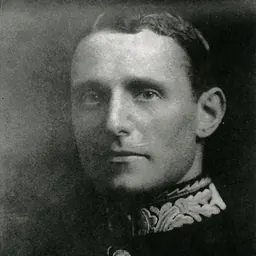
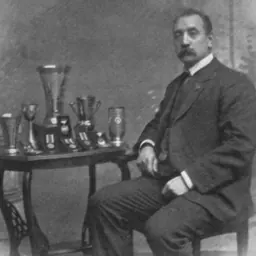
Related people
Same field, nearest in time
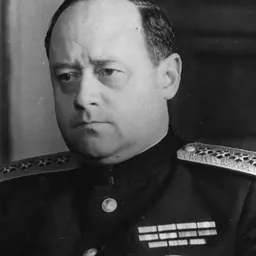





Contemporaries
People whose lives overlapped George Raymond Dallas Moor's

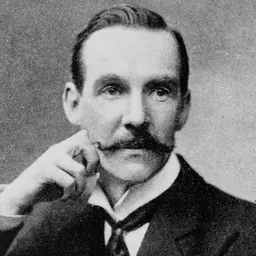

Frequently asked questions
Who was George Raymond Dallas Moor?
recipient of the Victoria Cross (1896–1918)
When was George Raymond Dallas Moor born?
George Raymond Dallas Moor was born on 22 October 1896 in St Kilda.
When did George Raymond Dallas Moor die?
George Raymond Dallas Moor died on 3 November 1918 in Mouvaux.
What was George Raymond Dallas Moor's occupation?
George Raymond Dallas Moor was a military personnel.
What nationality was George Raymond Dallas Moor?
George Raymond Dallas Moor was British.
Sources & further reading
· Wikipedia: George Raymond Dallas Moor
Cite this page
APA: Biography.guide. (2026). George Raymond Dallas Moor. https://biography.guide/george-raymond-dallas-moor/
MLA: "George Raymond Dallas Moor." Biography.guide, https://biography.guide/george-raymond-dallas-moor/.
Chicago: "George Raymond Dallas Moor." Biography.guide. https://biography.guide/george-raymond-dallas-moor/.
Data last updated: 2026-09-20 · Spot an error? Report a correction.
Page generated 2026-09-27 05:23 UTC