
About George Odger
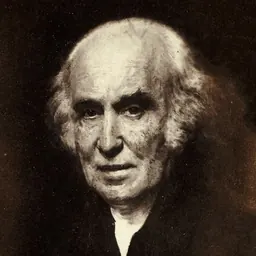
Lived 1814 – 1877 (aged 62–63). George Odger was a trade unionist, cobbler and union member.
George Odger (1813–1877) pioneer British trade union leader and as a longtime member of the governing General Council of the International Workingmen's Association, also known as the First International.
George Odger (1813 – 4 March 1877) was a pioneer British trade unionist and radical Liberal politician, who also ran as a Lib-Lab by-election candidate.
He is best remembered as the head of the London Trades Council during the period of formation of the Trades Union Congress and as the first President of the First International.
Biography
Early years
George Odger was born in 1813 in Roborough, Devon, England. Odger's father was a miner from Cornwall and the family was an impoverished one, forcing George to be apprenticed as a shoemaker at about 10 years of age. Odger's formal education was limited and primitive, but he was able to expand his intellectual horizons through self-education and reading.
Odger travelled the country in search of work as a shoemaker, eventually landing in London around the age of 20. There he became active in the nascent trade union movement, joining the Ladies Shoemakers' Society, which later became part of the Amalgamated Society of Cordwainers.
Trade union leader
Odger first came to public attention in 1859 when he served on a general committee to coordinate aid for striking workers in the London builders' strike of that year. As a leading member of the British trade union movement, George Odger not only attending this foundational gathering but was a prominent speaker at the event.
During this interval Odger also remained active in the Trades Union Congress (TUC), he was the Secretary of its Parliamentary Committee, the post later to become the General Secretary, from 1872 to 1873.
Electoral politician Base of the Reformers Memorial, Kensal Green Cemetery, showing George Odger's name.
Odger put himself forward electorally for the first time in the new constituency of Chelsea in the 1868 General election – the first held since passage of the Reform Act 1867 that granted the right to vote to part of the male urban working class for the first time. Although his participation had been sought by a great number of local voters, controversy erupted that Odger's participation would split the Liberal vote and he subsequently withdrew from the race.
In June 1869 Odger was one of four Liberal candidates to compete for two seats in the borough of Stafford. Odger would finish in third place in the primary election, with the two Liberal victors defeated in the general election by Thomas Salt and Reginald Arthur James Talbot.
Odger also stood as a Lib–Lab candidate in Southwark in the February 1870 by-election there, losing by about 300 votes out of more than 9,000 cast in a three-way race.
Death and legacy
Odger died on 4 March 1877. He was remembered at the time of his death as a "good, clear writer and a fluent speaker. He was not what is called 'eloquent,' but he was better; he spoke with force, with effect, with a knowledge of his subject."
Henry James wrote of the funeral: "The element of the grotesque was very noticeable to me in the most marked collection of the shabbier English types that I had seen since I came to London. The occasion of my seeing them was the funeral of Mr. George Odger, which befell some four or five weeks before the Easter period. Mr. George Odger, it will perhaps be remembered, was an English Radical agitator of humble origin, who had distinguished himself by a perverse desire to get into Parliament. He exercised, I believe, the useful profession of a shoemaker, and he knocked in vain at the door that opens but to the refined. But he was a useful and honourable man, and his own people gave him an honourable burial."
George Odger is buried in Brompton Cemetery.
Odger is listed on the Reformers' Memorial in Kensal Green Cemetery in London. Odger Street on the John Burns' Latchmere Estate in Battersea is named after him.
A London County Council commemorative Blue Plaque was erected at Odger's former residence, 18 St Giles High Street, in the 1950s. After this house was demolished in the 1970s the plaque was rescued and can now be seen in the lobby of St Giles in the Fields having been placed there in 1974.
Footnotes
Don’t just read it —
keep it.
Full-length biographies made to live with: read them, listen on the way to work, watch them tonight.
- E-book
- Audio
- Video
Instant download · yours to keep · every purchase keeps this site free
Important facts
People in George Odger's life
Named in this biography and alive at the same time



Related people
Same field, nearest in time


Contemporaries
People whose lives overlapped George Odger's




Frequently asked questions
Who was George Odger?
British trade unionist
When was George Odger born?
George Odger was born in 1814.
When did George Odger die?
George Odger died in 1877.
What was George Odger's occupation?
George Odger was a trade unionist, cobbler and union member.
Sources & further reading
Cite this page
APA: Biography.guide. (2026). George Odger. https://biography.guide/george-odger/
MLA: "George Odger." Biography.guide, https://biography.guide/george-odger/.
Chicago: "George Odger." Biography.guide. https://biography.guide/george-odger/.
Data last updated: 2026-09-20 · Spot an error? Report a correction.
Page generated 2026-09-27 05:31 UTC