
About George N. Leighton
Lived 1912 – 2018 (aged 105). George N. Leighton was an American lawyer and judge.
George Neves Leighton (born George Neves Leitão; October 22, 1912 – June 6, 2018) was an American judge who served as a United States district judge of the United States District Court for the Northern District of Illinois. At home, the family spoke Crioulo. Leighton left school after sixth grade to work with his father picking cranberries, strawberries, and blueberries. He also worked on an oil tanker that sailed from Fall River, Massachusetts to Aruba. James McCauley Landis, the Dean of Harvard Law School, granted him a first-year scholarship and admitted him. At the end of basic, he was sent to Fort Huachuca in Arizona before shipping out to the Pacific Theater as part of the segregated 93rd Infantry Division. He became a military captain and earned a Bronze Star Medal, the Distinguished Service Medal, the Asiatic Pacific Service Metal, and the Combat Infantry Badge for his service. After the war ended in 1945, he returned to the Law School and earned his LL.B. degree the following year. His early years as a lawyer were spent in private practice, including with Christopher C. Wimbish. From 1947 and 1952, he was the president of the Third Ward Regular Democratic Organization; he then was elected Assistant State Attorney General of Illinois in 1949. He served two terms and left in 1951 to co-found Moore, Ming, and Leighton (later McCoy, Ming, and Leighton), one of the largest Black law firms in the United States. Chicago was still deeply segregated at this time and he was unable to rent an office from a white landlord, so he moved to the South Side and worked near Comiskey Park. He brushed shoulders with many notable Black professionals; he mentored several Chicago lawyers including Barack Obama and at one point had Martin Luther King Jr. as a client. Plaintiffs argued their qualifications satisfied all other requirements and requested that the judge declare the Boswell Amendment unconstitutional. Defendants in the case were Dale Wilson, county superintendent of schools; Russell Malan, superintendent of Harrisburg schools; and D.B. McGehee, president of the Board of Education for School District 43; they were represented by George B. Lee and L.M. Hancock.
In March 1951, Harrisburg schools were ordered to desegregate schools by October 1. Judge Casper Platt told the school board they had a month to put their intent to desegregate into a legal document, including the date that schools must be desegregated by.
Around the same time, Leighton and colleague William Robert Ming worked a similar case in Cairo, Illinois with counsel from Thurgood Marshall.
Cicero race riots (1951) In 1951, WWII veteran Harvey Clark and his family attempted to rent an apartment owned by Camille DeRose in the all-white suburb of Cicero, Illinois and were quickly turned away by the sheriff. While 60 police officers were on site, they reportedly did not provide crowd control, though they did eventually request that the firemen turn their hose on the rioters; they were refused. Three months later, Assistant State Attorney James A. Brown requested the charges be dropped against Leighton. Leighton used the false indictment charges against him as a lesson in understanding "defendants [who] say to me, 'Judge, I ain't guilty,' I could see what he meant because I had gone through the same thing." Fines dealt to three police officers, including Konovsky, were sentenced, but later repealed by the Illinois Court of Appeals.
In October 1951, a federal jury was formed to investigate the riot. The NAACP provided counsel for the Clark family in his $200,000 suit against Cicero. The case wrapped up in April 1957 when Cicero agreed to settle with Camille DeRose for $4,300 and with the Clarks for $2,400. The Clarks subsequently moved to Detroit.
After the riot, a Black family purchased the home from Camille DeRose and "rent[ed] to all comers, preferably negro and white war veterans."
Earl Howard Pugh (1955) In 1936, Earl Howard Pugh and William Fowler were arrested of murdering railway worker William Hagg during a robbery. Pugh received life in prison and Fowler was given 199 years.
Martin Luther King Jr. (1960) In 1960, Martin Luther King Jr. was arrested for a traffic violation in DeKalb County, Georgia near Atlanta. He and his wife had invited white writer Lillian Smith to dinner and he was driving her back to Emory University, where she was receiving cancer treatments, when he was pulled over and falsely charged for driving without a license. He was placed on a probation that would end in jail time if he broke any more laws; he was not informed of this and a few days later participated in a sit-in at Rich's Department Store. While in jail, King contacted presidential candidates Richard Nixon and John F. Kennedy. Less than a month later, he was sentenced to death by electric chair. Judge Joseph Sam Perry contacted the Illinois Supreme Court, who had already rejected four of Miller's appeals, to request a deferral of Miller's execution so he might be retried. In fact, what he told her was that he was going to be blamed for the death.
Miller claimed that after his initial arrest, he was held for 52 hours and was not allowed to contact his family or attorney. He was told he could do so if he signed some documentation about the case, which he did not realize was a confession. Following the new eye-witness report and Miller's ex-girlfriend admitting to perjury, Judge Joseph Sam Perry told Hancock County authorities that they had to retry Miller within three months. A year later, the United States Court of Appeals found that Miller had been tried fairly and evidence was not misrepresented. Despite this, he requested another hearing a month later. He was granted one in 1966 by the Illinois Supreme Court but the appeal was not successful in his favor.
At the beginning of 1967, Miller's legal team found that prosecutors had withheld vital information for over eight years, that being the strand of hair found on May's body did not belong to Miller. They knew this information before the first trial even occurred. Another article of evidence came forward: the stained shorts found near May's body were covered in paint, not blood as the defendants had led them to believe. The Supreme Court very quickly and unanimously withdrew the conviction because they refused to "tolerate a state criminal conviction obtained by the knowing use of false evidence."
Miller was released from prison in March 1967 after 11 years in prison. Harvard Law School Association: International member Honorary memberships: Loyola University Chicago: Honorary Doctor of Laws degree (1989) Other memberships Chicago Committee on Urban Opportunity: Member He spent his final years at the Brockton VA in Massachusetts. In March 1982, he beat Senior Master Leonid Kaushansky, his proudest chess moment. He also received the Illinois State Bar Association's first Diversity Leadership Award.
In 2005, a USPS building in his hometown of New Bedford, Massachusetts was renamed the "Honorable Judge George N. Leighton Post Office Building" in his honor. In 2009, the Illinois Supreme Court established the "Honorable George N. Leighton Justice Award," which recognizes one who has given exceptional service to the legal community and exhibits the qualities that personified Judge Leighton's character, service and legal career. He was the first recipient. In 2012, the Cook County Criminal Courthouse in Chicago was renamed the "Hon. George N. Leighton Criminal Court Building."
Don’t just read it —
keep it.
Full-length biographies made to live with: read them, listen on the way to work, watch them tonight.
- E-book
- Audio
- Video
Instant download · yours to keep · every purchase keeps this site free
Important facts
People in George N. Leighton's life
Named in this biography and alive at the same time


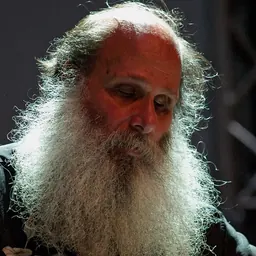


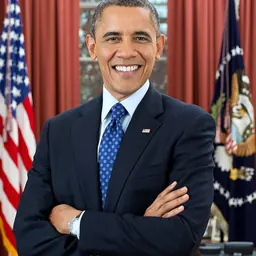

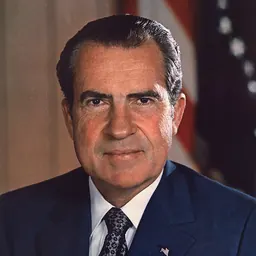
Related people
Same field, nearest in time
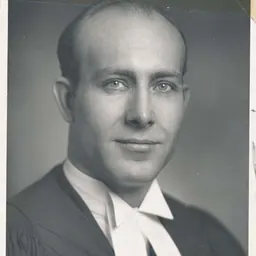



Contemporaries
People whose lives overlapped George N. Leighton's






Frequently asked questions
Who was George N. Leighton?
American jurist
When was George N. Leighton born?
George N. Leighton was born on 22 October 1912 in New Bedford.
When did George N. Leighton die?
George N. Leighton died on 6 June 2018 in Brockton.
What was George N. Leighton's occupation?
George N. Leighton was a lawyer and judge.
What nationality was George N. Leighton?
George N. Leighton was American.
Sources & further reading
· Wikipedia: George N. Leighton
Cite this page
APA: Biography.guide. (2026). George N. Leighton. https://biography.guide/george-n-leighton/
MLA: "George N. Leighton." Biography.guide, https://biography.guide/george-n-leighton/.
Chicago: "George N. Leighton." Biography.guide. https://biography.guide/george-n-leighton/.
Data last updated: 2026-09-20 · Spot an error? Report a correction.
Page generated 2026-09-27 05:28 UTC