
About George Murray, 6th Lord Elibank
Lived 1706 – 1785 (aged 79). George Murray, 6th Lord Elibank was a military personnel.
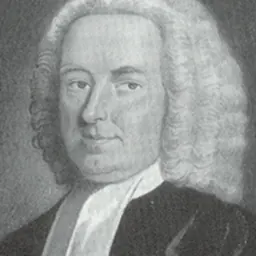
Rear-Admiral George Murray, 6th Lord Elibank (died 11 November 1785) was a British naval officer. He joined the Royal Navy in the early 1720s and fought in the Battle of Porto Bello in 1739 as a lieutenant on board the ship of the line HMS Hampton Court. Murray was promoted to commander in 1740 and given command of the sloop HMS Tryall to take part in George Anson's voyage around the world. A series of illnesses and deaths in Anson's squadron meant that by early 1741 Murray had been promoted to post captain and given command of the frigate HMS Pearl. Pearl and another ship lost contact with Anson in April of that year and after taking heavy damage and casualties through storms and sickness, sought safety in Rio de Janeiro before sailing for England.
Murray continued in the navy after this, receiving a number of different commands including the ship of the line HMS Hampshire in which he served in the Mediterranean Sea and English Channel. While in command of the ship of the line HMS Duke in 1756 he retired from active naval service. He was promoted as a superannuated rear-admiral shortly after this. He inherited the title Lord Elibank when his elder brother died in 1778.
Early life George Murray was born the second son of Alexander Murray, 4th Lord Elibank and his wife Elizabeth. (John Charnock names his father as 'George' Murray, but this seems to be a mistake.) His brother was Gen. James Murray, first Governor of Quebec.
Naval career Early service Murray joined the Royal Navy as a volunteer on board the frigate HMS Lyme on 8 January in either 1721 or 1722. He was promoted to midshipman on Lyme on 9 January in either 1723 or 1724 before passing his examination for lieutenant on 2 February in the following year. His first appointment as a lieutenant came when he was assigned as fourth lieutenant of the ship of the line HMS Orford at the Nore on 5 May 1727, where he served until 31 July 1728. On 1 August he was appointed second lieutenant of the frigate HMS Ludlow Castle on board which he served for over a year completing "secret service" duties, leaving on 13 September 1729 when she was paid off. Murray stayed in Captain until 5 March 1735 or 1736, although he had been relegated to third lieutenant in June 1732, when he moved to become third lieutenant of the ship of the line HMS Princess Caroline serving in Admiral of the Fleet Sir John Norris' fleet off the Tagus. As such Murray participated in Hampton Court in the Battle of Porto Bello on 20 November 1739; she created so much smoke from the frequent firing of her guns at a gun battery that the other ships of the fleet at one point thought she was on fire.
Murray was promoted to commander on 24 July 1740 and given command of the sloop HMS Tryall in August. Tryall joined the squadron of Commodore George Anson which was sent to the South Seas for Anson's voyage around the world. They sailed from England on 18 September.
Post-captain
On 3 November 1740 the squadron arrived at Madeira and the captain of the ship of the line HMS Gloucester left to return to England; this resulted in a series of promotions to fill the vacancy and Murray was promoted to post-captain and given command of the frigate HMS Wager.
Murray was next appointed to command the ship of the line HMS Hampshire on 6 October, in which he was sent to serve in the Mediterranean. Some time after this Hampshire returned to the Mediterranean and in January 1745 Murray was one of the presiding captains in the court martial at Mahon of Captain Richard Norris, who had absconded from his post in 1744.
He left Hampshire in May and instead joined the ship of the line HMS Revenge as her temporary captain between 28 May 1745 and 17 November 1748; he did not serve at sea again until 7 May 1755 when he was given command of the newly captured ship of the line HMS Trydent.
Death Murray died at Ballinerig, Scotland, on 11 November 1785. Maria Murray-Mackenzie who married Colonel Lord Edward Hay, brother of George Hay, 8th Marquess of Tweeddale Isabella Murray-Mackenzie
Not having a son, Murray's title passed to his nephew Alexander upon his death.
Notes and citations
Don’t just read it —
keep it.
Full-length biographies made to live with: read them, listen on the way to work, watch them tonight.
- E-book
- Audio
- Video
Instant download · yours to keep · every purchase keeps this site free
Important facts
People in George Murray, 6th Lord Elibank's life
Named in this biography and alive at the same time
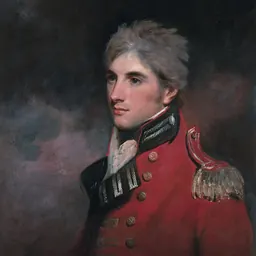
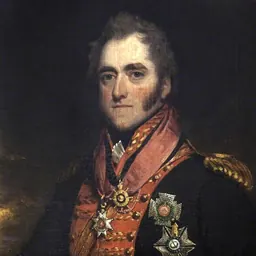
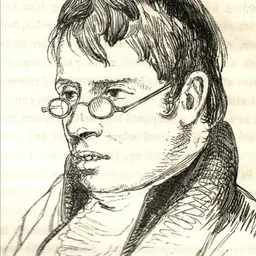
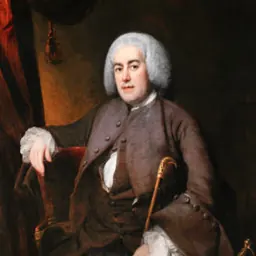
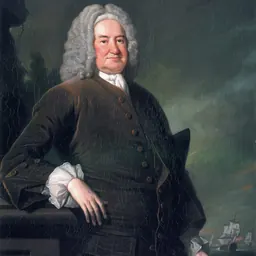

Related people
Same field, nearest in time
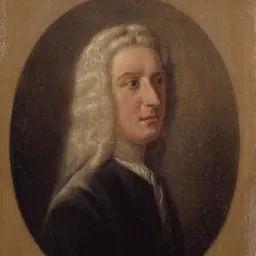


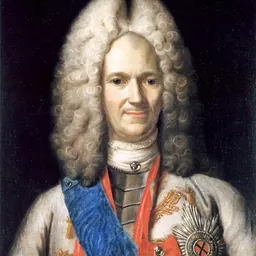

Contemporaries
People whose lives overlapped George Murray, 6th Lord Elibank's




Frequently asked questions
Who was George Murray, 6th Lord Elibank?
British peer and Royal Navy admiral
When was George Murray, 6th Lord Elibank born?
George Murray, 6th Lord Elibank was born on 14 May 1706.
When did George Murray, 6th Lord Elibank die?
George Murray, 6th Lord Elibank died on 12 November 1785.
What was George Murray, 6th Lord Elibank's occupation?
George Murray, 6th Lord Elibank was a military personnel.
Sources & further reading
· Wikipedia: George Murray, 6th Lord Elibank
· DBpedia: George Murray, 6th Lord Elibank
Cite this page
APA: Biography.guide. (2026). George Murray, 6th Lord Elibank. https://biography.guide/george-murray-6th-lord-elibank/
MLA: "George Murray, 6th Lord Elibank." Biography.guide, https://biography.guide/george-murray-6th-lord-elibank/.
Chicago: "George Murray, 6th Lord Elibank." Biography.guide. https://biography.guide/george-murray-6th-lord-elibank/.
Data last updated: 2026-09-20 · Spot an error? Report a correction.
Page generated 2026-09-27 05:10 UTC