
About George Mouton
Lived 1770 – 1838 (aged 68). George Mouton was a French politician and military officer.
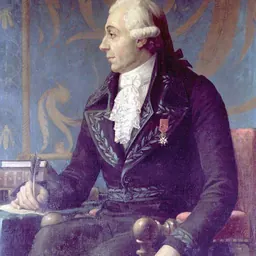
Georges Mouton, comte de Lobau (; 21 February 1770 – 27 November 1838) was a French soldier and political figure who rose to the rank of Marshal of France.
Biography
Born in Phalsbourg, Lorraine and Barrois, he enlisted in the French Revolutionary Army in 1792. Serving in the early campaigns of the French Revolutionary Wars, he was promoted to the rank of colonel by 1800.
He was promoted to général de brigade in 1805, after the establishment of the French Empire, and to général de division in 1807. Mouton distinguished himself in the battles of Jena, Landshut and Aspern-Essling. In 1810, he was created count of Lobau in recognition of his role in the battle of Aspern.
During the Russian Campaign, he acted as a senior aide-de-camp to Emperor Napoleon I of France. He then served with distinction during the 1813 campaign, seeing action at the Battles of Lützen and Bautzen.
After Dominique Vandamme was made prisoner during the battle of Kulm, Lobau commanded the retreat of the remnants of the corps. He served under Laurent Gouvion Saint-Cyr when, upon the retreat after the battle of Leipzig, the latter was trapped in Dresden and after the surrender of these forces he became a prisoner of the Austrian Empire for the rest of the war.
During the Hundred Days, Mouton rallied to Napoleon and was made commander of the VI Infantry Corps which he led in the battles of Ligny and Waterloo. At the Battle of Waterloo he distinguished himself in the defense of Plancenoit against the Prussians.
After the Second Restoration, Lobau was forced to go into exile until he was allowed to return to France in 1818. He was elected to the House of Representatives from 1828 to 1830 as a liberal, and, in 1830, he joined the July Revolution as commander of the National Guard.
As a reward for his services to King Louis-Philippe he was made a Marshal in 1831. He was also made a Peer of France in 1833. In 1832 and 1834, Lobau was assigned to suppress insurrections, a task in which he was successful.
Mouton died in Paris in 1838 as a result of an old wound.
Don’t just read it —
keep it.
Full-length biographies made to live with: read them, listen on the way to work, watch them tonight.
- E-book
- Audio
- Video
Instant download · yours to keep · every purchase keeps this site free
Important facts
People in George Mouton's life
Named in this biography and alive at the same time
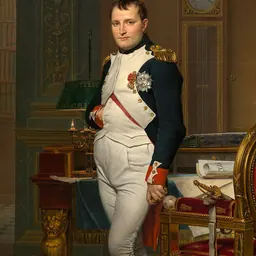

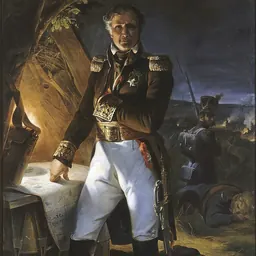
Related people
Same field, nearest in time

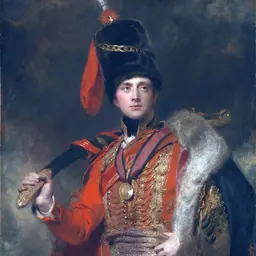


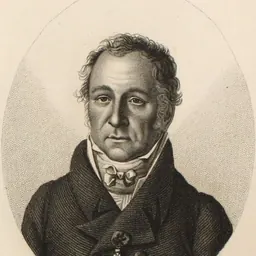
Contemporaries
People whose lives overlapped George Mouton's




Frequently asked questions
Who was George Mouton?
French politician and officer (1770-1838)
When was George Mouton born?
George Mouton was born on 21 February 1770 in Phalsbourg.
When did George Mouton die?
George Mouton died on 27 November 1838 in former 1st arrondissement of Paris.
What was George Mouton's occupation?
George Mouton was a politician and military officer.
What nationality was George Mouton?
George Mouton was French.
Sources & further reading
Cite this page
APA: Biography.guide. (2026). George Mouton. https://biography.guide/george-mouton/
MLA: "George Mouton." Biography.guide, https://biography.guide/george-mouton/.
Chicago: "George Mouton." Biography.guide. https://biography.guide/george-mouton/.
Data last updated: 2026-09-25 · Spot an error? Report a correction.
Page generated 2026-09-27 05:09 UTC