
About George Maney
Lived 1826 – 1901 (aged 74). George Maney was an American diplomat, politician, military personnel, bolivia, colombia and paraguay.
Brigadier-General George Earl Maney (August 24, 1826 – February 9, 1901) was an American soldier, politician, railroad executive and diplomat. He was a general in the Confederate States Army during the American Civil War and a reconstruction era U.S. ambassador to Colombia, Bolivia, Uruguay, and Paraguay.
Early life and education George Earl Maney was born in Franklin, Tennessee, to Judge Thomas Maney and his wife. His father was a prominent newspaper editor and circuit judge. Young Maney attended the Nashville Seminary before graduating from the University of Nashville in 1845 at the age of 19.
Mexican-American War Maney served as a second lieutenant in the 1st Tennessee Volunteer Regiment during the Mexican-American War (1846–1848). When his three-months term of enlistment expired, he enrolled in the United States Army and served as a first lieutenant in the 3rd U.S. Dragoons, which participated in General Winfield Scott's march to Mexico City.
Return to civilian life When hostilities ceased, Maney returned home. He studied law, passed his bar exam in 1850, and established a law practice in Franklin. It became quite successful. Maney subsequently entered politics and was elected to the Tennessee State Legislature.
American Civil War Following the secession of Tennessee and the beginning of the American Civil War, Maney joined the Rock City Guards, a Nashville militia. He subsequently enlisted in the Confederate States Army as a captain in the 11th Tennessee Volunteer Infantry. On May 6, 1861, he was promoted to colonel of the 1st Tennessee. He served in western Virginia, first under Robert E. Lee at the Battle of Cheat Mountain and later under Thomas J. "Stonewall" Jackson at Bath and Romney.
Maney asked for a reassignment to his native Tennessee, which was threatened by Union forces. As an officer in the Army of Tennessee, Maney participated in the Battle of Shiloh and was promoted on April 16, 1862, to brigadier general. He led his brigade in the battles of Perryville, Chickamauga, and Murfreesboro. In November 1863, he was wounded severely in his arm during the Chattanooga Campaign. He was on medical leave for much of the rest of the year.
In 1864, Maney commanded a division in William J. Hardee's corps during the Atlanta campaign. He was captured in August and later released, but he did not return to active field duty because of problems with his wounded arm. Hardee recommended that Maney be promoted to major general, but the request was not fulfilled. Maney surrendered following the Carolinas campaign and was paroled on May 1, 1865, at Greensboro, North Carolina.
Postwar career After the war, Maney returned to his Tennessee home. He became president of the Tennessee and Pacific Railroad in 1868, serving in that executive post for nine years. Unlike many of his former Confederate compatriots, he became an active Republican. He was elected to the state senate. During the carpetbagger era, Maney held considerable influence over the Governor of Tennessee, Dewitt Clinton Senter. Maney helped restore the government to former Confederates once their civil rights were restored.
Maney became active in a number of reconciliation efforts during Reconstruction, working to improve relations between the former enemies. In early 1876, he was a candidate for governor, but withdrew his name from the ballot. In December of that year, his daughter Frances married a former Union officer in the 15th Massachusetts.
During the presidential administrations of James A. Garfield, Chester Arthur, and Benjamin Harrison, Maney was appointed as ambassador to various countries in South America. He was the U.S. minister to Colombia (1881–1882), and then was the Minister Resident/Consul General to Bolivia from November 4, 1882, until June 1, 1883. He returned home and was a delegate to the Republican National Conventions of 1884 and 1888. He spent four years (1890–1894) as the U.S. ambassador to Uruguay and Paraguay.
General George Maney died in Washington, D.C., from a cerebral hemorrhage. He is buried in Mount Olivet Cemetery in Nashville, Tennessee.
Personal life Maney married Elizabeth T. "Betty" Crutcher of Nashville in 1853; they raised a family of five children.
Don’t just read it —
keep it.
Full-length biographies made to live with: read them, listen on the way to work, watch them tonight.
- E-book
- Audio
- Video
Instant download · yours to keep · every purchase keeps this site free
Important facts
People in George Maney's life
Named in this biography and alive at the same time

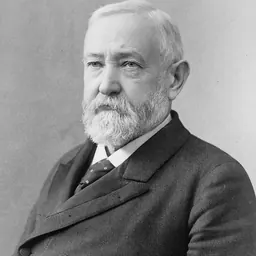

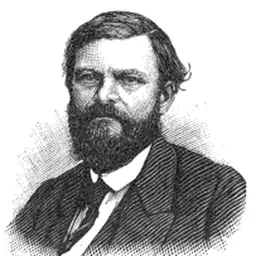
Related people
Same field, nearest in time


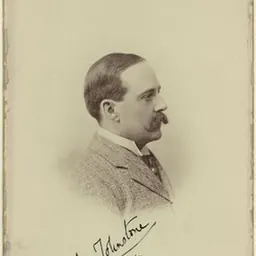

Contemporaries
People whose lives overlapped George Maney's
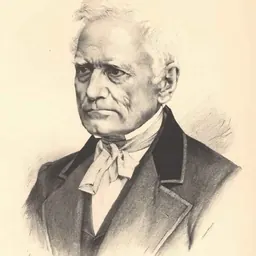



Frequently asked questions
Who was George Maney?
Confederate Army general (1826-1901)
When was George Maney born?
George Maney was born on 24 August 1826 in Franklin.
When did George Maney die?
George Maney died on 9 February 1901 in Washington, D.C..
What was George Maney's occupation?
George Maney was a diplomat, politician, military personnel, bolivia, colombia and paraguay.
What nationality was George Maney?
George Maney was American.
Sources & further reading
Cite this page
APA: Biography.guide. (2026). George Maney. https://biography.guide/george-maney/
MLA: "George Maney." Biography.guide, https://biography.guide/george-maney/.
Chicago: "George Maney." Biography.guide. https://biography.guide/george-maney/.
Data last updated: 2026-09-25 · Spot an error? Report a correction.
Page generated 2026-09-27 05:13 UTC