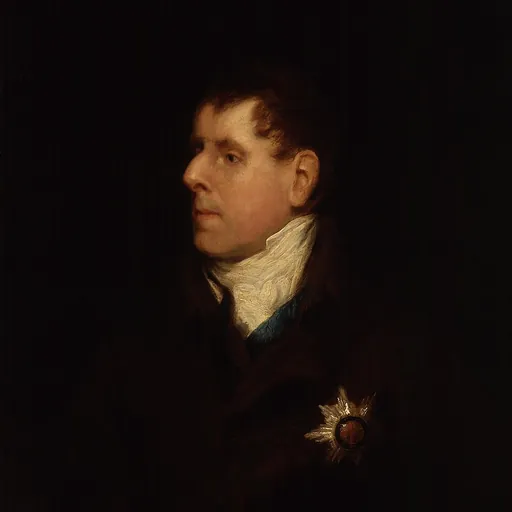
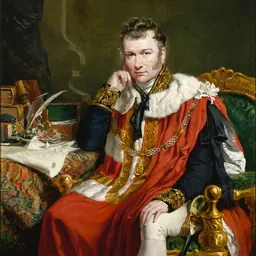
George Leveson-Gower, 1st Duke of Sutherland
British diplomat, politician and landowner
About George Leveson-Gower, 1st Duke of Sutherland
Lived 1758 – 1833 (aged 75). George Leveson-Gower, 1st Duke of Sutherland was a British diplomat, politician, land owner and art collector.
George Granville Leveson-Gower, 1st Duke of Sutherland KG, PC (9 January 175819 July 1833), known as Viscount Trentham from 1758 to 1786, as Earl Gower from 1786 to 1803 and as the Marquess of Stafford from 1803 to 1833, was an English politician, diplomat, landowner and patron of the arts from the Leveson-Gower family. He was the wealthiest man in Britain during the latter part of his life. He remains a controversial figure for his role in the Highland Clearances.
Background Sutherland was the elder son of Granville Leveson-Gower, 2nd Earl Gower (1st Marquess of Stafford from 1786), by his second wife, the former Lady Louisa Egerton, daughter of Scroop Egerton, 1st Duke of Bridgewater. His mother died when he was 3, and his father remarried to Lady Susanna Stewart, daughter of Alexander Stewart, 6th Earl of Galloway. Lord Granville Leveson-Gower, later 1st Earl Granville, was his younger half-brother from this marriage. Styled Viscount Trentham as his father's heir, he was educated at Westminster and at Christ Church, Oxford, where he graduated MA in 1777.
Earlier political career Trentham sat as Member of Parliament for Newcastle-under-Lyme from 1779 to 1784. Having become Earl Gower on his father's elevation to a marquessate in 1786, he then sat for Staffordshire from 1787 to 1799, being appointed a Privy Counsellor in 1790. In 1799, he was summoned to the House of Lords through a writ of acceleration in his father's junior title of Baron Gower (though he continued to be known by the higher courtesy title of Earl Gower).
Ambassador during French Revolution Between 1790 and 1792 he was Ambassador to France. Gower was appointed ambassador in Paris in June 1790 at the age of 32. Due to Louis XVI being under house arrest in the Tuileries Palace, Gower was unable to become 'an ornament at Versailles', i.e. was unable to work closely with the royal family. Gower was scarcely better equipped to handle the complexity of the French Revolution than his predecessor, the Duke of Dorset. He had no previous experience of diplomacy. Gower's main priority in Paris was to provide news from the French court back to Britain, however trivial. Though Gower also reported some popular 'disturbances', he had little comprehension of the broader political climate. On 10 August 1792 an insurrection by the newly established Paris Revolutionary Commune drove the royal family from the Tuileries and three days later Louis was arrested and imprisoned in the Temple fortress. Britain broke off diplomatic relations in protest. The closure of the British embassy meant that the intelligence operations could no longer be run from it, resulting in Britain replacing the ambassador with Captain George Monro, removing Gower from diplomacy in France.
Later political career
After his return to Britain he declined the posts of Lord Steward of the Household and Lord-Lieutenant of Ireland. On 20 September 1794, he was appointed Colonel of the new Staffordshire Regiment of Gentlemen and Yeomanry, personally commanding the Newcastle-under-Lyme Troop. He retired from the command in January 1800.
In 1799 he accepted the office of joint Postmaster General, which he retained until 1801. He succeeded his father as Marquess of Stafford in 1803. The now Lord Stafford played an important part in the downfall of Henry Addington's administration in 1804, after which he changed political allegiance from the Tory to the Whig party.
He was created Duke of Sutherland on 28 January 1833; he held that title for less than six months until his death later that year.
Land ownership Wealth
The Leveson-Gower family owned extensive lands in Staffordshire, Shropshire and Yorkshire. In 1803 Sutherland also succeeded to the vast estates of his maternal uncle Francis Egerton, 3rd Duke of Bridgewater, which included the Bridgewater Canal and a major art collection including much of the Orleans Collection; both Gower and his uncle had been members of the consortium which brought it to London for dispersal. According to the will of the Duke of Bridgewater, these passed on the death of the first Duke of Sutherland to his third son Lord Francis Leveson-Gower (see below). This inheritance brought him great wealth. Sutherland is estimated to have been the wealthiest man of the 19th century, surpassing even Nathan Rothschild. The precise value of his estate at death is unknown, as it was simply classed as 'upper value'. He was described by Charles Greville as a "leviathan of wealth" and "...the richest individual who ever died". Following the death of the Duke of York in 1827 he purchased the leasehold of Stafford House (now Lancaster House), which became the London residence of the dukes of Sutherland until 1912.
Development of Sutherland and Highland clearances
Sutherland and his wife, the Countess of Sutherland, remain controversial figures for their role in the Highland Clearances, where thousands of tenants were evicted and rehoused in coastal crofts as part of a programme of improvement. The larger clearances in Sutherland were undertaken between 1811 and 1820. In 1811 Parliament passed an Act granting half the expenses of building roads in northern Scotland, on the provision that landowners paid for the other half. The following year Sutherland commenced building roads and bridges in the county, which up to that point had been virtually non-existent. Appalled by the poor living conditions of his tenants and influenced by social and economic theories of the day as well as consulting widely on the subject, he and his wife (to whom much of the proprietorial oversight of the estate had been delegated) became convinced that subsistence farming in the interior of Sutherland could not be sustained in the long term. Much higher rents could be obtained from letting land for extensive sheep farms—so providing a much better income from the estate.
The Sutherland estate management had had plans for clearance for some years, with some clearance activity in 1772 when Lady Sutherland was still a child. However, a shortage of money stopped these plans from progressing to any greater degree—a situation that continued after her marriage to Leveson-Gower. However, when he inherited the vast wealth of the Duke of Bridgewater, plans could proceed—and Leveson-Gower was happy for large amounts of his wealth to be spent on the changes to the Sutherland estate. In 1814, one of the estate's factors, Patrick Sellar, was supervising clearances in Strathnaver when the roof timbers of a house were set on fire (to prevent the house being reoccupied after the eviction) with, allegedly, an elderly and bedridden woman still inside. The woman was rescued, but died six days later. The local law officer, Robert Mackid, was an enemy of Sellar and started taking witness statements so that Sellar could be prosecuted. The case went to trial in 1816, and Sellar was acquitted. The publicity arising from the trial was not welcome to the Sutherlands. Sellar was replaced as factor and further, larger clearances continued in 1818 to 1820. Despite efforts to avoid press comment, in 1819 The Observer newspaper ran the headline: "the Devastation of Sutherland", reporting the burning of roof timbers of large numbers of houses cleared at the same time.
Family The then Lord Trentham married Elizabeth Sutherland, 19th Countess of Sutherland, daughter of William Sutherland, 18th Earl of Sutherland (whom she had succeeded in that title as an infant) and the former Mary Maxwell (who had died just before her husband), on 4 September 1785. They had four surviving children:
George Sutherland-Leveson-Gower, Marquess of Stafford (11 August 1786 – 27 February 1861), later 2nd Duke of Sutherland. Lady Charlotte Sophia Leveson-Gower (c. 1788 – 7 July 1870), married Henry Howard (later 13th Duke of Norfolk) and had issue. Lady Elizabeth Mary Leveson-Gower (1797–1891), married Richard Grosvenor, Viscount Belgrave (later 2nd Marquess of Westminster) and had issue. Lord Francis Leveson-Gower, later Egerton (1 January 1800 – 18 February 1857), later 1st Earl of Ellesmere.
Final years and death Eleven years after becoming enfeebled by a paralytic stroke, Sutherland died at Dunrobin Castle in July 1833, aged 75, and was buried at Dornoch Cathedral. within the original estates of the Leveson family acquired on the dissolution of Lilleshall Abbey. The tablet on the north face of the monument reads "To the memory of George Granville Leveson Gower, K.G. 1st Duke of Sutherland. The most just and generous of landlords. This monument is erected by the occupiers of his Grace's Shropshire farms as a public testimony that he went down to his grave with the blessings of his tenants on his head and left behind him upon his estates the best inheritance which a gentleman of England can bequeath to his son; men ready to stand by his house, heart and hand."
There is also a monument erected in the Trentham Estate, Staffordshire. This colossal statue, designed by Winks and sculptured by Sir Francis Leggatt Chantrey, surmounts a plain column of stone on a tiered pedestal. The monument was raised in 1834 at the instigation of the second Duke, a year after the first Duke's death.
In 1837 a large monument, known locally as the Mannie, was erected on Ben Bhraggie near Golspie to commemorate the Duke's life. The existence of this statue has been the subject of some controversy—in 1994, Sandy Lindsay, a former Scottish National Party councillor from Inverness proposed its demolition. He later altered his plan, asking permission from the local council to relocate the statue and replace it with plaques telling the story of the Clearances. Lindsay proposed moving the statue to the grounds of Dunrobin Castle, after the J. Paul Getty Museum in Los Angeles declined his offer to take it. There was a failed attempt by vandals to topple the statue in November 2011. A BBC news report of this incident quoted a local person saying that few people wished the statue removed; instead they saw it as an important reminder of history. As of March 2026, however, the statue still stands.
Criticism Due to his controversial role in the Sutherland Clearances, the "Mannie" statue to the Duke in Golspie, Sutherland has been subject to repeated vandalism.
Don’t just read it —
keep it.
Full-length biographies made to live with: read them, listen on the way to work, watch them tonight.
- E-book
- Audio
- Video
Instant download · yours to keep · every purchase keeps this site free
Important facts
Family & relationships
People in George Leveson-Gower, 1st Duke of Sutherland's life
Named in this biography and alive at the same time

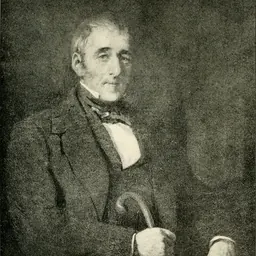

Related people
Same field, nearest in time
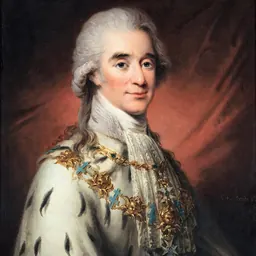
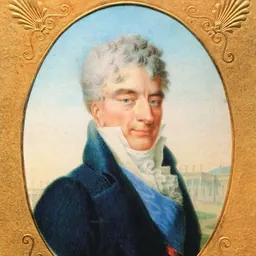

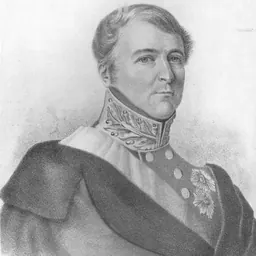

Contemporaries
People whose lives overlapped George Leveson-Gower, 1st Duke of Sutherland's




Frequently asked questions
Who was George Leveson-Gower, 1st Duke of Sutherland?
British diplomat, politician and landowner (1758-1833)
When was George Leveson-Gower, 1st Duke of Sutherland born?
George Leveson-Gower, 1st Duke of Sutherland was born on 9 January 1758 in London.
When did George Leveson-Gower, 1st Duke of Sutherland die?
George Leveson-Gower, 1st Duke of Sutherland died on 19 July 1833 in Dunrobin Castle.
What was George Leveson-Gower, 1st Duke of Sutherland's occupation?
George Leveson-Gower, 1st Duke of Sutherland was a diplomat, politician, land owner and art collector.
What nationality was George Leveson-Gower, 1st Duke of Sutherland?
George Leveson-Gower, 1st Duke of Sutherland was British.
Sources & further reading
· Wikipedia: George Leveson-Gower, 1st Duke of Sutherland
· DBpedia: George Leveson-Gower, 1st Duke of Sutherland
Cite this page
APA: Biography.guide. (2026). George Leveson-Gower, 1st Duke of Sutherland. https://biography.guide/george-leveson-gower-1st-duke-of-sutherland/
MLA: "George Leveson-Gower, 1st Duke of Sutherland." Biography.guide, https://biography.guide/george-leveson-gower-1st-duke-of-sutherland/.
Chicago: "George Leveson-Gower, 1st Duke of Sutherland." Biography.guide. https://biography.guide/george-leveson-gower-1st-duke-of-sutherland/.
Data last updated: 2026-09-22 · Spot an error? Report a correction.
Portrait: Wikimedia Commons · author & licence
Page generated 2026-09-27 05:01 UTC