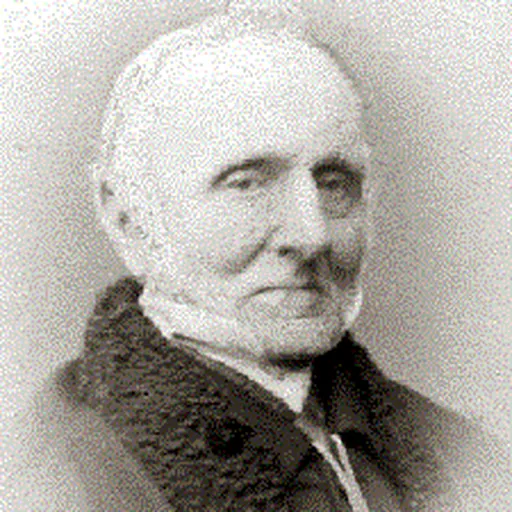
About George Jones
Lived 1786 – 1869 (aged 83). George Jones was a British painter and artist.
George Jones (6 January 1786 – 19 September 1869) was an English painter who specialised in military art.
Life
A compositional sketch depicting a member of the Black Watch attending a General of Hussars, possibly intended to be Lord Uxbridge at Waterloo, oil on board, 1815. Jones was born in London, the only son of John Jones, a mezzotint engraver. He became a student at the Royal Academy Schools in 1801 at the early age of 15, exhibiting his first work depicting a biblical scene in 1803. He was a frequent exhibitor at the Royal Academy over the next eight years. He joined the Royal Montgomeryshire Militia; the date of his commission as captain is given as 17 February 1812. There is a possibility that he had served in the South Devon Militia as far back as 1808. His obituary states that he volunteered for active service with his company in Spain, but he was certainly part of the army of occupation in Paris after the Battle of Waterloo.
After the war he resumed his art career, winning prizes and fame for his paintings of military engagements. He was elected an associate of the Royal Academy in 1822, a full member in 1824, becoming its librarian, and from 1840 to 1850 its keeper. He was the friend of Charles Turner, engraver, and of J. M. W. Turner, whose most loyal executor he became, writing a short memoir of him and painting pictures recording his gallery. Unlike the two Turners he is unaccountably not commemorated on his former residences in London by any plaque.
He married Gertrude Anne Loscombe (died 1896) in 1844.
He died in Park Square, Regent's Park on 19 September 1869 and is buried on the western side of Highgate Cemetery.
Resemblance to Wellington Jones bore a strong resemblance to his hero, Arthur Wellesley, 1st Duke of Wellington, and was sometimes mistaken for him. Jones was said to be very proud of his resemblance to the Duke. When Wellington was told about this he remarked, "Mistaken for me, is he? That's strange, for no one ever mistakes me for Mr. Jones". In fact, there is evidence that Wellington was once mistaken for Jones. When approached by a man who said "Mr Jones, I believe", Wellington replied, "if you will believe that you will believe anything." In 1829, Jones painted a large scene of Borodino, while from the same year came his scene entitled Nelson boarding the 'San Josef' at St. Vincent.
Scinde Campaign paintings Jones was friendly with William Napier, brother of General Sir Charles Napier, and following the victories in Scinde in 1842–1843, William asked Jones to paint a scene in support of his brother who was being criticised for supposedly creating the war to further his own ambitions. Jones painted several scenes including the Battle of Meanee, the Battle of Hydrabad, the Battle of Trukee and the destruction of the fortress at Emaum Ghur.
Crimean War paintings The subject of the Crimean War appealed to Jones who exhibited two preliminary oil sketches at the Royal Academy in 1855 entitled The battle of the Alma and Balaclava 1854 - conflict at the guns. Four years later, the artist submitted another picture entitled The Battle of Inkermann.
Indian Mutiny paintings Just as the Scinde paintings were created to celebrate a general, Jones painted several scenes of the Indian Mutiny to honor Sir Colin Campbell. The first piece was entitled Contest in the Raptee river between the 7th Hussars, commanded by Sir W. Russell, and the Sowars. His two major paintings depicted Lucknow and Cawnpore.
Abyssinian Campaign In the final year of his life, Jones produced a watercolor depicting The conquest and destruction of Magdala.
Gallery
Don’t just read it —
keep it.
Full-length biographies made to live with: read them, listen on the way to work, watch them tonight.
- E-book
- Audio
- Video
Instant download · yours to keep · every purchase keeps this site free
Important facts
People in George Jones's life
Named in this biography and alive at the same time



Related people
Same field, nearest in time

Contemporaries
People whose lives overlapped George Jones's



Frequently asked questions
Who was George Jones?
British painter, and Keeper of the Royal Academy (1786-1869)
When was George Jones born?
George Jones was born on 6 January 1786 in London.
When did George Jones die?
George Jones died on 19 September 1869 in London.
What was George Jones's occupation?
George Jones was a painter and artist.
What nationality was George Jones?
George Jones was British.
Sources & further reading
· DBpedia: George Jones (painter)
Cite this page
APA: Biography.guide. (2026). George Jones. https://biography.guide/george-jones-painter/
MLA: "George Jones." Biography.guide, https://biography.guide/george-jones-painter/.
Chicago: "George Jones." Biography.guide. https://biography.guide/george-jones-painter/.
Data last updated: 2026-09-20 · Spot an error? Report a correction.
Page generated 2026-09-27 05:10 UTC