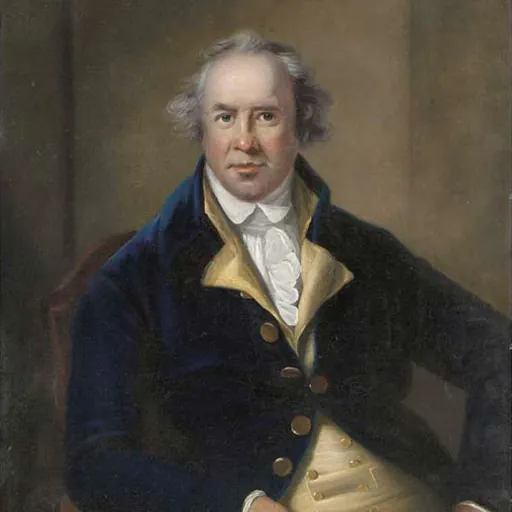
George James Bruere
Governor of Bermuda
About George James Bruere
Lived 1720 – 1780 (aged 59–60).
Lieutenant-Colonel George James Bruere ( – 10 September 1780) was a British Army officer and colonial administrator who served as governor of Bermuda from 1764 until his death in 1780. Of all Bermuda's governors since 1612, his term of office was the longest. He had a difficult time during the American Revolutionary War and is thought to have died of chronic stress caused by the interplay of Bermudians and American rebels.
Life Born about 1721, on 17 July 1743 Bruere married Elizabeth Neale, daughter of Richard Neale by his marriage to Anne Pendock, in St Mary's Church, Nottingham, England.
After an early career as a British Army officer, Bruere was appointed Governor of Bermuda in 1764. Previously serving in the army with the rank of lieutenant colonel, he arrived in Bermuda on the Prince of Wales in August 1764, bringing with him his wife and nine children.
He has been described as "a benign, simple and kindly man with a large family" and by the historian Sir John William Kaye as "a staunch royalist... loyal to the core". However, Kaye reports further that -
quote|Of this Governor Bruere the colonial annalists relate that he was a man of an irascible temper and overbearing disposition, living and ruling in a perpetual state of antagonism with the Assembly and the People. He was a soldier, and a good one; but he was habituated to command, and impatient of opposition.
In 1775, after the Battle of Lexington, the Continental Congress announced a trade embargo against British colonies remaining loyal to the Crown. Bermuda offered to supply the Patriots with salt, but they were unimpressed and asked for gunpowder. Meanwhile, in June 1775 Bruere lost his son John, who was killed fighting on the British side at the Battle of Bunker Hill.
This was despite the implication of his Bermudian relatives in the act of treason. The President of the Governor's Council, and occasional acting governor, was Henry Tucker, the husband of Bruere's daughter, Frances. Henry's father, a Colonel of the Militia, as well as Henry's brother, St. George Tucker, were suspected of involvement in organising the gunpowder theft. Colonel Henry Tucker had been one of the Bermudian delegates to the Continental Congress, and had met with Benjamin Franklin, with whom he is believed to have orchestrated the gunpowder theft. St. George had moved to Virginia to study law in 1772. He later moved to South Carolina, which had been colonised from Bermuda in 1670 by William Sayle (and which still had a sizeable and important enclave of Bermudians). He served during the American War of Independence as a colonel in the Virginia Militia. Another of Henry's brothers, Thomas Tudor Tucker, had emigrated to the continent before the war, and was serving in the rebel administration (he later became the longest serving Treasurer of the United States, as well as serving as a US Congressman and Senator). It has been suggested that George Washington (possibly unaware of the plotting of Franklin and Colonel Tucker) wrote the letter addressed to the people of Bermuda, which had sparked the treason, at the suggestion of Thomas, and that it had been delivered into the hands of his relatives in Bermuda. The theft, during which a visiting French officer was murdered and buried on the spot, was organised by persons highly-enough placed that no one was ever prosecuted.
The letter from Washington had read:
In 1776, in the course of the American Revolutionary War, Admiral Lord Howe sent two Royal Navy sloops of war, HMS Nautilus (1762) and Galatea, to Bermuda with the task of stopping the trade between Bermuda and the Colonies in rebellion.
During the early years of the war, however, when rebel sympathy was strongest, Bermudians reportedly built large numbers of Bermuda sloops for sale to the Americans, via neutral ports, for use as privateers.
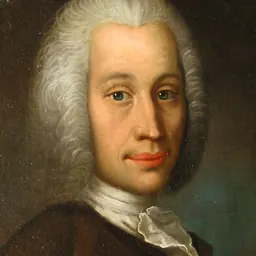
Death Exhausted by his last years in office, Bruere became ill in July 1780, probably a result of chronic stress, and he died in St George's on 10 September 1780, at the age of fifty-nine. He was later said by the historian Henry Wilkinson to be "the victim in the eyes of his family of five years of incessant strain and foul play", in particular caused by the dealings of the islanders with the rebel colonists. Perhaps because he was said to have died of yellow fever, he was buried under the floor of St. Peter's Church, St. George's. A surviving portrait of Bruere (pictured) is attributed to John Russell, RA His wooden coffin had crumbled away, but a copper plate supposed to be from the top of the coffin was found in the skeleton's chest cavity, bearing the inscription "His Excellency / George James Bruere ESQr / Governor of Bermuda / And Lieut. Colol. In His/ Majestys Service OB / The 10 September 1780/ AE 59 Years". The vicar of the church commented that he had no record of the funeral. From the bones, it was estimated that Bruere was , in height, which was about the average for the 18th century.
Children Bruere had at least nine children: William; George Bruere Jr. (ca. 1744–1786); John (killed at the Battle of Bunker Hill, 1775);
Don’t just read it —
keep it.
Full-length biographies made to live with: read them, listen on the way to work, watch them tonight.
- E-book
- Audio
- Video
Instant download · yours to keep · every purchase keeps this site free
Important facts
People in George James Bruere's life
Named in this biography and alive at the same time




Contemporaries
People whose lives overlapped George James Bruere's



Frequently asked questions
Who was George James Bruere?
Governor of Bermuda
When was George James Bruere born?
George James Bruere was born in 1720.
When did George James Bruere die?
George James Bruere died on 10 September 1780.
Sources & further reading
· Wikipedia: George James Bruere
· DBpedia: George James Bruere
Cite this page
APA: Biography.guide. (2026). George James Bruere. https://biography.guide/george-james-bruere/
MLA: "George James Bruere." Biography.guide, https://biography.guide/george-james-bruere/.
Chicago: "George James Bruere." Biography.guide. https://biography.guide/george-james-bruere/.
Data last updated: 2026-09-22 · Spot an error? Report a correction.
Portrait: Wikimedia Commons · author & licence
Page generated 2026-09-27 05:04 UTC