
About George II, Duke of Saxe-Meiningen
Lived 1826 – 1914 (aged 88). George II, Duke of Saxe-Meiningen was a sovereign.
Georg II, Duke of Saxe-Meiningen (2 April 1826 – 25 June 1914), was the penultimate Duke of Saxe-Meiningen, reigning from 1866 to 1914. For his support for his successful court theatre he was also known as the Theaterherzog (theatre duke).
Family and early life Georg was the only son of Bernhard II, Duke of Saxe-Meiningen and his wife Princess Marie Frederica of Hesse-Kassel. His birth on 2 April 1826 was met with great relief as the succession to the duchy was in jeopardy due to a lack of male heirs in the family. Georg remained an only child for seventeen years, until the birth of his sister Princess Augusta in 1843.
Georg spent his first few years under the supervision of his parents and grandmother the Dowager Duchess Luise Eleonore. It was the latter who instilled upon Georg the patriotic virtues of his heritage, as well as the sense of duty needed to rule a duchy. In opposition to his father, Georg had sided with the Prussians during the war and was rewarded with a position of Lieutenant General of the Prussian army. The young duke was familiar enough with Prussian politics to regard their attitudes as impractical. She was the eldest daughter of Prince Albert of Prussia and Princess Marianne of the Netherlands, and was a granddaughter of both Frederick William III of Prussia and William I of the Netherlands.
They had four children: Bernhard III, Duke of Saxe-Meiningen (1 April 1851 – 16 January 1928). he married Princess Charlotte of Prussia on 18 February 1878. They had one daughter, Princess Feodora of Saxe-Meiningen. Prince Georg Albrecht (12 April 1852 – 27 January 1855). died at two years old. Princess Marie Elisabeth of Saxe-Meiningen (23 September 1853 – 22 February 1923). unnamed son (29 – 30 March 1855). died at a day old.
Although couple had a short engagement, it was a love match. Among the wedding gifts was an opulent old villa on Lake Como from her mother Marianne. It was renamed the Villa Carlotta in the bride's honor. They spent the next five years in Berlin and Potsdam but returned to Meiningen for the birth of their children. He succeeded his father as Duke of Saxe-Meiningen in 1866, eleven years after Charlotte's death.
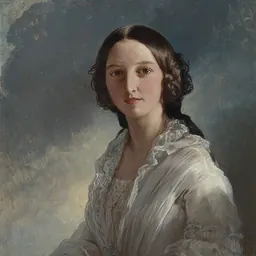
Second Georg's second wife Princess Feodora of Hohenlohe-Langenburg, c. 1860. Portrait by Franz Xaver Winterhalter
Despite his recent widowhood, Georg went on a search for a new wife, if only to provide a mother for his two young children. Georg met his second cousin Princess Feodora of Hohenlohe-Langenburg while he was on his way to Italy; they became engaged almost at once. She was a niece of Queen Victoria, being a daughter of Victoria's half-sister Princess Feodora of Leiningen and her husband Ernst I, Prince of Hohenlohe-Langenburg. On 23 October 1858, they married at Langenburg.
Georg and Feodora had three sons:
Prince Ernst Bernhard of Saxe-Meiningen (27 September 1859 – 29 December 1941) he married Katharina Jensen on 20 September 1892. They had six children. Prince Frederick Johann of Saxe-Meiningen (12 October 1861 – 23 August 1914) he married Countess Adelaide of Lippe-Biesterfeld on 24 April 1889. They had six children. Prince Viktor of Saxe-Meiningen (14 – 17 May 1865).
Their marriage was unhappy however. Georg had never become reconciled to Charlotte's death and Feodora was not temperamentally suited for the life she was expected to lead. She had no intellectual or artistic attainments; even worse, she had no interest in developing any. Despite this fact, Georg attempted to educate her, as he was a great lover of the arts, especially theater. Her mother approved, stating it was "very sensible of him indeed to arrange for his bride to be much occupied with lessons, to take drawing lessons, and to hear lectures on history". Georg in turn became increasingly angry and defensive at anyone who failed to recognize his wife and treat her as an equal.
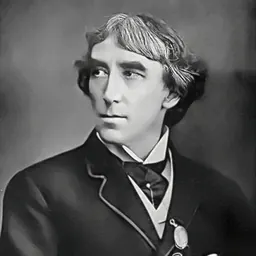
The initial aim of the Meiningen Ensemble was to create, within the context of an ensemble, historical exactitude of the mise en scene. The Meiningen company sought to create the illusion of natural space within the confines of the proscenium arch. Duke Georg was concerned mainly with creating a naturalistic illusory atmosphere where the actor could establish or re-create authenticity in performance. Chronegk and the Duke prepared sketches and diagrams showing actors how to walk and move in period clothing to achieve a naturalistic feel to stage characterization. The Meiningen productions influenced playwrights like Henrik Ibsen, actors like Henry Irving and directors like Antoine and Stanislavsky.
The conventions of realism for the Meiningen seemed to create the means by which a theatre artist creates the illusion of everyday life. They saw that art should copy science by depicting life 'as it is' without direct comment, interpretation and the structural edifice of the well made play. The Duke believed that a lifelike reality was achieved on stage through a careful study of the play and showing this in stage movement, composition and stage business. His major contribution to the stage was not just his use of realistic settings and costumes but in the way he tried to use and integrate performers as part of the mise en scene. The use of costume did not merely reflect historical accuracy but attempted to help actors perform in a style and mode which integrated with other elements. He demanded that all the actors were at most rehearsals and he carefully worked out the actions of even everyone in crowd scenes. Individual members of crowds and main actors alike were expected to provide specific research and character analysis related to the events depicted on stage. He was known for his great vision and memory and he often worked without a prompt book or script, working from his head and using a runner to ferry his ideas to his assistant Chronegk. Because his work toured extensively from 1874 to 1890, Meiningen's unified productions had a great impact on the theatre world. He is widely considered the theatre's first Modern director.
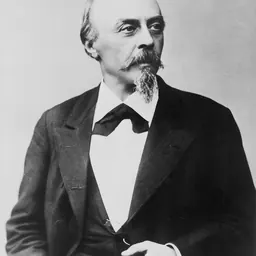
Meiningen Court Orchestra The Duke was also the patron of one of Europe's leading orchestras, the Meiningen Court Orchestra. The orchestra attained its distinction after the Duke hired the conductor Hans von Bülow in 1880. Bülow instituted stringent rehearsal methods and, with the Duke's agreement, hired eight musicians, raising its membership to 44. He offered the orchestra as a trial ensemble to Johannes Brahms, who was to try out his Second Piano Concerto and Third Symphony with the orchestra and premiered his Fourth Symphony there, conducting it himself. A dispute with Brahms over who was to conduct the premiere of his Fourth Symphony in Frankfurt led Bülow to resign (he was scheduled to premiere it there, but Brahms pre-empted him by conducting it with a local orchestra). Bülow was succeeded briefly by his 20-year-old assistant Richard Strauss, who resigned after a month, and then by Fritz Steinbach. Steinbach championed the music of Brahms, instituting Brahms Festivals in 1895 and 1897 in Meiningen with the composer present. A private concert by the Meiningen Court Orchestra and Steinbach for Brahms in 1891 led the composer to notice the artistry of the ensemble's first clarinetist, Richard Mühlfeld; Brahms promised to compose music for Mühlfeld, and did indeed compose his Clarinet Trio, Clarinet Quintet, and two Clarinet Sonatas. In 1897 the Duke undertook the construction of a Brahms monument in Meiningen's English gardens, sculpted by Adolf von Hildebrand.
Later life In his later life, Georg suffered from acute deafness and retired from active life. He had been fond of hunting and traveling, and was a collector of antiques and manuscripts.
Georg is buried at , next to his third wife.
Honours Ernestine duchies: Grand Cross of the Saxe-Ernestine House Order, April 1844; Joint Grand Master, 20 September 1866 Grand Cross of the Order of the White Falcon, 23 September 1845 Knight of the Order of the Rue Crown, 1845 Kingdom of Prussia: Knight of the Order of the Black Eagle, 25 December 1849; with Collar, 1854 Grand Commander's Cross of the Royal House Order of Hohenzollern, 11 March 1878 Grand Cross of the Royal Guelphic Order, 1858 Grand Cross of the House and Merit Order of Peter Frederick Louis, with Crown in Gold, 14 October 1862 Duchy of Anhalt: Grand Cross of the House Order of Albert the Bear, 15 December 1865 Grand Cross of the Order of the Württemberg Crown, 1866 Knight of the Supreme Order of the Most Holy Annunciation, 18 April 1869 Austria-Hungary: Grand Cross of the Royal Hungarian Order of St. Stephen, 1870 Knight of the Order of St. Hubert, 1888
Ancestry
Don’t just read it —
keep it.
Full-length biographies made to live with: read them, listen on the way to work, watch them tonight.
- E-book
- Audio
- Video
Instant download · yours to keep · every purchase keeps this site free
Important facts
People in George II, Duke of Saxe-Meiningen's life
Named in this biography and alive at the same time




Related people
Same field, nearest in time

Contemporaries
People whose lives overlapped George II, Duke of Saxe-Meiningen's



Frequently asked questions
Who was George II, Duke of Saxe-Meiningen?
German noble (1826–1914)
When was George II, Duke of Saxe-Meiningen born?
George II, Duke of Saxe-Meiningen was born on 2 April 1826 in Meiningen.
When did George II, Duke of Saxe-Meiningen die?
George II, Duke of Saxe-Meiningen died on 25 June 1914 in Bad Wildungen.
What was George II, Duke of Saxe-Meiningen's occupation?
George II, Duke of Saxe-Meiningen was a sovereign.
What nationality was George II, Duke of Saxe-Meiningen?
George II, Duke of Saxe-Meiningen's recorded nationality: Duchy of Saxe-Meiningen.
Sources & further reading
· Wikipedia: George II, Duke of Saxe-Meiningen
· DBpedia: George II of Saxe-Meiningen
Cite this page
APA: Biography.guide. (2026). George II, Duke of Saxe-Meiningen. https://biography.guide/george-ii-duke-of-saxe-meiningen/
MLA: "George II, Duke of Saxe-Meiningen." Biography.guide, https://biography.guide/george-ii-duke-of-saxe-meiningen/.
Chicago: "George II, Duke of Saxe-Meiningen." Biography.guide. https://biography.guide/george-ii-duke-of-saxe-meiningen/.
Data last updated: 2026-09-20 · Spot an error? Report a correction.
Page generated 2026-09-27 05:31 UTC